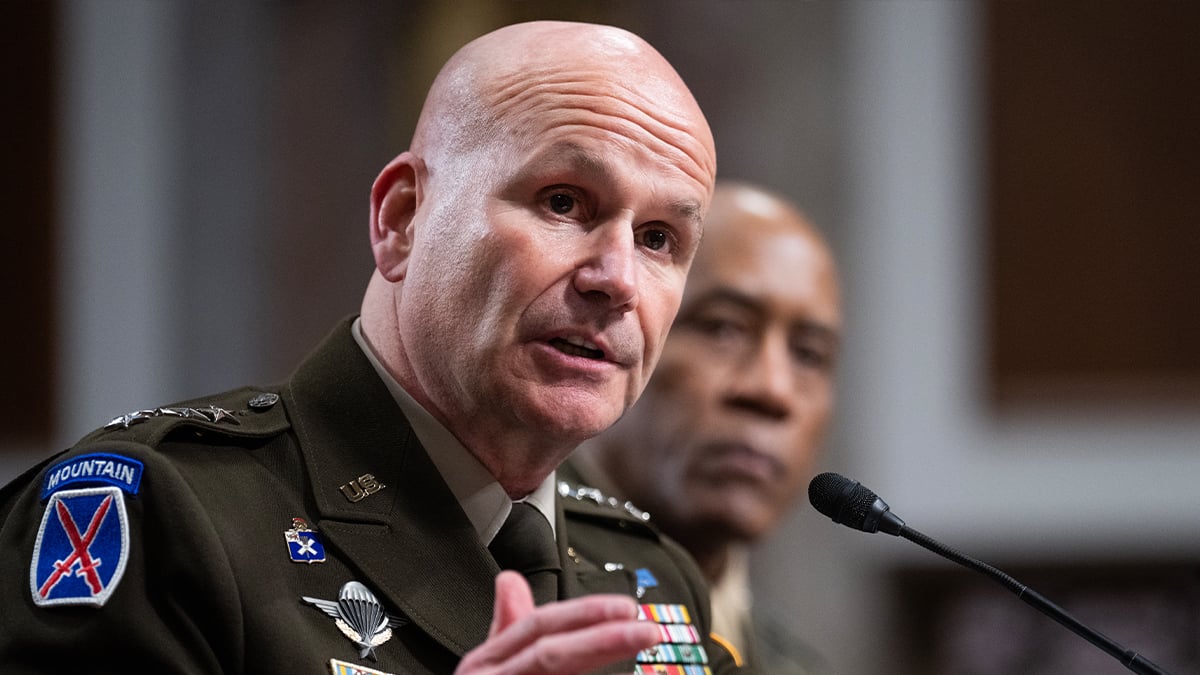
Ahead of NATO’s 2026 summit, the alliance’s former supreme allied commander Europe, retired U.S. Army Gen. Christopher Cavoli, cautions that though Ukraine appears to be “rapidly moving into a position of gaining advantage” against Russia, there will not be “a World War II-type of ending to this war.”
Ukraine’s buildup of a domestic drone and cruise-missile industry is “one of the most remarkable military feats of the century” and may be “the future of warfare,” says Cavoli. But he warns that Russia’s air force, navy and nuclear forces remain largely intact, despite devastating losses of ground personnel and materiel.
Post-peace, “we can expect Russia to rebuild as quickly as possible, to reposition on NATO’s borders, and they will do so in a frame of mind in which they are very much persuaded that we are their enemy,” he told Independence Avenue Media.
Cavoli, who oversaw the logistics of NATO’s military shipments and training for Ukraine from July 2022 until his retirement in July 2025, says that the alliance, which meets July 7-8 in Ankara, Turkiye, should be ready to respond. He calls Russia’s war against Ukraine “a wake-up call to build larger forces with greater stockpiles of munitions and reserves of materiel.”
This interview was recorded on June 12, 2026 and has been edited for length and clarity.
Ia Meurmishvili, editor-in-chief, Independence Avenue Media: Let’s start with your assessment of how the war in Ukraine is going.
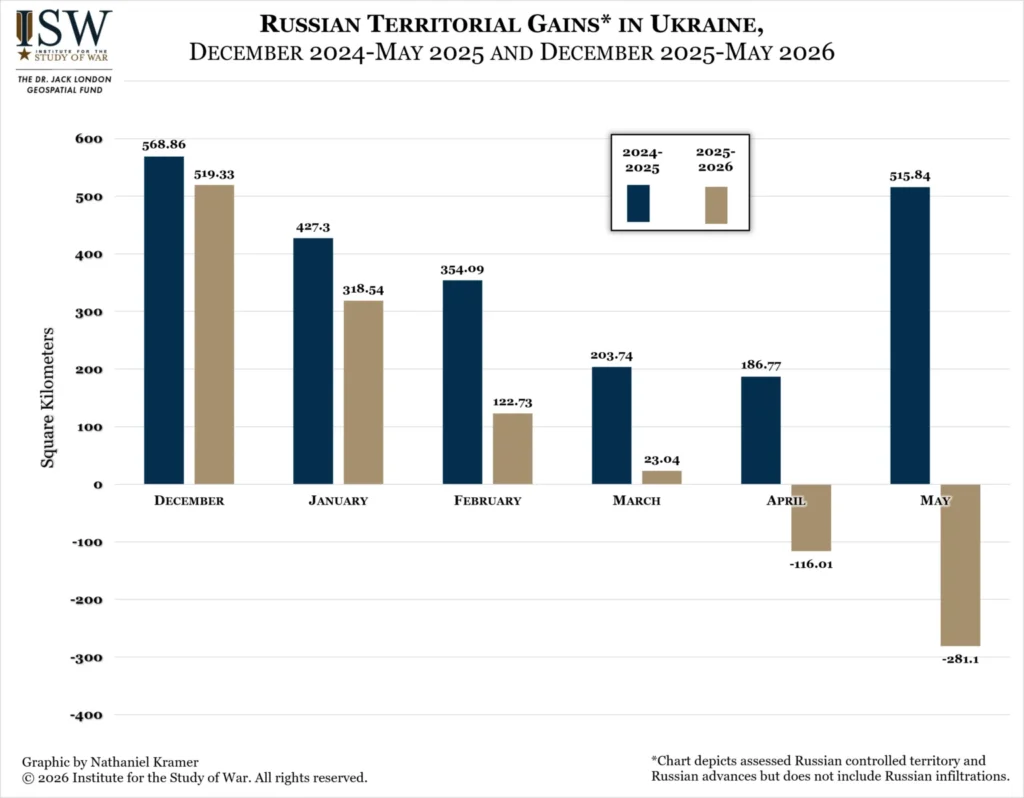
Retired Gen. Christopher Cavoli, former supreme allied commander Europe and U.S. European commander: Well, I think Ukraine has pulled off one of the most remarkable military feats of the century. Ukraine has managed against the odds to fight Russia to a standstill in its invasion and, in fact, is turning around and regaining moderate amounts of territory right now. I think the key to this was bringing together their organization and getting their defense industry up to a level where they don’t depend entirely on outside support for their ability to defend [themselves] any longer.
There are still a couple of things that they require outside support for, and [Ukrainian] President [Volodymyr] Zelenskyy has been quite clear about those. But the vast majority of what they’re doing now, they are doing with their own defense industry. And so this is a huge change.
MORE: Drones Reshaped the War in Ukraine. Robots Are Doing It Again
The second thing that’s changed is their ability to strike deep into Russia. The Ukrainians have clearly adopted a strategy in which they will resist Russia longer than Russia can persist in the fight. How long that will be, we will only be able to tell when the events come. But Russia has been losing tremendous numbers of soldiers. For the first time since the beginning of the war, Russia has begun losing more soldiers in a month than they are able to field back onto the battlefield. This is a bad direction for Russia.
The deep strikes that Ukraine has been able to perpetrate against the Russian Federation have really started to take a toll on the energy industry inside Russia. But more importantly, it has intruded upon the consciousness of the Russian people, I believe. It has brought the war home to Russia.
MORE: Former CIA Official in Russia: Putin Should Fear Elites Who’ve Had Enough of Ukraine War
I found it to be remarkable that Russia asked for a [temporary] ceasefire [with Ukraine] in order to be able to hold the annual May 9 Victory Day parade this year. And then, when the parade did occur, it was greatly diminished in size. This was a hundred percent because Ukraine has developed and demonstrated the ability to strike deep into Russia. So the tables have turned quite a bit. We see that in Crimea this week with the very significant strikes that Ukraine is doing into Crimea. And Ukraine has stabilized the situation and is rapidly moving into a position of gaining advantage.
IAM: Experts have told Independence Avenue Media that this may be the beginning of the end of this war. Do you share that viewpoint?
Cavoli: Well, we hope we’re seeing a beginning of the end of the war on terms that are acceptable to Ukraine. You know, this has been an unbelievably destructive war. It’s been very destructive for both sides. Ukraine has suffered a lot of human and materiel damage, and Russia has suffered well over a million [casualties]. So, yes, we would hope to see this war end. However, I believe the strategy of both sides is to dig in for the long term and see who can outlast the pain of the other side. In this regard, I think the Ukrainians have begun to develop an advantage, but that doesn’t mean we’re coming close to the end of the war yet. We pray for that and we hope for that, but I think it’s gonna be a little bit longer still.
IAM: How do you think the war could end? Is it a diplomatic solution or is it a military solution? What’s your view on that?
Cavoli: Almost all wars end with some sort of agreement. This does not appear to be the sort of war that’s gonna move toward an unconditional surrender of one side or the other. The Ukrainians have demonstrated that they are not the type of nation that intends to surrender, and they have also demonstrated that Russia is incapable militarily of pushing Ukraine so far that Ukraine has to surrender. Likewise, Ukraine doesn’t have intentions to invade Russia, so it’s not going to compel a surrender there.
We’re not going to see a World War II-type of ending to this war. That means anything short of that is going to be some sort of a brokered decision. I think the military instruments have to play out a little bit longer. There will be a little bit more war before the sides are ready to sit down and to be able to come to some sort of an agreement to end the fighting. But I certainly expect the fighting to end through some form of diplomacy in the end, whether third-party diplomacy or the two parties dealing with each other.
IAM: In one of your recent appearances, you said that the scale of this war is unimaginable. Could you tell us about that scope?
Cavoli: The Russians have been suffering 30,000 to 35,000 casualties a month. That’s a thousand people a day. That is more than an infantry battalion. That’s almost two infantry battalions every single day since the beginning of this year. That alone gives an indication of the scale.
But second, when we see the level of destruction of the cities along the front line in eastern Ukraine, just absolutely destroyed to the ground, that is an indicator of the scale of the fighting. It takes a lot of bombs to make things like that happen. And then, finally, of course, we just see the materiel expenditures, the quantity of artillery shells fired by both sides, the numbers of tanks lost. The Russians have lost more than 4,000 main battle tanks. There are developed nations with only 150 or 200 or 300 tanks in their entire inventory. So the scale of the conflict in terms of the amount of destruction is remarkable.
It’s also a big conflict geographically. The front line spreads for more than a thousand kilometers, so the types of logistics necessary to wage a war like that really are remarkable as well. And it’s interesting, it’s relevant to those of us who are not involved in the fight, because most of us have been considering for the past 30, 35 years wars to be smaller things, discrete, maybe shorter in time, and we’ve built our forces accordingly. This is a wake-up call to build larger forces with greater stockpiles of munitions and reserves of materiel.
IAM: Where do you put Ukraine in terms of technological development? We’ve talked about how the tables have turned and potentially put Ukraine in a stronger negotiating position. What put Ukraine there?
Cavoli: Yeah, so as the Ukrainian stockpiles of artillery ammunition started to dwindle in 2022 and 2023 — especially coming through the summer of 2023, I think it became obvious to the Ukrainians that they need to substitute something else there, and the first-person view drones (FPVs) appeared on the battlefield.
This is not super high-tech stuff. This is not the same as an F-35 or something like that. But it was available and it was something that could be innovated upon quickly. And so, in just a remarkable spontaneous outburst, Ukrainian society began to set up shops that built small drones. And those eventually became the basis for further innovation.
MORE: Petraeus: Ukraine’s Drone Edge Is Reshaping the War — and the Future of Warfare
And we saw Ukrainian engineers go to the front lines and rapidly learn what countermeasures were being employed against their equipment and developing a counter-countermeasure to that in this escalation of innovation that goes on. And so, Ukraine was able to build from the bottom up a fairly effective but very low-cost ecosystem of weapon systems that could be brought to bear against Russia.
They aren’t the most exquisite weapons in the world, but they’re very capable. And what you need is not the very best of something. You need something that’s better than what the enemy has that you’re fighting. And Ukraine has done exactly that, and they did it from the bottom up, and it’s been a lesson for the rest of us. Certainly the most experienced and most accomplished drone engineers in the world are in Ukraine right now.
This has not stopped with the drones, though. Ukraine is now producing cruise missiles that are highly effective. It is producing a wide variety of things. And in so doing, Ukraine is really sketching out the future of warfare for the rest of us. We would all be wise to study very closely what they’re doing and to adopt significant parts of it.
IAM: How do you assess the threat from Russia? Where do you see the Russian threat during this war as well as once this war ends?
Cavoli: Well, as usual with Russia, it’s necessary to listen to the words of their leaders and to start from the face value of what they say. During the war, I think NATO has very successfully contained the war to the battlefield where it’s being fought. There has been some accidental leakage out, but there hasn’t been very much horizontal escalation. And there’s been no significant vertical escalation. We’ve had veiled nuclear threats, but we haven’t seen anything. Russia’s ability to really pick fights elsewhere is sort of limited right now.
I think during the war we get a little bit of time to prepare. And we do need to prepare because Russia has stated very clearly that, after this fight, they intend to reposition larger forces than before on the borders with NATO. And they will have the ability to reconstitute their force in not very much time. So it’s important to remember that their navy, other than the Black Sea Fleet, has not suffered greatly. Their nuclear forces have not suffered at all. Their air force has suffered minimally.
So other than the ground forces, there is still a very significant arsenal that Russia possesses.
Their ground forces are not that difficult to reconstitute. Russia has never depended on extremely high-quality ground forces. It’s depended on quantities of ground forces. And to replace a conscript army that has an average of one year of experience takes one year.
So we can expect Russia to rebuild as quickly as possible, to reposition on NATO’s borders, and they will do so in a frame of mind in which they are very much persuaded that we are their enemy. And so we have to prepare for that. We want to avert problems with them, and the way to do that is by responsibly rearming ourselves and posturing our forces in such a fashion as to discourage and deter such a fight from ever happening.
IAM: Do you think NATO realizes the threat that you just described? And do you expect the July 7-8, 2026, NATO summit in Ankara, Turkiye to address some of those threats?
Cavoli: Absolutely. I believe that the heads of state and government are very seized by this moment, that the sea change in NATO since February of 2022 is absolutely remarkable. It began with the writing of defensive plans for the alliance again. For 35 years after the Cold War, we didn’t think they were necessary and we didn’t have them. Once the plans were written, one could describe what force is required to execute the plans. And so finally, we had a shopping list for defense expenditures in NATO. And now the time is to build that force and to pay for that force. But as we do so, we discover that we have some limits to our industrial capacity. And I think that’s going to be a main theme of the Ankara summit: How do we move our defense industry? What are our objectives and what are our programs to move our defense industry quickly to fulfill the demands of our deterrence and defense plans?
IAM: And would you assess that Europeans are ready to ramp that up?
Cavoli: Well, it always depends on the country. Europe isn’t one country. It’s a number of different countries, and so, each country has to make its own decisions. Some are making decisions very, very quickly. Poland has ramped up its defense expenditures well past what we would have hoped for. The three Baltic countries have as well — very significant defense expenditure increases. In other countries — Germany — we’re very proud of the work they’re doing. Other countries are still struggling to find the money and to carve out the fiscal space in their budgets necessary to execute their responsibilities to rearm. But they’re looking for that, and there will be political discussions in those countries. But I believe that, ultimately, we will see that NATO very responsibly and very quickly rearms itself and prepares to deter a significant threat from Russia after the Ukraine war.