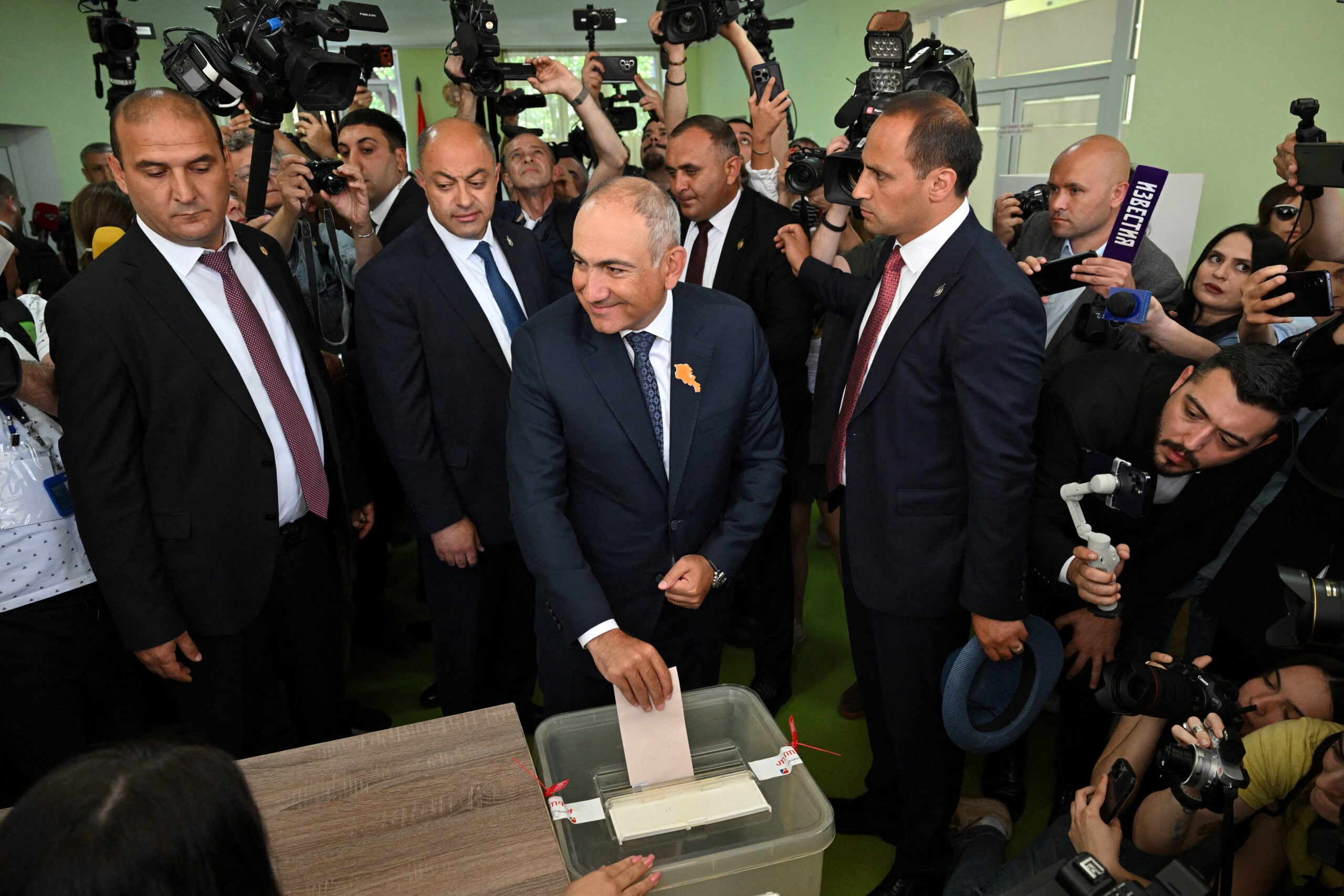
When Armenians re-elected Prime Minister Nikol Pashinyan and his Civil Contract party, they chose “Europe over Russia,” says Diane Francis, author of the popular Substack newsletter Diane Francis and editor-at-large of the National Post.
But she says Armenia is “now entering dangerous territory” because Russian President Vladimir Putin is “very upset by all this.”
In a wide-ranging interview with Independence Avenue Media, Francis says that Moscow sees its so-called sphere of influence slipping away and will use whatever levers it still has to halt Yerevan’s westward pivot.
“They have to be fully prepared for all of the games that the Russians played in Ukraine and elsewhere to be played inside their country,” says Francis.
Still, she says, Pashinyan is in a strong position: U.S. President Donald Trump has gone out on a limb to publicly endorse the prime minister — something he has not done with Ukraine, which has now been fighting off Russia’s full-scale invasion for more than four years.
Francis says that the EU can help Armenia too if it starts to “act like the superpower it could be.”
“They should be all over Armenia, helping them,” says Francis. “Not boots on the ground, but compensating and creating trade connections and that sort of thing.”
This interview, recorded on June 9, 2026, has been edited for length and clarity.
Ia Meurmishvili, editor-in-chief, Independence Avenue Media: Diane, on Sunday, in Armenia, Prime Minister Nikol Pashinyan’s party, Civil Contract, won re-election. How do you assess that election? What do you think that means for Armenia?
Diane Francis, editor-at-large at the National Post: I think it’s good news for the Armenian people to choose Europe over Russia or the status quo. But I think they’re entering dangerous territory now. I think that the Russians have a playbook to try and discipline the “near abroad” countries. It didn’t work in Ukraine and it didn’t work in Georgia, but they’re going to try it in Armenia anyway. It’ll be difficult. I think they’ll [Armenia] be okay because Trump has weighed in in support of the new leader. That’s helpful. That wasn’t in place when Ukraine was fending off Russian influence after it started to go down the path toward becoming European.
IAM: Pashinyan’s promise to the Armenians was that he will bring about peace. That was one of the main campaign promises — peace and stability. Do you think peace between Azerbaijan and Armenia is really possible at this point?
Diane Francis: In a strange way the two foes have to become friends if they both want to fend off a Russian incursion eventually or Russian interference eventually. And then at the same time it looks like they’ve set aside their differences over territory.
Trump is in there and he wants to build a corridor [Trump Route for International Peace and Prosperity]. So all these things are playing out. You’ve got Trump on Armenia’s side and you ironically have Azerbaijan on Armenia’s side, which is different from what happened in Georgia or Ukraine.
IAM: What do you think this means for Georgia, which for over 500 days has had a demonstration in the capital, Tbilisi, where people are demanding the release of political prisoners, new elections and generally higher democratic standards in the country? Do you think Armenia’s elections have any impact on Georgia in any way?
Diane Francis: I think it has a positive impact on those who want democracy and to keep the Russians out. It’s good news to the Georgians and it’s good news to the Azerbaijanis. It would be nice if they all collaborated, put aside their differences, and started to build some kind of an alliance that would ensure that none of them fall into the dark side again.
That’s too much to hope for. On the other hand, the Americans for the first time are wading into the situation. The problem, though, is that Putin is very upset by all of this. He’s actually threatened and he invoked during the Armenian election: You may end up like another Ukraine.
So he threatened invasion, essentially. And I think that’s why the Americans said we’ve got to do something to respond to that, because we can’t have this happening. He can’t be nibbling away at all of this again. And it’s not what the Armenian people want. And there’s a very powerful Armenian diaspora in North America and in Europe, and that’s helpful.
MORE: As Moscow Weakens, the South Caucasus Grows Closer to the West
IAM: How do you look at it in terms of what we saw in Hungary, for example, where President Donald Trump endorsed [former Hungarian Prime Minister] Viktor Orban, where [Vice President] JD Vance visited Hungary just before the elections, but the results were dramatically different? Hungary’s new Prime Minister, Peter Magyar, won overwhelmingly in the election. So what is the difference between the two? How do you explain that?
Diane Francis: [The U.S.] has a quirky foreign policy. Most countries do. Very quirky. And it is not consistent. It’s not consistent at all. But I think that they are intelligent enough to know that Armenia has to be propped up and supported, as Georgia has been, and Azerbaijan too, eventually, to avoid another Ukrainian nightmare. They know that Russia will pounce — will move in, and destroy these countries and their leadership, and take over these people’s lives in a bad way. So their moves in Armenia are designed to keep Russia out of the Caucasus, to stop the imperialism from spreading — beyond the fact that they’re trying to gobble up Ukraine. The Hungarian thing — and this is the quirkiness and the inconsistency — is more about American domestic politics than about Hungarian politics.
The MAGA movement that supports Trump adopted Orban as their poster child. He was right-wing, he didn’t like immigration. They liked him, and he also tweaked the nose of the Europeans, who they basically have never liked very much because they haven’t paid their military share of NATO.
So it’s complicated, but that’s why the inconsistency, because you’re absolutely right in asking the question because Orban was an awful leader, a corrupt leader, and yet they liked him. And this guy in Armenia is a good guy and they like him. So there’s a lot of extraneous policy issues that surround these decisions.
IAM: How do you think President Putin is perceiving this? We saw elections in Hungary where Viktor Orban, a close ally of President Putin, was defeated. We see what’s happening in Iran, we saw what happened in Venezuela. These are distant regions, not the Caucasus per se, but we’re seeing the Trump route in the South Caucasus and now Armenian elections and Moldovan elections before that. Do you think Putin is thinking that he’s losing strategic leverage?
Diane Francis: Well, he’s not winning in Ukraine. And he [hasn’t won] in Georgia either. And I think the fact that Trump has gone to bat for Armenia means hands off, buddy. You can’t go any further. He can’t be happy, but he’s also been warned. He’s been truly warned.
And the other thing that I think is needed, and I hope that comes down the pike, and it’s starting to, is the European Union has to start to act like the superpower it could be. And they should be all over Armenia, helping them. Not boots on the ground, but compensating and creating trade connections and that sort of thing. And diplomatic support.
And so the oil thing is a very real problem. But remember, Putin tried that with Europe. He threatened before invading Ukraine that Europe would be cut off from all of its oil and gas from Russia. And then he did it.
And the Europeans scrambled like crazy and have completely gotten off of Russian energy — except for Hungary because of Putin’s Russian partnership, and Serbia. So they’re completely off. He lost the biggest consumer marketplace he’d ever had. Putin. And the same thing could happen with Armenia. Energy can be obtained for them somehow — not from Iran, but somehow. They just have to be able to get energy, and they can’t be tied to that regime because that’s always trouble.
IAM: Prime Minister Pashinyan, before the elections, said that Armenia is not Russia’s ally when it comes to the war in Ukraine. And that irritated President Putin. What does that mean for Russia militarily? When Armenia, which hosts a large Russian military base on its territory, is saying that we’re not partners?
Diane Francis: That’s probably why he’s knocking on the door and he’s put up this puppet oligarch in this election to try and bring it into the fold again. That’s not gonna work. And Trump is onto it now. The Americans are onto it, the Europeans are onto it. So Armenia has to do a careful balancing act here to avoid having the “bear” come in actually and take over the country or part of it. This is perilous. So it has to be done carefully and diplomatically. Now you already have the Americans and Europeans siding with Armenia’s right to become whatever wants it to be, which looks like democracy. But it’s going to have to be done slowly, gradually. But they have to be fully prepared for all of the games that the Russians played in Ukraine and elsewhere to be played inside their country.
IAM: Do you think Ukraine is benefiting from a democratic Armenia that’s pivoting away from Russia?
Diane Francis: Not directly benefiting, but I think it reinforces the fact that everybody in the world except Russia admires Ukraine for what it’s doing, for fighting off the Russians, for building a democracy, for building an incredible economy. It is a technological powerhouse.
Ukraine is an amazing place and they will join the European Union eventually and be the Silicon Valley of the whole continent. And I think that it’s really, really complementary to the Ukrainians that their sacrifices have also encouraged, maybe even gave the Armenians the idea. But to think that any of the former Soviet republics who left that place want in again is absolutely insanity. But that’s Putin.