Russia’s war against Ukraine is weakening Moscow’s influence across the South Caucasus and accelerating geopolitical shifts in the region, former NSC Senior Director for Europe Michael Carpenter says in an interview with Independence Avenue Media.
“Moscow’s influence in the South Caucasus is clearly dramatically weakened,” Carpenter says, pointing to Armenia’s rapidly expanding ties with the United States and the European Union, as well as Azerbaijan “pushing further and further away from Russia and asserting its sovereignty and independence.”
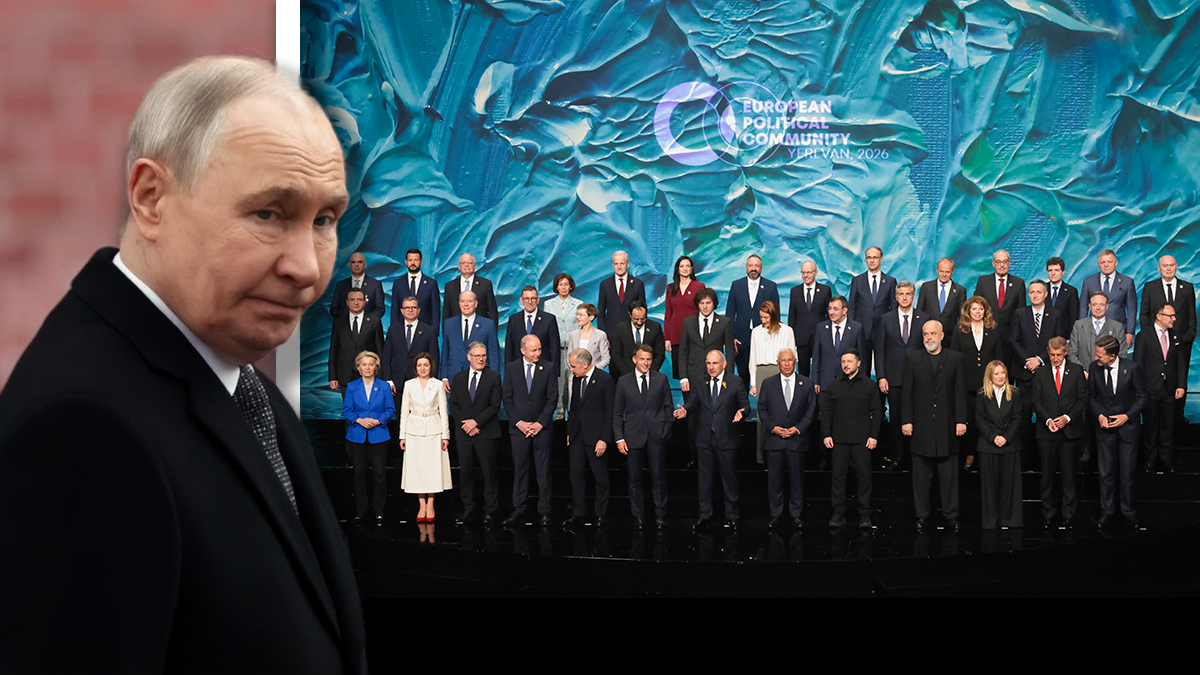
Armenia recently hosted the European Political Community summit in Yerevan and has expanded ties with both Washington and Brussels — developments Carpenter says would have been “unthinkable” even “two years ago.” Azerbaijan, meanwhile, is positioning itself as a central player in infrastructure and connectivity projects increasingly linking Central Asia to European markets.
At the same time, Carpenter says Georgia is “trending in the opposite direction,” as concerns over democratic backsliding increasingly intersect with questions about the country’s geopolitical orientation.
Carpenter argues that the further Georgia has moved away from the democratic norms of “five or 10 years ago,” the more it has “reached out geopolitically to China, Iran and Russia” — a development he says is also shaping Western calculations about long-term strategic investment in the region.
“The more that Georgia regresses democratically and fails to abide by European norms, the less attractive as a candidate it is for Western investment,” Carpenter says. He argues that Western concerns increasingly extend beyond democracy itself to broader questions about Georgia’s Euro-Atlantic trajectory and its future role in regional connectivity projects linking Europe and Central Asia.
He also expresses concerns about Washington’s position on Georgia’s trajectory, mentioning a new Trump Tower announced by Eric Trump, President Donald Trump’s son.
“It’s evolving in a dangerous direction, and I fear that the desire to complete a commercial project along the lines of a Trump Tower in Tbilisi will distract those in power, such as Secretary of State Rubio, from pursuing the U.S. national interest,” he says.
The following interview, conducted on May 11, 2026, has been edited for length and clarity.
Kartlos Sharashenidze, Independence Avenue Media: Following Moscow’s most scaled-back Victory Day parade in years, Russian President Vladimir Putin suggested that the war against Ukraine may be approaching its end. He also said he would be ready to meet Ukrainian President Volodymyr Zelenskyy once the terms of a possible peace agreement are finalized. What do you think is behind these statements, and how do you interpret them?
Michael Carpenter, former NSC Senior Director for Europe: The first thing I’d say is I’m a little bit cautious about overinterpreting Putin’s statement about the war ending. It may be that this is the first of a series of interventions by Putin to try to prepare the population for the Russian exit from the war. As I said, I’m a little bit skeptical that that is the direction that we’re heading in simply because the Russian war economy is so focused on delivering output for this conflict and the recalibration of that economy for civilian purposes is going to be so costly and is going to cause so much dislocation within society. Plus [there’s the challenge of] all the returning veterans and what they’re going to do for Russian society over the medium term and even in the short run. I think all of those factors augur against Putin wanting to settle the war soon. So I take all of this with a note of caution.
But what I will say is that in March, essentially, Ukraine and Russia fought to a net zero gain for both sides. In April, Ukraine actually had net territorial gains over Russia. And Russia’s casualties are absolutely astronomical. At 35,000 per month killed and wounded [according to Zelenskyy], and — I’ve heard a statistic that 60% of those wounded are wounded so badly they cannot return to the fight, not even this year but ever.
MORE: Hodges: The Momentum Has Shifted in Ukraine’s Favor — and Russia Knows It
And so in the midst of those sorts of pressures and with the enormous pressure as well on the Russian economy, with inflation likely much higher than the official rate, probably closer to 15% or even closer to 20%, with GDP stagnating and declining, Russia is in a real period of crisis — or it’s entering into a period of crisis. So I think all of that will make the Russian side a little bit more cautious about how it speaks about this war. But I would say it’s a little bit premature to predict that Putin and the “Siloviki” [Russian state security services] around him are ready to do a deal to end the war anytime soon.
IAM: What do you think Ukraine’s response should be to these statements?
Carpenter: On the Ukrainian side, I think the message has to be, or at least what they interpret from Putin’s message from the Victory Day parade, is continue doing what you’re doing.
I think the Ukrainians have now fully automated the front lines. They have developed and perfected their ability to strike, not just at an operational depth of a few hundred kilometers, but really at a strategic depth of up to 1,500 kilometers or even more. And their ability to take out major aspects of the Russian hydrocarbon complex, whether it’s refining facilities or whether it’s switching stations or other types of key infrastructure, is so advanced that Russia is really feeling the pain.
MORE: With Expanding Deep Strike Capabilities, Ukraine Takes Aim at Russia’s Oil
So, for Ukraine, I think the message has to be continue prosecuting the war as they currently are, to great effect — degrading Russian forces on the front lines in massive numbers, month by month. And then continuing to develop that resilience back home, the 90 billion euro [EU] loan was certainly very helpful, but the Europeans could help push this into a whole new space if they were to mobilize the currently frozen Russian assets that are sitting in European jurisdictions. If they mobilize those assets and gave them to Ukraine, then the situation would change dramatically because Putin would see that his runway is vastly diminished while Ukraine’s would be vastly lengthened.
IAM: And beyond Ukraine, what impact is the war having on Russia’s wider regional influence? How costly has the war against Ukraine been for Russia’s influence in the South Caucasus? Considering the current geopolitical dynamics in the region — Armenia hosted the European Political Community summit last week, followed by the EU-Armenia summit. What message does this send to Moscow?
Carpenter: On the one hand, Moscow’s influence in the South Caucasus is clearly dramatically weakened. You see it in Armenia, you see it in Azerbaijan. You also see it on the other side of the Black Sea in Moldova.
However, in Georgia, I think Russia’s influence, frankly, has strengthened over the course of the last few years, not as a result of the war in Ukraine, but as a result of Russia’s own political warfare strategy inside the country. So I think it’s a mixed picture overall.
But you’re right. The fact that Yerevan was able to host the European Political Community summit, the fact that President Zelenskyy was able to travel to Yerevan, that Armenia has really strengthened ties dramatically with the United States and the European Union — all of that was just unthinkable as short as five years ago. Even frankly two years ago it was unthinkable.
And Azerbaijan as well is pushing further and further away from Russia and asserting its sovereignty and independence. And of course the two sides are forging a new chapter in their relationship, which is what’s really exciting about the South Caucasus.
But again, it’s a mixed picture because Georgia’s trending in the opposite direction, in my view.
IAM: While discussing Armenia’s relations with the European Union, President Putin linked the origins of the war in Ukraine to Kyiv’s efforts to move closer to the EU. He also suggested that Armenia should hold a referendum so the Armenian people could decide whether they want to move closer to the European Union or remain within the Russia-led economic union. What do you think Putin is trying to achieve by drawing parallels with Ukraine?
Carpenter: The suggestion that Armenia hold a referendum is obviously designed for Russia to be able to manipulate that sort of a referendum to derail Armenia from its current course, which is geopolitical alignment with the West. Obviously, Putin is scared of this. So he’s making some parallels with Ukraine.
And similarly, he was frightened by Georgia’s moves toward the West beginning in 2004 to 2008, up until the [2008] Russian invasion. He was deathly worried that Georgia was going to join the Western camp of countries and that Russia would no longer have the influence that it historically had.
And so now he fears that about Armenia. But of course, the momentum is there and the geopolitics are completely different, because Russia, as I said, it’s bogged down in Ukraine. It’s hemorrhaging people at a rate that is just absolutely astounding on the front lines. Iran is vastly weakened. Syria has fallen. The Assad regime has fallen. The Maduro regime has also been crippled. It hasn’t completely fallen, but it’s been crippled in Venezuela. So, Putin is facing a lot of geopolitical setbacks right now.
IAM: Can Russia realistically prevent deeper EU engagement in Armenia?
Carpenter: Well, they can try, and they are trying. The sort of manipulation behind the scenes, the political warfare tactics, the co-optation of certain elite figures, the use of Russian dark money to try to finance operations in Armenia that are anti-Western or pro-Russian in some way, or at least anti-establishment — that continues, as well as the online disinformation and the messaging that’s coming from Russia.
I think it’s less effective because Russia has done this now for many years and a lot of countries have sort of caught on to their modus operandi. But they’re still trying very hard and they’re using especially agents of influence within Armenia to try to accomplish their aims.
And so Armenians have to be really vigilant as they go into the elections in a couple weeks’ time to look out for this Russian malign influence or manipulation or disinformation — all the various tools that Russia has at its disposal.
IAM: What practical changes could deeper EU engagement bring to Armenia and the region when it comes to security, economic development and regional connectivity?
Carpenter: So, the main things are investment, investment, and investment. That is really the main thing that both the Europeans and Americans can do right now. And the fact that Nvidia, the technology company, has invested $500 million in Armenia in a data center is, to my mind, one of the best examples of how the United States can exert influence in the region in a very helpful fashion that will create jobs but also a digital backbone for the Middle Corridor that spans Central Asia to Europe, and that really brings Armenia further into the 21st century.
And then on top of that, there’s also investments in connectivity, rail, roads, pipelines to bring energy, ideally, from Turkmenistan and points further to the east to European markets. All of that has to happen. And I think it will over time. But the sooner that that infrastructure can be built and the sooner the connectivity can happen the better.
IAM: The European Union has deep concerns about democratic backsliding in Georgia. At the same time, Georgia remains important to Europe’s interests in the South Caucasus, including on connectivity and trade. Do you think the EU’s strategic interests in Georgia could eventually override the concerns about democratic backsliding, or will democratic standards continue to shape the future of EU-Georgia relations?
Carpenter: I think they’re linked because the one aspect of Georgia’s democratic backsliding that is sort of an ironclad rule is that the further that Georgia has moved away from its democratic norms of, say, five or 10 years ago, the more it has reached out geopolitically to China, Iran, and Russia.
And so the European Union obviously is aware of this and is not going to bet on connectivity through Georgia if it fears that some of that infrastructure is going to fall into Chinese or Russian hands.
And so I think to the extent that Georgia can reform and become a democratic country, the better a candidate it becomes for east-west infrastructure that would be financed either by America or by the Europeans. But the same is true of the opposite — the more that Georgia regresses democratically and fails to abide by European norms, the less attractive as a candidate it is for Western investment. And surely the Georgian Dream leadership has to realize that. It’s not rocket science. It’s pretty obvious that that’s been the case in the past and it’s going to be the case in the future as well.
IAM: I’m asking this because we see the European Union maintaining close strategic cooperation with Azerbaijan despite longstanding concerns over democracy and human rights there. Could a similar logic eventually shape the EU’s approach toward Georgia?
Carpenter: Well, obviously not all of the countries in the South Caucasus, and certainly none of the countries in Central Asia, are representative liberal democracies. And yet the U.S. and the European Union do business with them, as they should. This is not to say that neither the United States nor other Western countries can preclude doing geopolitical business with countries that are not of the same governance model as they are. What it means is that when a country starts to regress to the degree that Georgia has, there are open questions about the direction of its geopolitical alignment. And I think that’s the case.
With Azerbaijan, I think the geopolitical alignment is much clearer. I think Azerbaijan has cast its lot with the West. It is very cautious because obviously it has a northern neighbor in Russia and a southern neighbor in Iran, which is right now deeply destabilized. And so, of course, they’re cautious, but I think Azerbaijan has proven to be a good partner for Western countries when it comes to providing energy. And I think that for that reason, it falls into a slightly different category than Georgia today.
IAM: So, you mentioned U.S. interest in the region and President Trump’s administration has played an important role in the Armenia-Azerbaijan peace process, including through the proposed [Trump Route for International Peace and Prosperity] TRIPP corridor. How closely aligned are U.S. and EU approaches and interests in the South Caucasus right now? Are the U.S. and the EU really on the same page when it comes to the South Caucasus?
Carpenter: It’s a good question on the degree of coordination. In terms of strategic alignment, I think by and large, the U.S. and the EU are pretty well aligned.
I know that they’re having a lot of conversations. The [EU Special Representative for the South Caucasus and the Crisis in Georgia] Magdalena Grono — I know that she speaks on a regular basis with her counterparts in Washington.
So, I know they’re talking. And I truly believe that strategically, they have the same interest, which is to ensure there is a durable peace between Armenia and Azerbaijan, a diplomatic opening between Azerbaijan, Armenia, and Turkey, and then the infrastructure connectivity that will allow not just hydrocarbons to flow from Central Asia, but just as importantly, critical raw materials to flow from Central Asia, which is a repository of a lot of these minerals. Potentially the processing capability doesn’t exist right now, but potentially that processing capability could be built in Central Asia and allow for a tremendous movement of these goods to Europe, where the market is already quite mature and available to receive those critical raw materials.
So, I think that the future is very bright. And I think the European Union and the American side both understand this. They just have to tactically align what they’re doing in terms of the diplomacy to make sure that they’re on the same page from day to day.
IAM: When we spoke last summer, you said, “We’re about to find out” whether the South Caucasus can be complete without Georgia. How do you see current U.S. interests in Georgia? Under the current administration, we’ve seen Secretary of State Marco Rubio hold a phone call with Prime Minister Irakli Kobakhidze, renewed attention to the Anaklia Deep Sea Port project, and reports that Tbilisi will become the first city in the region to host a Trump Tower. How do you see this administration’s approach to Georgia, and how does it differ from the administration you served in?
Carpenter: This administration’s position on Georgia is still evolving. I fear that it’s evolving in a dangerous direction and I fear that the desire to complete a commercial project along the lines of a Trump Tower in Tbilisi will distract those in power, such as Secretary of State Rubio, from pursuing the U.S. national interest. I hope not. I hope that’s not the case. I hope that the U.S. continues to try to support a Western consortium that will develop the Anaklia seaport and that will press the government of Georgia on human rights and finally get the government to reverse some of this geopolitical positioning that is antithetical to Georgia’s Euro-Atlantic integration and its Euro-Atlantic trajectory.
But so far the administration has been sort of quiet on these issues. They haven’t shown their cards. And I fear that the commercial factor, the very private commercial factor, which has nothing to do with the U.S. interests, may get in the way.
Now, if I’m wrong and the administration comes out and supports the MEGOBARI Act [Mobilizing and Enhancing Georgia’s Options for Building Accountability, Resilience, and Independence] and enacts sanctions and tries to achieve an outcome in Georgia that is more compatible with the country’s Euro-Atlantic future, that the last administration supported, then I’ll applaud that. But I haven’t seen any signs that that’s happening. You have some Republican members of Congress who have been very articulate and eloquent about Georgia’s future in the West and wanting to support that path, but that has not translated into policy actions from the administration as of yet and we’re already a year and a half into this administration. So, I wonder whether we’re going to see a potential loosening of influence by the United States in Georgia in the coming months and years.
IAM: So, with the current situation in Georgia in mind, and the latest developments between Armenia and Azerbaijan, do you think the post-Soviet order in the South Caucasus is beginning to fundamentally change?
Carpenter: I think so. I think the rapprochement and the reestablishment of diplomatic relations between Armenia and Azerbaijan, and let’s hope the ratification of the peace treaty between the two countries, which hasn’t happened yet, but if that does happen, that will be a game changer for the entire region.
And I am absolutely in my bones convinced, and also intellectually I am convinced, that Georgia is going to pursue a Euro-Atlantic future at some point soon. It will reverse this current period of stasis or regression. But it’ll take probably a new government in power to effectuate a reverse change where they go back to pursuing Euro-Atlantic integration as they did up until 2024. And once they do that, I think the European Union will accept them with open arms. But they have to be serious about the reforms that are necessary for that membership.
So, let’s hope that that reality comes into play. But in the meantime, Armenia and Azerbaijan are going to outpace Georgia significantly in the next couple of years, because that’s where the locus of activity is going to be and that’s where Western companies are going to want to invest.