Congress has taken a series of actions on Georgia in recent weeks that reflect growing concern on Capitol Hill about Russian and Chinese influence in the country and the future of U.S.-Georgia relations.
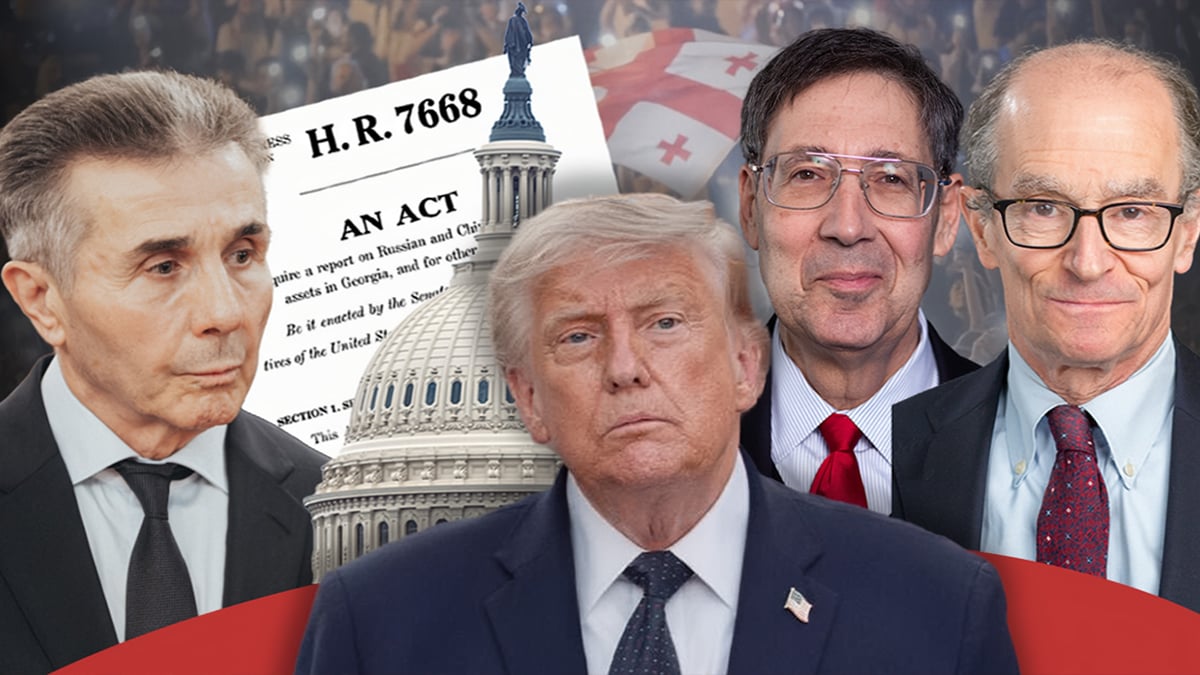
On June 8, the House of Representatives passed the Countering China’s Control of the Caucasus Act, requiring the Trump administration to assess Russian and Chinese intelligence activities and influence operations in Georgia and develop a five-year strategy for U.S.-Georgia relations.
Days earlier, the House Armed Services Committee approved similar Georgia-related provisions for inclusion in the draft 2027 National Defense Authorization Act.
The congressional actions followed comments by Secretary of State Marco Rubio during a June 3 congressional hearing. Rubio said Georgian officials had asked what it would take to improve relations with the United States and that Washington had communicated its expectations and had seen positive signs — “hopefully, we can build on that basis and perhaps change the trajectory, not just of our relationship with Georgia, but of their behavior,” he said.
🇺🇸🇬🇪U.S. Secretary of State Marco Rubio said Georgia has recently taken steps indicating it wants to improve relations with the United States. Speaking during a House Foreign Affairs Committee hearing, Rubio acknowledged longstanding U.S. concerns about the direction of the… pic.twitter.com/MKmafC20NS
— Independence Avenue Media (@indavemedia) June 3, 2026
Georgian Prime Minister Irakli Kobakhidze rejected that account the following day, saying Georgia had never asked such a question and was “not a schoolchild” that could be held back a year and told how to behave.
Independence Avenue Media spoke with former U.S. diplomats Daniel Fried and John Herbst about what these developments suggest about Washington’s current view of Georgia and whether the two countries can improve relations.
Here’s what they told us:
John Herbst, former U.S. ambassador and senior director of the Atlantic Council’s Eurasia Center:
“This is a sign of growing frustration in Congress, with the not helpful, even partly hostile policy of the regime in Tbilisi — partly hostile towards the United States. And they want to make sure that we’re paying close attention to this and we take any necessary measures to deal with the problem. This is obviously a defeat of [former prime minister and honorary chairman of the ruling Georgian Dream party] Ivanishvili’s efforts to improve relations with the United States, even as his policy cuts directly against American interests.”
Herbst said the Georgian government appears to have expected a different approach from the Trump administration after the 2024 election.
“We know that when President Trump was re-elected, Ivanishvili and his henchmen were figuring they could establish a new relationship with Washington. They were hoping that they wouldn’t care about what’s happening in Georgia, they wouldn’t care that Georgia’s aligning itself somewhat with Moscow and even with Iran and with China. And of course they were wrong about that. The Georgian Dream was not in a very good position as they headed down the authoritarian path.”
MORE: Iran Concerns Push Georgia Into U.S. National Security Debate
Daniel Fried, former U.S. assistant secretary of state for European and Eurasian affairs:
“I’m sure the Georgian government would be willing to work with the Trump administration on the basis of a deal — we do what we want at home and you’ll have business opportunities. In other words — we get to stomp on the opposition and democratic society, civil society in Georgia, and if we give you business opportunities, you’ll overlook that. I don’t think that this is the Trump administration’s approach. I can understand that many in Georgian civil society would worry that it would be the approach to abandon them in favor of commercial deals. I get that. I understand why. But in my conversations with Trump administration people, I’m not getting that sense.”
Fried said he believes the Trump administration understands the challenges of rebuilding ties if Georgia continues its current course.
“I sense that they understand that it will be difficult for any U.S. administration, including the Trump administration, to build back ties with the Georgian government if the Georgian government is acting in an outrageous fashion, in a dictatorial fashion. And it will be a lot easier if the Georgian government finally starts to back off its more repressive moves.”
Despite the tensions, Fried argued that opportunities for improved relations still exist.
“For one thing, you have a significant number of Republicans in Congress who are very pro-Georgian democracy. I think the Trump administration is reaching out to the Georgian government. I think the Georgian government does have an opportunity here, but if the Georgian government’s objective is merely to beat up the democratic opposition and civil society, it won’t work. The Georgian government may think that the Trump people will put no pressure on them with respect to democracy and repression whatsoever, but I’m not sure this is the case.”
MORE: The Missing Investor: Georgia’s Port Caught Between Washington and Beijing