Brian Whitmore is a contributor writing for Independence Avenue Media. The views expressed are the author’s and do not necessarily reflect those of Independence Avenue Media.
Shortly after Volodymyr Zelenskyy’s ill-advised July 15 decision to sack his young, popular and highly effective defense minister Mykhailo Fedorov, two data points caught my attention.
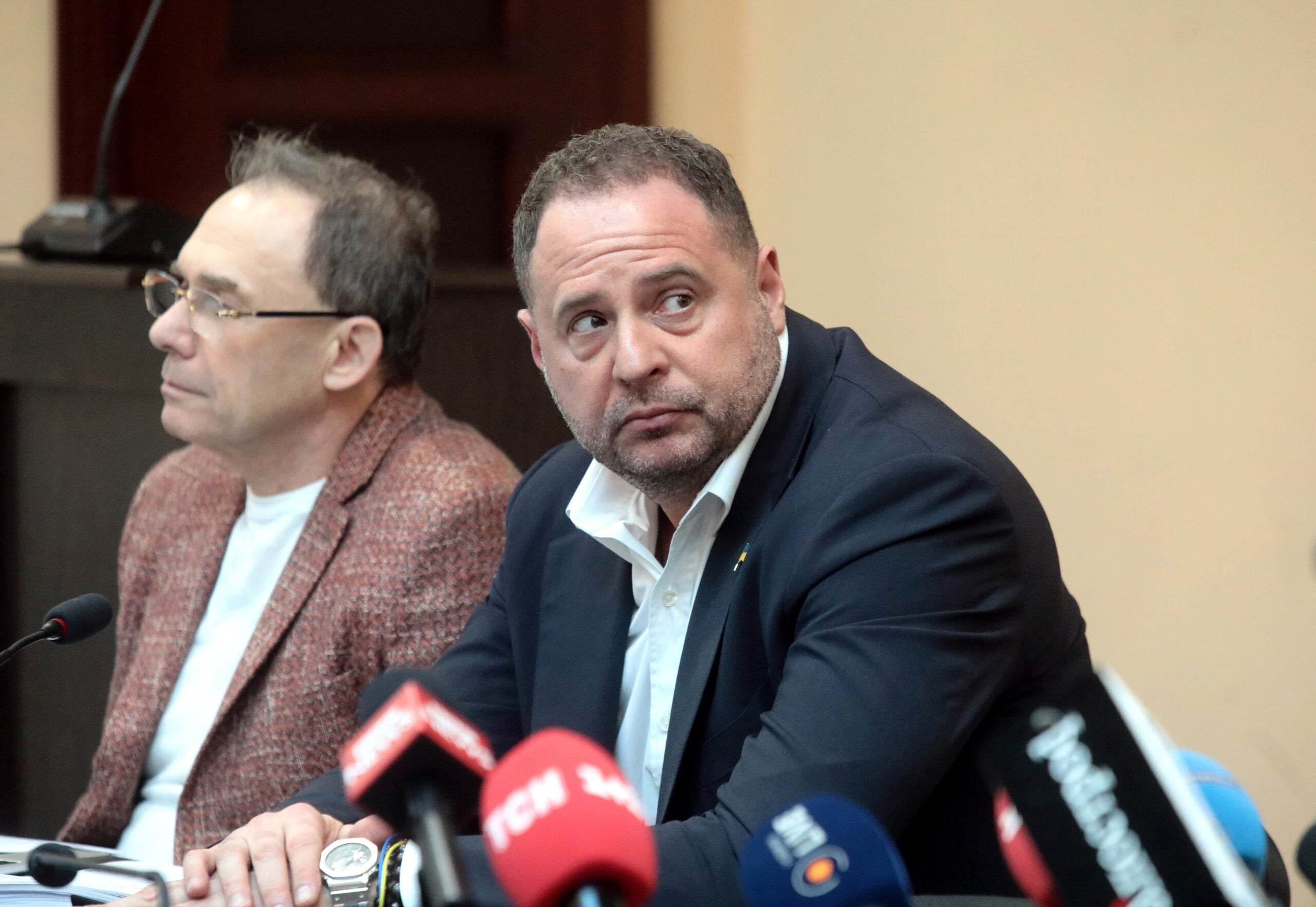
Just hours after Fedorov’s dismissal was formalized, Ukrainska Pravda reported that Gen. Oleksandr Syrskyi had met with Zelenskyy’s disgraced former chief of staff Andriy Yermak. Now why was Syrskyi, a rival of Fedorov’s who was at that point still the commander in chief of Ukraine’s armed forces, meeting with a stigmatized former official who had been charged with money laundering? Seems like a valid question since, as the kids today would say, it all seemed pretty “sus.”
The second data point was a popular chant at demonstrations in Kyiv supporting Fedorov: “corruption kills!” This suggested to me that Ukrainian civil society is keenly aware of just how “sus” it all was.
In an interview with Ukrainska Pravda in late July, his first since being fired, Fedorov said the real reason for his dismissal was that reforms he spearheaded to make defense procurement more transparent — and by extension less corrupt — had upset entrenched interests.
“The reason is connected to procurement, tenders, with the fact that we have started restructuring these processes,” Fedorov said, adding that his reforms “sparked significant dissatisfaction among many people, who began constantly exerting influence” on Zelenskyy.
The record seems to back up Fedorov’s claim.
Historically, a tight circle of military brass had decided which companies received defense contracts. Fedorov abolished this practice, known as the Generals’ List, and forced defense contractors to compete openly on price and performance via a new electronic tender system.
Fedorov told Ukrainska Pravda that he had explicitly warned Zelenskyy that his new open-tender reforms would deprive a powerful private company — which he did not name — of up to $100 million in expected revenue. He claimed that this unnamed company had placed specific officials inside the Defense Ministry to protect its financial interests.
Fedorov’s dismissal as defense minister appears to be part of an ongoing struggle in the political elite between reformers and the entrenched corrupt interests that Ukrainian political scientist Serhiy Kudelia, on a recent episode of The Power Vertical Podcast, called “the shadow state.”
Which brings us back to Yermak, who served as Zelenskyy’s powerful chief of staff from February 2020 until his ignominious departure amid a cloud of corruption allegations in November 2025.
According to Ukrainian media reports, Yermak clashed repeatedly with Fedorov, who had served as minister of digital transformation from 2019 until his appointment as defense minister in January 2026.
According to a report by Mezha, Zelenskyy was considering appointing Fedorov as defense minister back in 2023, but Yermak disuaded him. Yermak, Mezha reports, was concerned that Fedorov controlling the ministry would cost the presidential office he led its tight grip on lucrative defense procurement contracts.
And according to a report in The Kyiv Independent, the two also clashed in December 2024 when the government discreetly stripped Fedorov of his authority over drone purchases and vested it instead in officials described by anti-corruption watchdogs as “yes-men for Yermak.”
Fedorov and Yermak were also on opposing sides in a scandal that roiled Ukrainian politics in the summer of 2025: legislation that would have effectively neutered Ukraine’s flagship independent anti-corruption institutions — the National Anti-Corruption Bureau of Ukraine (NABU) and the Specialized Anti-Corruption Prosecutor’s Office (SAPO).
Mezha reported that when the legislation sparked angry demonstrations, the first time Ukrainians took to the streets since Russia’s full-scale invasion, Fedorov urged Zelenskyy to back down and withdraw the legislation while Yermak pushed the president to stay the course. According to the report, Fedorov was the “one person on the president’s team who could provide constructive communication with the anti‑corruption authorities.”
Amid the swelling protests, Zelenskyy heeded Fedorov’s advice and backed down. On July 31, 2025, the Verkhovna Rada passed, and Zelenskyy signed, a law that preserved NABU’s and SAPO’s independence from political interference. Zelenskyy said at the time that it was “very important that the state listens to public opinion.”
And a few months later, we all got a pretty good idea about why the shadow state wanted to clip NABU’s and SAPO’s wings.
In November 2025, the two anti-corruption organizations announced the results of a sprawling investigation called Operation Midas, which alleged that some of Zelenskyy’s closest associates were involved in a plot to skim around $100 million from Ukraine’s energy sector.
Among those implicated was businessman Timur Mindich, a longtime close ally of Zelenskyy who has since fled to Israel and whose name became the moniker for the scandal: Mindichgate. Others involved were then-Justice Minister Herman Halushchenko, and ultimately Yermak — who was forced to resign and faces corruption charges. And yes, that’s the same Yermak who met with Syrskyi hours after Fedorov was fired.
Ukrainian media and political analysts have suggested that despite his firing, “Yermak’s ghost” continues to influence policy decisions through backroom political networks he built during his tenure.
The protests last summer over the fate of the independent anti-corruption agencies and those this summer over Fedorov are, therefore, two sides of the same coin.
“The political crisis unfolding in Kyiv over military leadership is not a breakdown of democratic order — it is its ultimate manifestation,” Yuriy Boyechko, founder and CEO of Hope For Ukraine, a nonprofit providing aid to civilians affected by Russia’s war against Ukraine, wrote on Substack.
Ukraine is fighting two wars: one with Russia and one with the entrenched interests of the shadow state. The former is a battle for survival. The latter will determine how Ukraine will be governed.
More commentary by Brian Whitmore: The People’s War — Ukrainian Civil Society Takes Charge