
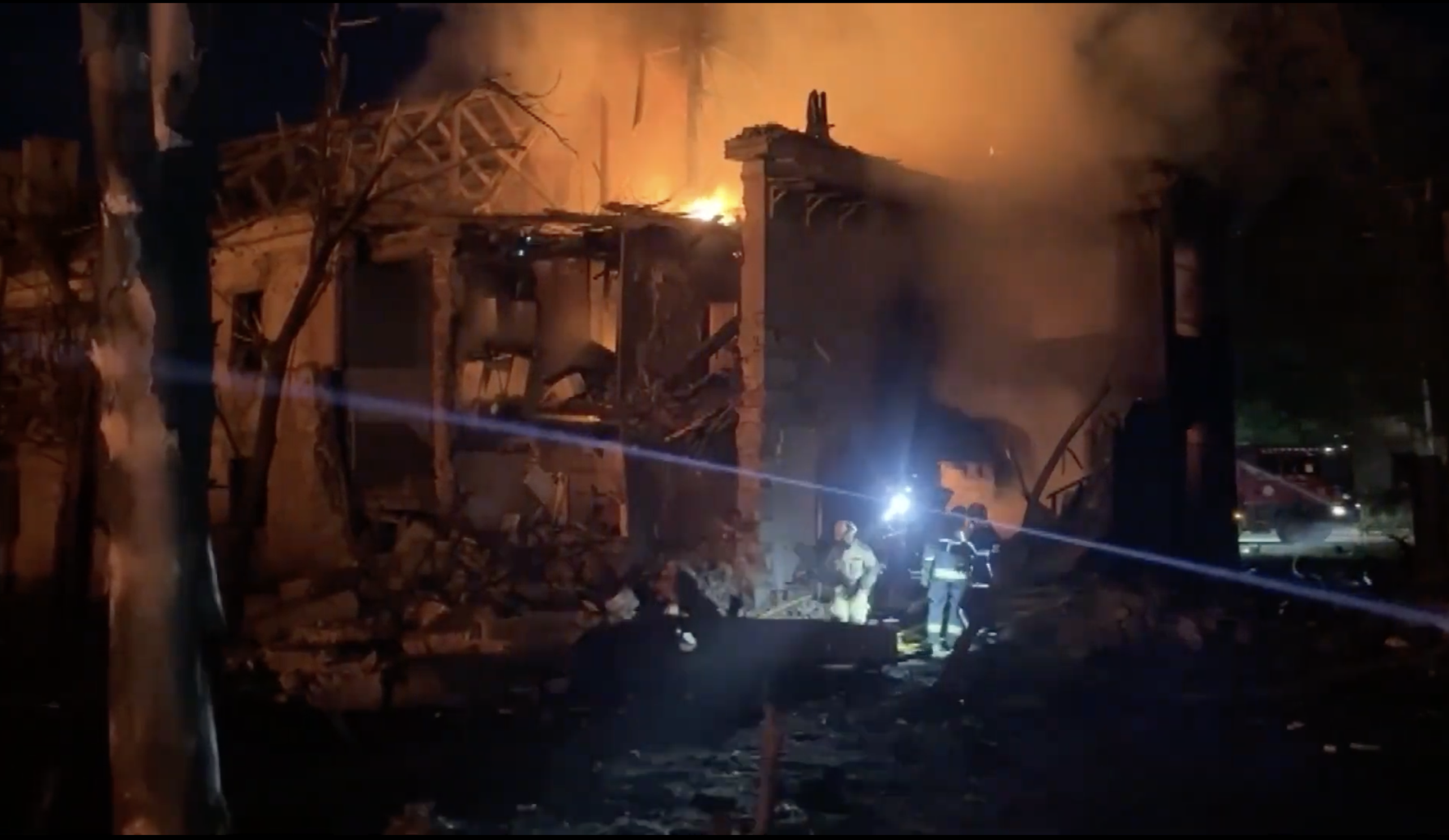
The crews had been digging through the ruins of the apartment building in Dnipro, UKraine for hours when someone called out:
“What is that buzzing?”
A moment later: “Air threat! Air threat! Air threat!”
While the crews were still searching for survivors of the April 27 missile strike, a Russian attack drone flew into a nearby hotel where people were still sheltering.
“I knew there were still people upstairs,” says Tetiana, the hotel’s manager. “The Shahed probably caught two of them as they were coming down. They were killed.”
The rescuers had nowhere to go but the damaged buildings around them. “There were wounded people, and we carried them out,” says Vladyslav Serebro, a fire and rescue unit commander. “Then another air raid alert began. We had to hide under a pool table because there was no time to leave the building.”
None of this was an accident of timing, says Anhelina Hrytsei, a researcher with Truth Hounds.
“A double-tap strike is a military tactic in which an initial strike hits a location that may be civilian or military,” says Hrytsei. “Then, after an interval ranging from about 10 minutes to several hours, when emergency services have arrived, a second strike is launched.”
Her organization documented the tactic in Ukraine as early as 2022, she said, “with its use intensifying every year.”
Since the start of the full-scale invasion, 116 Ukrainian emergency workers have been killed and more than 600 wounded, according to Ukraine’s state emergency service.
Emergency crews have adapted where they can. Personnel now stand watch on the sky while their colleagues continue to dig to find victims. Against drones and ballistic missiles near the front lines, that does not buy a lot of time.
“We had about 30 seconds,” says Artem Chehrin, a deputy commander with the state emergency service, of another strike. “Two missiles struck the same place where rescuers were putting out the fire.