
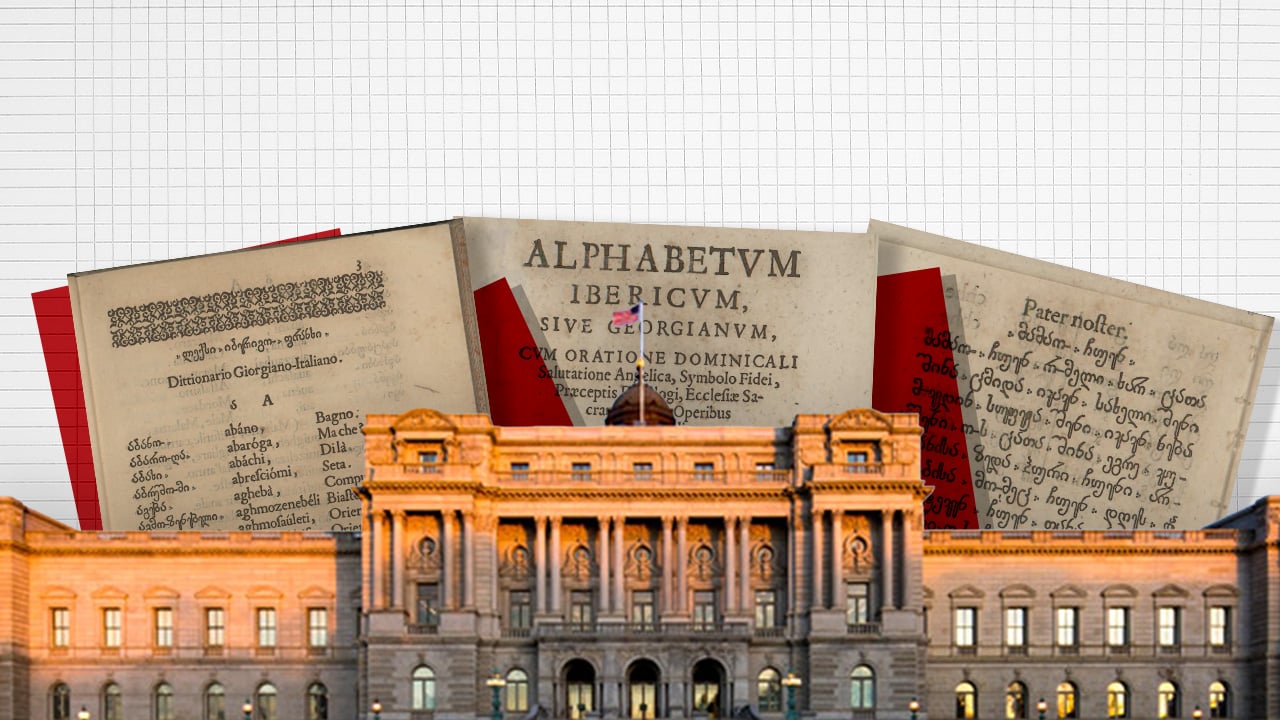
It is Rome, 1629. At the printing press of Propaganda Fide — the Catholic Church’s missionary printing house.
Two books are printed: a Georgian alphabet with prayers and a Georgian-Italian dictionary.
These are the first Georgian-language texts ever set in movable type.
Now, nearly four centuries later, the books that marked that moment are being held at the Library of Congress.
Originally created for Catholic missionaries, the books were meant to provide practical tools for clergy preparing to work in Georgia.
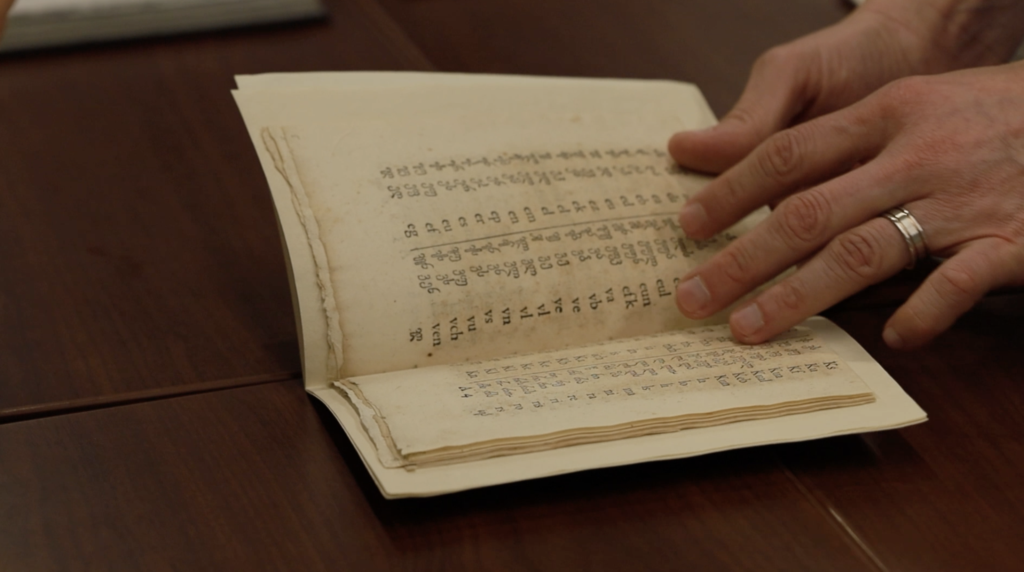
Khatchig Mouradian, an area specialist, gives Independence Avenue Media a firsthand look at these unique texts, first flipping through the pages of a book that contained the Georgian alphabet and prayers.
“We only have the Latin title, and the rest is in Georgian,” he says. “And this will allow the priest to also know how to pronounce the words and how to recite the prayer. This is, for example, Ave Maria.”
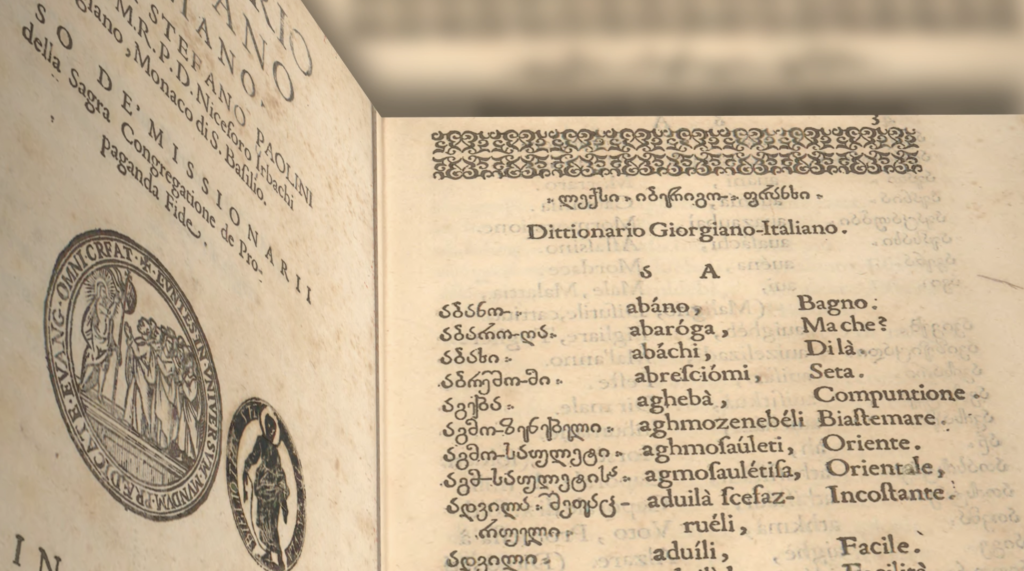
Next, Mouradian shows a Georgian dictionary.
“This is a phenomenal dictionary that, in the beginning, introduces the letters, and then we have the words in Georgian, their transliteration in Latin script, and then the Italian synonym for it,” he says. “In both of these cases, these were published with the assistance of Georgia’s representative in Rome. So, there was a Georgian person who was familiar with the alphabet, was familiar with the language of course, and he played a critical role in the process of printing.”
That representative is Nikoloz Irubakidze-Cholokashvili — a Georgian cleric, scholar, and diplomat sent to Rome by Georgian King Teimuraz I as part of an effort to seek support from Western Europe and the Papacy.
At the time, Georgia, one of the world’s earliest Christian nations, is facing sustained pressure and repeated invasions from Safavid Persia and the Ottoman Empire.
The effort does not succeed. No army comes. No alliance is formed. But before leaving Rome, Cholokashvili helps bring the Georgian language into print for the first time — some 80 years before printing begins in Georgia itself.
“These early publications in Georgian are important because they’re part of world history, they’re part of world heritage, they’re part of the history of printing,” says Mouradian.
Now, four centuries later, the books are a lasting testament to a 17th-century diplomatic mission that did not secure the support Georgia sought.
Watch Below: