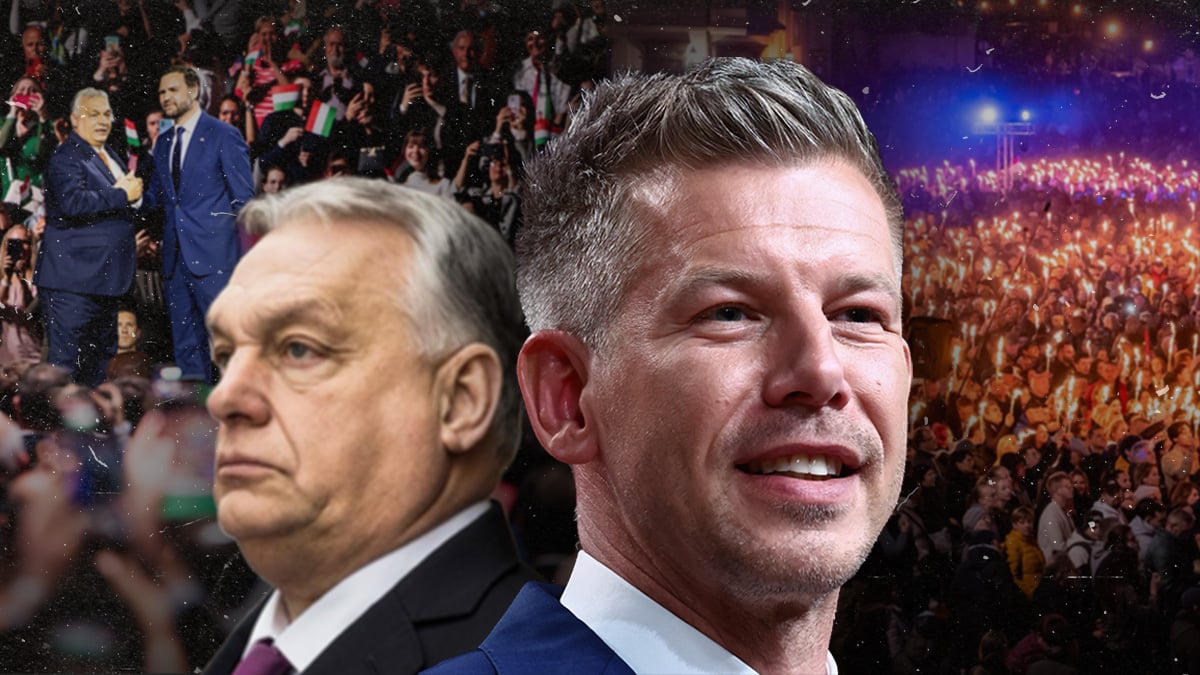
After 16 years in power, Hungarian Prime Minister Viktor Orban has been voted out — so now what?
Orban’s government reshaped Hungary’s institutions, challenged the European Union, and positioned itself as a model for parts of the populist right in Europe and the United States. But in an interview with Independence Avenue Media, Dalibor Rohac, a senior fellow at the American Enterprise Institute, says reshaping Hungary may not happen overnight.
Magyar will have to “undo the gradual colonization of the Hungarian state by the Fidesz party and Orban loyalists,” he says. “It’s true of the public administration, but it’s also true of the media, it’s true of the courts, it’s true of just many layers of political power, sometimes subtle soft power in Hungary. So I think that is actually not a task for four years. I think that’s more of a generational challenge to see how Hungary can deal with that legacy.”
Orban’s defeat also raises immediate questions about what comes next outside of Hungary — for the EU and Ukraine, and for governments in countries like Georgia, which Rohac says has sought to emulate Orban’s approach.
“I think both the MAGA movement and the Kremlin will try to look for other partners once they can’t count on Budapest,” says Rohac. “But whether Georgia is important enough to play the role, I think that’s far from obvious.”
The following interview, recorded on April 14, 2026, has been edited for length and clarity.
Kartlos Sharashenidze, Independence Avenue Media: Let me start with the big picture — after 16 years in power, what do you think ultimately made it possible to unseat Viktor Orban?
Dalibor Rohac, senior fellow at the American Enterprise Institute: I think it was a combination of two factors.
The first one was his actual track record as prime minister. For 16 years, Hungary has been moving from one of the most successful post-communist economies to a position of being one of the poorest member states in the EU. It is currently ranked by Transparency International as the most corrupt country in the European Union. It is a country that has lost several hundred thousand people, both to emigration and to population aging. It’s a country where very little has been delivered in terms of tangible improvements in the quality of life, in the quality of public services, and I think that has fueled popular discontent.
At the same time, the rise of Peter Magyar and of his Tisza party provided a new avenue for the opposition to mobilize, and for people to peel away from the base of the Fidesz party to an appealing center-right alternative.
Hungary saw efforts at unifying the opposition before, but those were not successful. I think it required the right sort of leadership and it also required the right sort of messaging. Tisza and Magyar delivered both of those.
Read More: Orban is Gone: What it Means for Ukraine, the EU, Russia and the U.S.
IAM: Help us understand Peter Magyar as a leader. He was an insider — a Fidesz insider — until just about two years ago. Does his background make him better equipped to undo what Orban built, or does it raise some questions about how far the changes will actually go?
Rohac: I suppose we’ll have to wait and see. Peter Magyar is somebody who is coming from the world of the Fidesz party itself. He is somebody who actually comes from a political family. He is a relative of one of Hungary’s former presidents. He was the husband of the justice minister in the Fidesz government [Judit Varga] who resigned in disgrace in a scandal that involved presidential pardons to people who were said to be involved in cover-ups of sex abuse taking place in one of the government-run orphanages.
As a Fidesz member, he had a reputation for being kind of difficult and complaining all the time and not really being happy with the way the country was moving.
In 2024 he decided on a radical break on the back of his ex-wife’s scandal and he built this center-right alternative, borrowing from Fidesz’s vocabulary.
So he’s a center-right figure. He is somebody who does not hide a sort of patriotic sentiment. He’s not a European federalist. He might say Euroskeptic things at times. He would even say things that are critical of Ukraine and of Ukraine’s rapid EU accession. But that has allowed him to compete effectively on Fidesz’s own playing field and he has done so quite successfully.
I think at the same time he’s also been watching the examples of other countries that have been dealing with legacies of authoritarian rule — especially Poland. And I think he will be trying to learn from the example of the current Tusk government to design the sort of reforms that [Hungary] needs.
It helps that he now enjoys a constitutional majority in Hungary’s parliament. That way he can actually pull off some of the measures that would otherwise be elusive. And so he’ll be able to kind of clean house. That carries its own risks. But I think he’s in a very good starting position relative to what most observers expected.
IAM: What are your expectations? What will actually change in the Hungarian system after the Orban era, in practical terms? And what do you expect to stay in place from the last 16 years, at least in the near term?
Rohac: Well, in very practical terms, Hungary will immediately stop being a troublemaker in the EU. I think Mr. Magyar signaled very clearly that he wants Hungary to be a constructive stakeholder. That doesn’t mean saying yes to everything but [there won’t be] the sort of bargaining that we saw with Mr. Orban, where he was trying to extract concessions from the EU in exchange for support to unrelated causes, whether they had to do with Ukraine or sanctions against Russia. I think those sorts of blackmail practices will cease. I think he’ll try to repair the regional alliances, especially the link between Budapest and Warsaw.
Domestically, he will face a worsening economic situation. Even before the war in Iran, Hungary had a lingering inflation problem that was getting worse. It has a substantial public debt that’s getting worse. The Orban government was making no effort to put Hungary’s public finances on a more sustainable path. So I think there’ll be some firefighting involved in these first months in office.
There’s also a quasi-independent budget office in Hungary that has the power to override political decisions on public spending under certain circumstances. That budget office is staffed by Fidesz loyalists, as is everything else in Hungary. So that will be probably the biggest task ahead — to undo the gradual colonization of the Hungarian state by the Fidesz party and by Orban loyalists. It’s true of the public administration, but it’s also true of the media, it’s true of the courts, it’s true of just many layers of political power, sometimes subtle soft power in Hungary. So I think that is actually not a task for four years. I think that’s more of a generational challenge to see how Hungary can deal with that legacy. But I think that is very high on his list of priorities.
IAM: You mentioned the European Union and Hungary’s relationship with it. Could you tell us more about your expectations — what does this change mean for how Hungary shows up in the EU, on Ukrainian funding, on sanctions, on the veto power Hungary was using under Orban? How quickly do you expect these changes to come?
Rohac: I think these changes will come pretty quickly. On the EU side, I think there’ll be a lot of willingness to help Magyar get off to a good start. So all of these funds that have been frozen, I think they will get unfrozen pretty quickly. And there might even be a kind of turning a blind eye to some of the questionable practices that might continue in the new government. I think everybody wants Mr. Magyar to succeed. Everybody wants to help him so that’s an almost immediate effect.
And Mr. Magyar also signaled that the ongoing Hungarian obstruction over the 90-billion-euro loan for Ukraine will be lifted, so Kyiv can expect those funds to start flowing. Hungary might not become a leader on the Ukraine dossier, but it will certainly be a constructive voice. That doesn’t mean saying ‘yes’ to everything. The question of Ukraine’s EU accession is a controversial question in Hungary so there’ll be complicated politics around that issue, but I think it just moves Hungary into a qualitatively different place than where it was before.
IAM: Let me ask you about the U.S. Why was Washington so visibly invested in an Orban win — the President, the Vice President, the Secretary of State — what was the U.S. interest?
Rohac: It is puzzling on the one hand, because Viktor Orban’s Hungary was not particularly well aligned with U.S. interests in Europe. It was a country that was working very closely with Russia, working very closely with China, it is a destination for massive Chinese investment. It also nurtured very strange ties with Iran over the years. Viktor Orban visited Tehran in 2015, and there have been very kind of lively contacts. Hungary is home to thousands of Iranian students as the only place in the EU where there were efforts to deepen cooperation on the non-sanctioned kind of matters, especially in business. So it certainly wasn’t the case that Hungary was doing Washington’s bidding in Europe.
However, Viktor Orban’s Hungary presented itself to conservative Washington, to Republican Washington, as a bulwark of traditional values, of social conservatism, of being a bulwark against mass migration. It was, in many cases, kind of recycling talking points overheard at CPAC conferences. And you see, by the way, the same rhetoric now coming from Tbilisi and from the Georgian Dream government. They talk about the deep state, some sort of global left-wing conspiracy led by George Soros, et cetera, et cetera.
So that was something that Hungarians really invested in and they spent serious money building connections with the far-right elements within the Republican Party, with the MAGA movement, the likes of the Heritage Foundation and other groups. And so there have been these kind of ideological affinities that existed. But those affinities explain more than anything else the strange commitment that the Trump administration had to Viktor Orban’s success.
IAM: Orban himself described what he was building as “illiberal democracy” — and for many on the populist right, Hungary was the model to follow, right? What does this result say about that model?
Rohac: The value of Hungary to some of the MAGA ideologues was in providing a real-life example of what their preferred political regime would look like. And now that Hungarian voters have given a fairly resounding ‘no’ to the political project, I think it’s going to be more of an uphill struggle for Mr. Trump and for people around him to sell that same vision to the American people. Not that Hungary would be particularly useful or important on the global stage, but right now I think Donald Trump looks more isolated, more lonely and kind of old and stale, rather than a messenger of a new form of right-of-center politics. His vision has been tested and hasn’t been particularly convincing.
IAM: You just mentioned Georgia, and a few months ago you wrote that Georgia’s ruling party, Georgian Dream, was trying to follow Orban’s playbook. Now that Orban is no longer in power, what does this mean for Georgian Dream and for Georgia?
Rohac: One immediate effect is that Georgian Dream has lost its most important ally in the EU. There was a lot of cheerleading that Orban was doing for the Georgian Dream government, trying to open doors. He didn’t have that much leverage or influence in the EU, but the sort of pretext of the accession process going on was something that was pushed by the Orban government. There is still Slovakia — the Georgian president recently visited Bratislava and there are ties between the Fico government and Georgian Dream, but Fico is really a marginal player and somebody who faces a very uncertain political future in his own country.
So, it’s questionable how Georgian Dream can keep pretending that it is nurturing some relations with Europe when it has basically lost all its European interlocutors. Perhaps that will mean that the MAGA movement will now try making inroads with Georgian Dream. I mean, that’s all very speculative. I think both the MAGA movement and the Kremlin will try to look for other partners once they can’t count on Budapest. But whether Georgia is important enough to play the role, I think that’s far from obvious.
IAM: You mentioned that Georgian Dream was trying to follow Orban’s playbook — but why do you think it hasn’t worked for them in terms of their relationship with the Trump administration? We haven’t seen any significant change in U.S.-Georgia relations since the new Trump administration came in. Why isn’t it working for Georgian Dream?
Rohac: I don’t have a good explanation for that, honestly, but I suppose part of the explanation is that in Orban’s case, the effort to reach out was sophisticated and involved a lot of human capital. For one, Orban already had preexisting ties to the center-right circles both in Europe and in the United States — goodwill that he could capitalize on. He also had a lot of human talent, a lot of very sophisticated people, who in some cases went to Budapest to run some of these organizations or were sent from Hungary to Western capitals and were able to charm people, and make persuasive intellectual arguments. There was a lot of money thrown at the problem, with lavish conferences and business-class trips to Budapest. I suspect the Georgian government has more severe financial constraints than the Hungarian government.
I don’t think Georgian Dream has been very good at this game. I don’t want to give them ideas. I don’t want them to get better at this game, but I’m still skeptical that they will be able to fill the shoes left by Viktor Orban in that space.
IAM: If this is more than just a Hungarian story, where do you expect the biggest impact to be felt first?
Rohac: Well, I think the biggest impact will be in Hungary’s immediate neighborhood. So Mr. Magyar and Donald Tusk, I think will be working very closely together to repair that tandem that once existed between Budapest and Warsaw. The Czechs and Slovaks, I think will follow eventually. So, I think it will reshape the region. It will reshape the perceptions of the region in the West.
My hope is that this part of Europe will stop being a problem child — the ungrateful kind of orphan who wandered into European institutions and NATO — but a real policy engine, whether it’s on defense or infrastructure. I mean, you look at the defense industrial base of Poland, you look at some of these joint ventures set up by the likes of Rheinmetall [German defense company] in Hungary to produce light infantry vehicles. So this could really be part of the backbone of the European defense industrial base going forward. I think we are perhaps for the first time in years, looking in a much more hopeful way at the future of the region.