
Brian Whitmore is a contributor writing for Independence Avenue Media. The views expressed are the author’s and do not necessarily reflect those of Independence Avenue Media.
Volodymyr Zelenskyy proposed meeting Vladimir Putin face-to-face at this week’s G7 summit in France. The Russian president responded by bombing one of Ukraine’s most significant spiritual and cultural landmarks — Kyiv’s 11th-century Pechersk Lavra, a UNESCO World Heritage Site also known as the Monastery of the Caves.
Rather than a demonstration of strength, the pre-dawn assault on Kyiv — which included 611 drones and 70 missiles including six Zircon hypersonic missiles and which killed at least five civilians — was a telltale sign of Russia’s weakness and desperation.
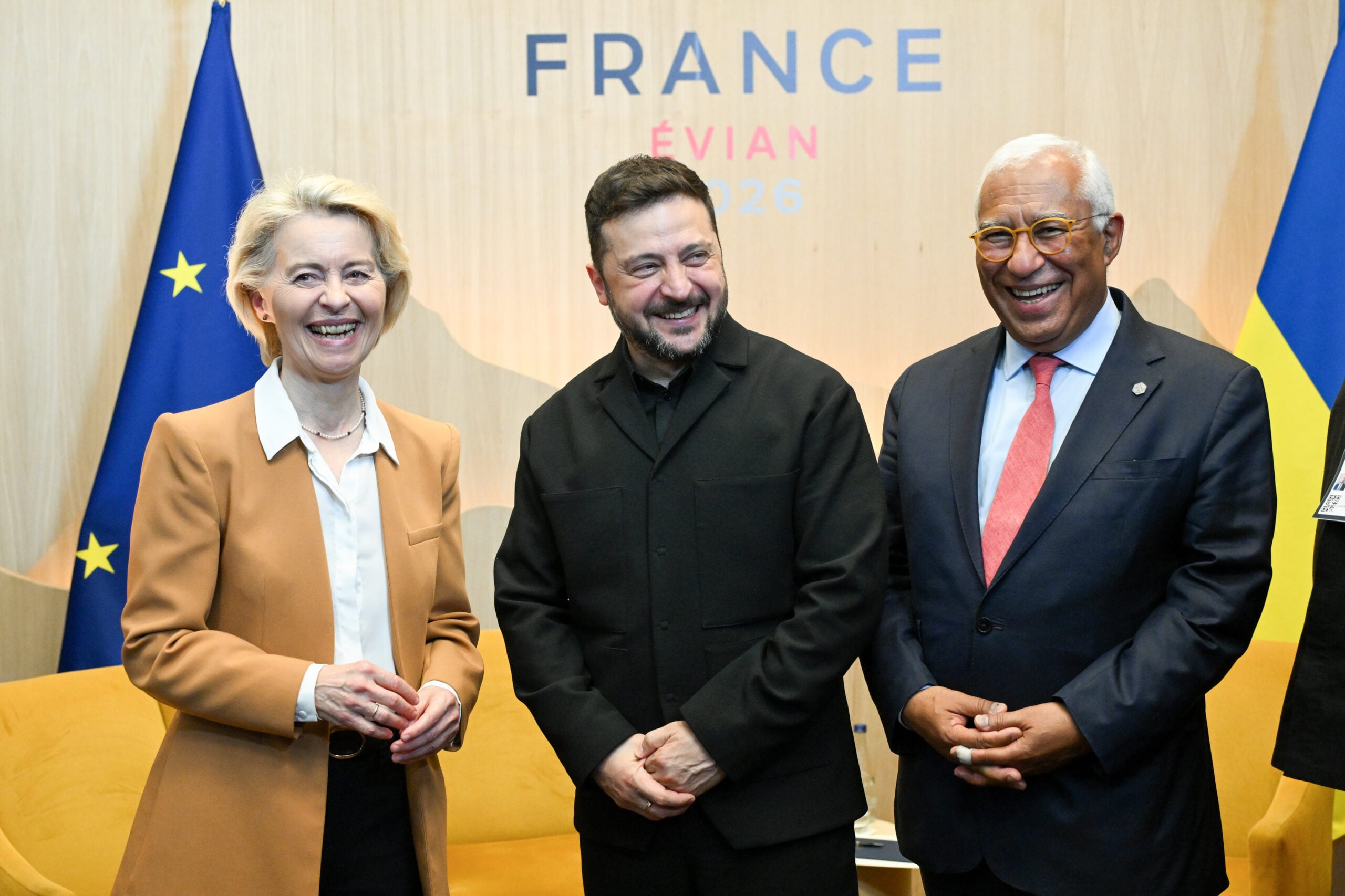
Officials arriving in Evian-les-Bains, the site of the G7 summit where Zelenskyy proposed meeting Putin, condemned Moscow in no uncertain terms and pledged to ramp up sanctions.
“For us in France this would be the equivalent of Notre Dame or Saint-Denis being bombed,” French Foreign Minister Jean-Noel Barrot said.
Estonian Foreign Minister Margus Tsakhna said Russia had “once again demonstrated its barbarity and contempt for humanity’s shared heritage.”
The European Union foreign policy chief, Kaja Kallas, called the attacks on civilians and the monastery “war crimes.”
And German Foreign Minister Johann Wadephul called the strike “vile attacks from the Russian side” and “evidence of Russia’s unwillingness to engage in peace negotiations.”
The Russian attack came just hours after Putin and U.S. President Donald Trump spoke on the telephone, which marks at least the fifth time a Russian aerial assault has followed a Trump-Putin call.
The Pechersk Lavra was not the only cultural and spiritual landmark Russia has struck recently. The June 15 strike also hit the Dovzhenko Film Studio in Kyiv. And recent aerial assaults have struck the Kharkiv Art Museum, the Chernobyl Museum, the National Art Museum of Ukraine, the Church of the Nativity of Christ, the Kyiv Municipal Academic Opera and Ballet Theatre, and the Kyiv Small Opera.
“The pattern of attacks on Ukrainian cultural institutions is too consistent to be accidental,” Roman Sheremeta, an associate professor of economics at Case Western Reserve University and the founding rector of American University Kyiv, wrote on Substack.
Moreover, according to the United Nations, May was the deadliest month of the war for Ukrainian civilians since the spring of 2022, with at least 274 killed and 1,800 injured.
But here’s the thing. As horrific and deplorable as Russia’s assaults on Ukrainian civilians and cultural heritage are, they also illustrate Putin’s weakness. Russia is losing at the front, Ukraine has turned the land bridge to Crimea into a death trap, effectively isolating the annexed peninsula, and Ukraine’s long-range strike capacity is hitting Moscow’s energy and military infrastructure inside Russia harder and with more precision than ever.
In response to the June 15 attack, Ukrainian drones struck a major oil refinery in Moscow twice this week in the largest attack on the Russian capital since the war began. The refinery, some 15 kilometers from the Kremlin, supplies approximately 40% of the Russian capital’s fuel needs.
“This is a fully justified response to Russian attacks on our cities and communities,” said Zelenskyy, who calls targeted strikes inside Russia “long range sanctions.”
The contrast is unmistakable. Losing on the battlefield, Russia is lashing out and conducting a campaign of terror against Ukrainian civilians and destruction of Ukrainian cultural and spiritual landmarks. In response, Ukraine is carefully and methodically targeting Russia’s energy and military infrastructure with devastating effectiveness and precision.
According to former Ukrainian defense minister Andriy Zagorodnyuk, Kyiv has not only turned the tide in the war through innovation, but particularly in the production, deployment, and use of drone technology at scale, it is actually revolutionizing warfare itself.
“The scale, speed, and scope of changes observed in Ukraine are already altering how wars are fought, how forces are organized, and how military power is generated and employed,” Zagorodnyuk wrote in a recent report for The Carnegie Endowment for International Peace. “They will define the next war, and they will benefit those who adapt faster, scale precision more cheaply, and turn innovation into combat power in real time.”
And as a result, Zelenskyy attended this year’s G7 summit, not with hat in hand seeking assistance, but in a position of strength — and not just as a consumer of security, but also as a provider.
In May, Zelenskyy announced that nearly 20 countries are engaged in talks with Ukraine to collaborate on drone production, technology exchange, and military expertise. Ukraine has already signed deals with Saudi Arabia, Qatar, the United Arab Emirates, Latvia, Lithuania, Germany, and Norway. And at the G7, Zelenskyy announced a new deal to “manufacture Ukrainian drone systems in Canada for the Armed Forces of Ukraine.”
Ukraine’s stronger position was not lost on most leaders at the G7.
European Commission President Ursula von der Leyen noted: “The tide is turning for Ukraine. The situation in 2026 is very different from 2025. Ukraine is bravely holding the front line. Russia’s fatigue is openly showing. That’s the time to double down on our support.”
At last year’s G7 in Alberta, leaders reportedly scrapped a plan to issue a strong statement of support for Ukraine after resistance from the Trump administration. Instead, they opted for a watered-down “chair statement” from the host, Canadian Prime Minister Mark Carney, praising Trump’s efforts to reach a peace deal.
Trump was still an outlier this week: “Look, we have nothing to do with it,” he said of Russia’s war against Ukraine. “It has no impact on us, other than we sell weapons” to Ukraine, he added.
But he did say that he would consider reimposing sanctions on Russian oil that had been partially lifted during the confrontation with Iran. And unlike last year, on Wednesday, all the G7 leaders, including Trump, issued a joint statement expressing “unwavering support” for Ukraine in defending its territorial integrity. The communique also called for additional air defense capacities for Ukraine and increased pressure on the Russian war economy.
Carney, for his part, was not the chair this year, but he had some thoughts on the matter himself: “It is a matter of time. Putin is going to lose this war.”
Collins: You said you think that Ukraine is going to ultimately win this war. When you were talking behind closed doors and the U.S. president was there, is that a view that he seemed to share as well?
— Scott Robertson (@sarobertson_) June 17, 2026
Carney: We, the Germans, the UK, the French, all are of the view that the… pic.twitter.com/5qinEQmZZ5