For the first time in nearly two decades, the May 9 Victory Day parade in Moscow will not include military hardware.
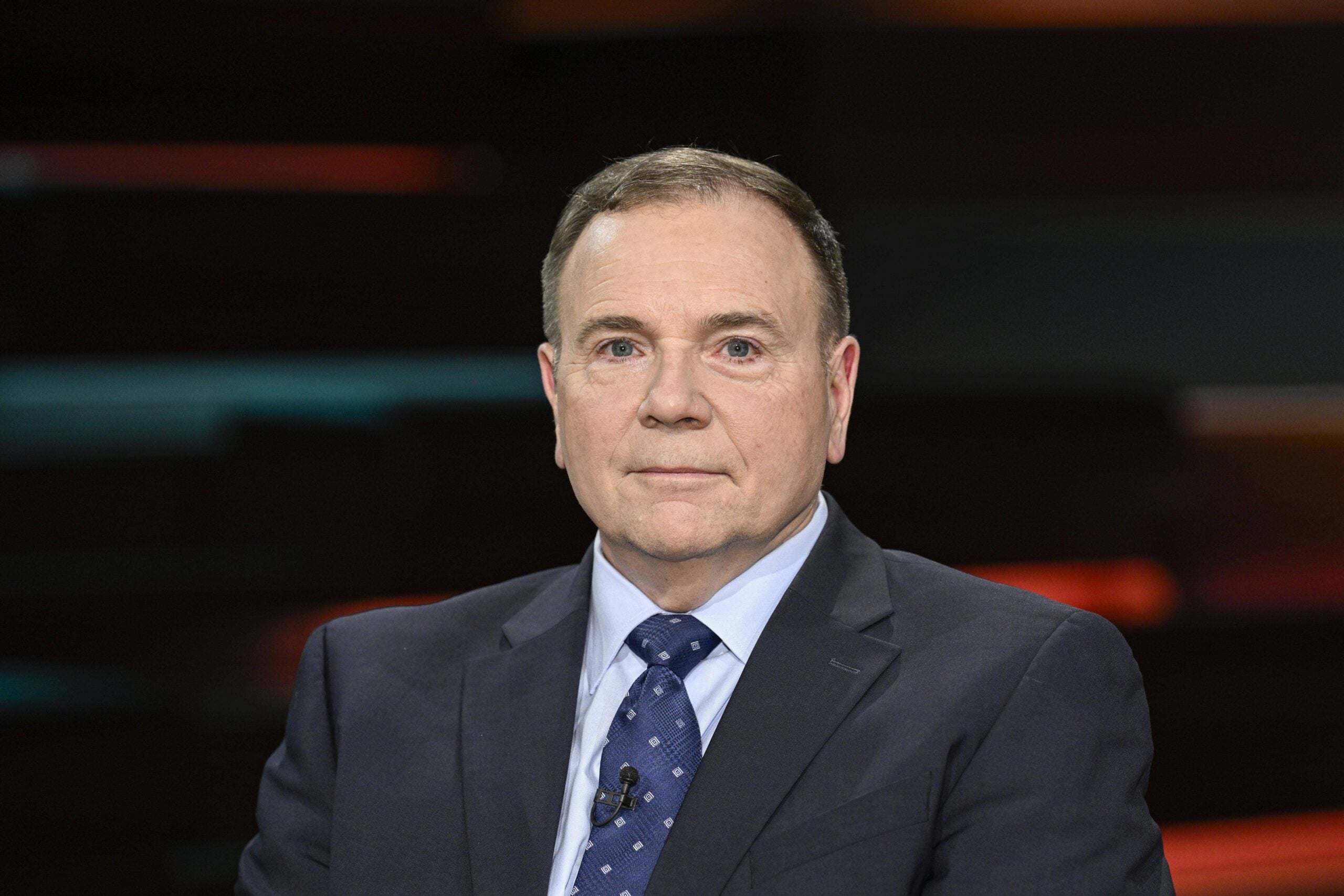
Retired Lt. Gen. Ben Hodges tells Independence Avenue Media that Russia is “scared that the Ukrainians will use this as an opportunity to create a gigantic embarrassment.” But in a wide-ranging interview, he says the larger context for the scaled back parade may be even more important.
“I really think this is Ukraine’s path to victory,” the former commanding general of U.S. Army Europe says of Ukraine’s expanding ability to strike targets deep into Russia. “That really changes things for the Russians. First of all, if they can’t export oil and gas, then they can’t sustain the war. But psychologically, also, it makes it very difficult for the Kremlin to paint this as a successful operation and that the Ukrainians are not nearly as good as the Russians and that sort of thing.”
Since March, Ukraine has been consistently striking Russian oil infrastructure, repeatedly hitting Baltic Sea ports in the north and refineries near the Black Sea in the south. Residents of Tuapse, in Russia’s Krasnodar region, have become frustrated with the government’s response to the attacks, which have brought on “poisonous” black rain caused by oil residue and soot from the burning refinery mixing with rainfall.
But despite what he sees as a shifting of momentum for Ukraine, Hodges says Ukraine’s air defenses remain a major vulnerability — and it’s one the rest of Europe should be reckoning with as well. No longer able to rely on the United States for Patriot batteries and other missile defense systems, Hodges calls on Europe to turn to its own industry to develop these tools domestically.
“If the Russians ever made the terrible decision to attack,” Hodges says, “I don’t believe that we are prepared in the rest of Europe, both in terms of capability or actually mentality.”
Hodges also speaks about the effect of the U.S. troop withdrawal from Germany and Armenia’s emphatic shift away from Russia to Europe.
The following interview, conducted on May 6, 2026, has been edited for length and clarity.
Ia Meurmishvili, editor-in-chief, Independence Avenue Media: Let’s start from May 9 — the parade in Moscow. Usually, [President Vladimir] Putin holds this parade as one of the biggest, if not the biggest, celebrations in the country. Over the past few years, throughout the war, many leaders have joined him on Red Square, but this year it’s going to be different. What do you make of this? Why are they limiting the parade? What’s going on?
Retired Lt. Gen. Ben Hodges, former commanding general of U.S. Army Europe: Well, it seems to be out of concern. They don’t want to have Ukrainian drones and Flamingos [Ukrainian domestically produced long-range missiles] landing on top of the parade. So they’ve reduced the profile. There’s a significant increase in security in and around the capital, including restrictions on internet activity. A lot of things are really tightening down because I think they are scared that the Ukrainians will use this as an opportunity to create a gigantic embarrassment. You could also speculate, well, they’re going to have troops there, but not the equipment because all the equipment has been focused on the war or maybe there are other reasons, but clearly the average Muscovite is going to recognize that it’s not the same big parade that it normally is.
MORE: With Expanding Deep Strike Capabilities, Ukraine Takes Aim at Russia’s Oil
IAM: Are the Ukrainians capable of posing that threat and inflicting any damage on Red Square?
Hodges: Yes, absolutely. They just hit a big posh apartment building a couple of days ago in Moscow and they struck one of the nicer neighborhoods. They don’t normally target civilian infrastructure, but they’ve demonstrated the reach. And of course, I really think this is Ukraine’s path to victory. They’ve developed such effective long-range precision weapons that can strike and hit oil and gas infrastructure, factories, headquarters, those kinds of things at great distance. That really changes things for the Russians. First of all, if they can’t export oil and gas, then they can’t sustain the war. But psychologically, also, it makes it very difficult for the Kremlin to paint this as a successful operation and that the Ukrainians are not nearly as good as the Russians and that sort of thing. So absolutely the Ukrainians have the ability. And also, it would not surprise me if we discover that they’ve infiltrated a lot of GRU [Russian military intelligence] and special operators in and around Moscow, that could be doing things as well.
MORE: Petraeus: Ukraine’s Drone Edge Is Reshaping the War — and the Future of Warfare
IAM: Ukraine’s head of drone development [Oleksandr Kamyshin] recently gave an interview to CBS [60 Minutes] where he said that the cost of killing one Russian is $1,000. Is Ukraine capable of depleting Russia from the manpower standpoint?
Hodges: I would say yes, assuming that Russia does not increase its ability to protect its own soldiers and degrade Ukraine’s ability to do what they’re doing. But I think we’ve had five months in a row now where Ukraine has killed or wounded more Russian soldiers than the Russians are able to recruit and bring into the armed forces. So that’s a negative trend, and if it continues, this sort of attrition becomes very, very problematic for the Russians. And of course, if you don’t have soldiers, then there’s less and less incentive for people to join even if there’s a significant financial bonus awaiting them. And if you don’t have soldiers who know how to do these things, they can’t be part of the training base. I mean, it’s one thing to recruit troops, but they have to go through training to be prepared if you expect they’re going to be effective on the battlefield. That’s manpower-intensive also.
So I think there’s a cumulative effect of what Ukraine is doing, which has contributed to what seems to me to be a major shift in the momentum of this war. Now, momentum can shift back, but right now, it looks like there’s no way that Russia can defeat Ukraine, and I don’t see anything changing to Russia’s benefit on the ground in the coming months because of what Ukraine has been able to do.
On the other hand, Ukraine still does not have the ability to push Russia all the way out. But I think the combination of stopping Russian ground operations and destroying Russia’s oil and gas infrastructure with their long-range precision weapons, that’s quite a combination.
The one thing that they haven’t been able to do is stop these Russian air and missile attacks against Ukrainian cities. You’ve been there, you know what it’s like. That’s still a problem.
IAM: Do you think it’s an impact of the Iran War that the Ukrainians are lacking some of those air defense systems and capabilities, or do you think it’s something else?
Hodges: Well, the Trump administration stopped supporting Ukraine with those kinds of things months ago, before the war against Iran. This was more of a policy decision than they’re just running out. Ukraine is going to have to keep working on developing their own capabilities. And then, of course, there’s the European countries, most of whom, like Germany, understand that their own security depends on Ukraine being successful. I would anticipate European countries looking to backfill some of those requirements that the United States should be filling but is not.
IAM: And do they have those capabilities? Can they actually step in?
Hodges: Not in adequate quantity. This air and missile defense, I think, is a major vulnerability that we have, not just in Ukraine, but across Europe. And this is a problem because if the Russians ever made the terrible decision to attack, let’s say, Latvia or Estonia or somewhere else in Europe, it will include drone strikes and missile attacks like what they do against Ukraine every night. I don’t believe that we are prepared in the rest of Europe, both in terms of capability or actually mentality. So, this is a problem. Nations have to turn to industry to provide what’s needed. Now, Ukrainians, of course, out of necessity, have been very effective at developing counter-drone technologies. Other people are working on this. Protection against drones is probably closer to reality than is adequate protection against cruise missiles.
More: Former Blinken Adviser: Russia and China May Benefit From Iran War
IAM: General, you live in Germany and you just mentioned Germany in your previous response — that Germany understands the stakes in Ukraine. What do you make of the decision to withdraw 5,000 U.S. troops from Germany? What kind of impact do you think that will have? Overall, how do you look at that decision?
Hodges: Well, of course I don’t like it. It’s something that they talked about in President Trump’s first administration, and ever since he came back into office for his second administration. I disagree with the decision. But what’s particularly unhelpful is the way this has been done. It doesn’t seem to be attached to a particular strategy that’s going to improve American security anywhere or is going to help protect American interests any better. In fact, it does the opposite. I think this decision will hurt us much more than it hurts Germany, even though President Trump clearly intended this to be seen as a punishment for the German Chancellor [Friedrich] Merz for his comments the other day about the U.S. and Iran. The fact is, from a German standpoint, it hurts psychologically that their longtime ally that they have trusted and stood alongside for decades is turning its back on them.
There’s a psychological aspect to this. And nobody should feel sorry for Germany. I mean, they have failed to do everything they should have done in terms of their own defense. There’s no doubt about that. But if you’re asking about impact, Germans are like, what’s going on with the United States? We don’t even recognize the U.S. anymore.
The impact on the United States is much more significant. As we do things, take steps that break down trust with our allies, that damages our ability for intelligence sharing, and we depend on allies for half of the intelligence that we use. Everything doesn’t come from an American satellite. And then of course, as I think most people are familiar with, the access that our allies give us, like Ramstein, the air base here in Germany, that’s essential. You cannot replicate what Ramstein means for us for projecting power into Africa, the Middle East, across the Mediterranean and throughout Europe.
This is a part of it. And I just worry that because of an act of petty retribution by the president against the Germans, he’s doing something that damages our strategic interests. This is not to say that European allies should not be doing more. But this was not done because he thought they’re not doing enough. This was done because he didn’t like what Merz had to say.
IAM: Do you anticipate anything from the German side as a tit-for-tat sort of reaction to this?
Hodges: I don’t. Every now and then in social media, you’ll see somebody say, well, let’s go ahead and shut down Ramstein, screw these guys. But I think most sober Germans, military leaders, political leaders, understand exactly what Merz said at the Munich Security Conference — that Europe needs the United States, the United States needs Europe. And Germany is our most important ally in Europe.
I think Europeans are going to take a longer-term view of this, recognizing it’ll never be the same again as it was. Don’t burn a bridge that you’re going to need later. So for me it’s frustrating because you can feel it — the lost trust. You know, people have always criticized American policy, that’s one thing, but they always looked up to the United States as an ideal, the defender of democracy, as that beacon. And now we’ve lost that. And I don’t think we’ll ever get that sort of respect back.
Days after U.S. President Donald Trump announced 5,000 troops would be pulled from Germany, Italian Prime Minister @GiorgiaMeloni said she would not support a U.S. troop withdrawal from Italy. She also defended Italy's commitment to @NATO and the United States, referencing… pic.twitter.com/PDU0kN2qCC
— Independence Avenue Media (@indavemedia) May 4, 2026
IAM: Let’s wrap up with the Caucasus. European leaders gathered in Yerevan [on May 4th for the 8th European Political Community Summit] What do you think of this meeting? Do you think Armenia, Azerbaijan, Georgia, and the Caucasus as a region is changing its position as it relates to Russia and Europe?
Hodges: I think that this is a fascinating development and I hope that European countries and the United States will be smart enough to understand and appreciate the opportunity of what the Caucasus mean as a portal between East and West, that everything doesn’t have to be controlled by Russia.
I think Russia is paying the price now for its failure to be a good ally to Armenia. I think in the last conflict between Armenia and Azerbaijan, Armenians really got left out by the Russians. The Russians have also failed to help their other allies, Syria and Venezuela. They’ve done very little to help Iran. I think the Armenians realize that it’s not good for their future to be handcuffed to Russia, that they can see the potential here.
The fact that so many European leaders went there also is a positive sign. I hope that this will continue. And I hope it has a positive effect on Georgia, that the Georgians see that their future is much better if you’re integrated into the West for your young people, for business, than it is to continue to be handcuffed to a corpse like Russia.