A former assistant secretary of state in the George W. Bush administration says the U.S. has become “a little less relevant” in efforts to end Russia’s war in Ukraine.
“Famously, the phrase was that the Ukrainians don’t have cards to play,” David Kramer, executive director of the George W. Bush Institute, tells Independence Avenue Media. “Ukrainians do have cards to play. We may have forfeited some of our cards in this situation.”
As the Trump administration has largely ended direct military support for Ukraine, Kramer says, Kyiv has adjusted by working more closely with European allies and forming new partnerships in the Gulf states.
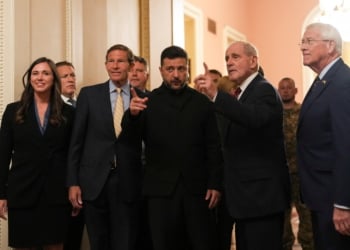
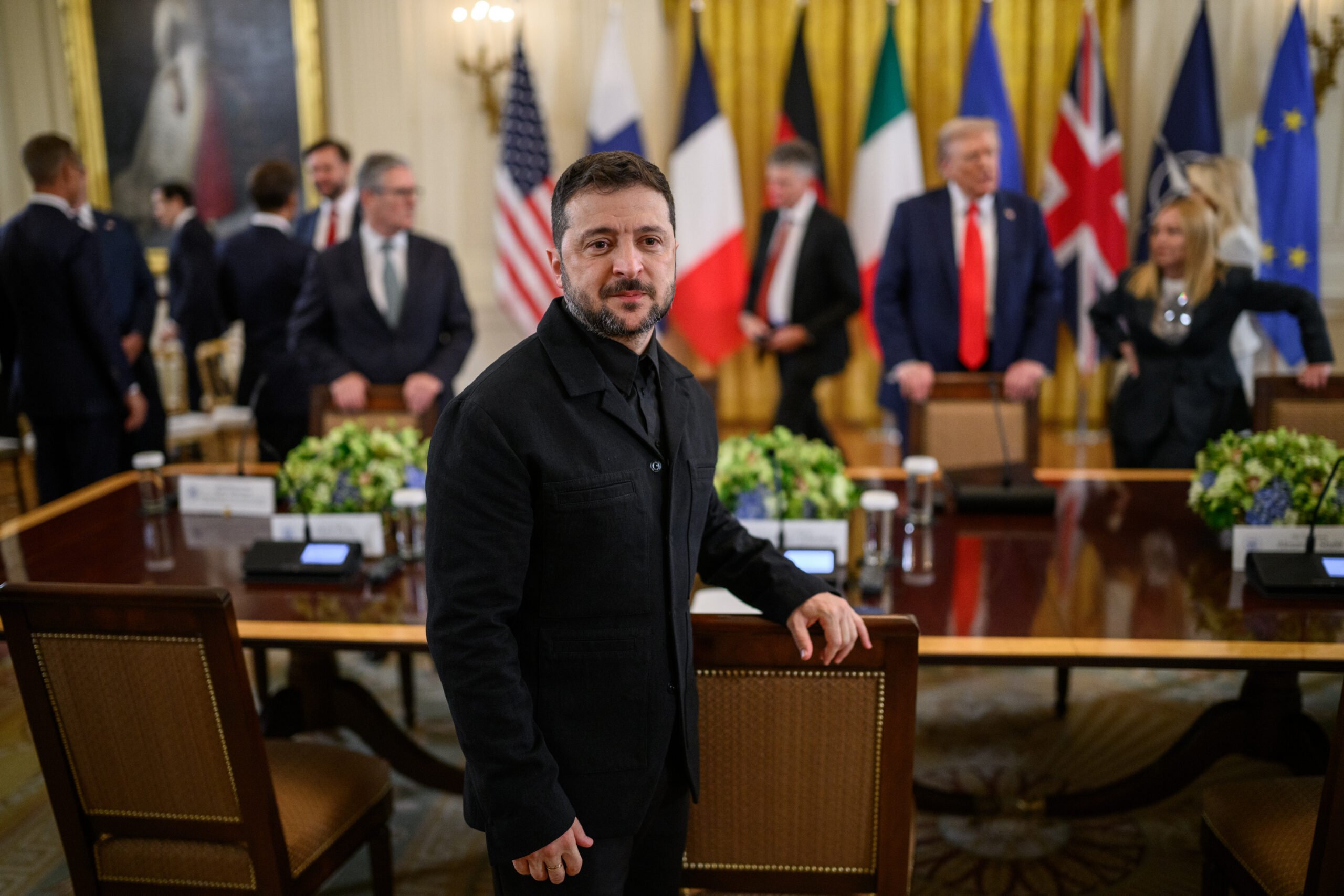
Meanwhile, with Ukrainian forces largely keeping Russia’s advance on the front lines in check, President Volodymyr Zelenskyy has sharpened his criticism of U.S. peace efforts. He has contradicted Secretary of State Marco Rubio’s accounts of the negotiations and has faulted U.S. special envoys Jared Kushner and Steve Witkoff for not yet visiting Ukraine.
Kramer, who argues Russia has never taken peace talks seriously, says reports of Kremlin help to Iran in targeting Americans only confirm that Russia remains an “existential threat.” He also warns that without firm U.S. security guarantees, Moscow could eventually turn its attention to the Baltics.
“I think Putin would like nothing more than to show that NATO is a ‘paper tiger,’” he says.
The following interview, recorded on April 23, 2026, has been edited for length and clarity.
Kiryl Sukhotski, Independence Avenue Media: This February, on the fourth anniversary of Russia’s full-scale invasion of Ukraine, you published an article named “Ukraine Can Still Win.” Four days later, the war in Iran started, and we’ve heard Ukrainian President Volodymyr Zelenskyy admitting this week that it has taken the focus away from Russia’s aggression against his country. So do you think that the situation has become more difficult for Ukraine because of Iran? And circling back to that article, can Ukraine still win?
David Kramer, executive director of the George W. Bush Institute and former deputy U.S. assistant secretary of state: I think Ukraine can still win, and we’ve seen some signs that Ukraine in the past month or so has been regaining more territory than Russia has been able to gain. Russia’s gain of Ukrainian territory — and let’s be clear, it is Ukrainian territory that Russia is trying to capture — has been minimal for the past year and a half, and it has come at enormous cost in terms of Russian lives. The Ukrainians, however, have been able to regain some of their territory that Russia had seized.
More: At the Front, Ukraine Is Holding the Line — and Finding Small Openings
But I think we also have seen since the outbreak of war between the United States and Iran, President Zelenskyy rather skillfully manage the diplomatic situation by going to the Gulf countries, signing deals with many of those countries, signing deals with Germany, with Norway and others. And so we see, I think, Ukraine increasingly looking to countries other than the United States. And that means that Ukraine will be more liberated.
We also see Ukraine, by the way, continuing its strikes against Russian energy facilities and storage sites. And that is causing significant problems. Some people were concerned that Russia would benefit from the higher price of oil, but Russian production is down somewhere between 20% and 40% as a result of Ukrainian strikes.
More: With Expanding Deep Strike Capabilities, Ukraine Takes Aim at Russia’s Oil
That is limiting Russia’s ability to benefit even with the waivers that the United States has offered on Russian oil that is already in tankers — a waiver that was extended, even though the secretary of treasury two days before had indicated he would not extend those waivers.
So in some respects, Ukraine is making progress. It is continuing. I think it still can win the war, not overnight. But we also see, in some respects, the United States becoming a little less relevant in the process. And that’s a new dynamic as well.
Sen. Chris Coons (@ChrisCoons): Do you disagree that Russia has received significant additional revenue from the sanctions relief?
— Independence Avenue Media (@indavemedia) April 22, 2026
Treasury Secretary Scott Bessent (@SecScottBessent): I couldn't disagree more. pic.twitter.com/e91P305ik9
IAM: Also, of course, the United States has scaled down the financial support to Ukraine — both current and promised support. And at the same time, President Zelenskyy said that the new peace talks on Ukraine cannot wait until the war in Iran is over. Do you think that’s a realistic expectation that those can actually happen before the U.S. disentangles itself from the events in the Middle East?
Kramer: Well, I think we’ve seen a few things. One is, as you rightly point out, Kiryl, the United States has essentially ended its assistance to Ukraine. There was the Prioritized Ukraine Requirements List — PURL as it’s known — where European nations can purchase American weapons that would then be sent on to Ukraine. But of course, we’ve seen a diversion of some of those weapons, that the United States was perhaps prepared to sell to the Europeans, going to the Middle East to deal with the situation there. That has meant a further reduction in U.S. assistance, even indirectly, through the PURL system.
Vice President JD Vance recently said that he thinks one of the proudest things that the Trump administration has accomplished was to end assistance to Ukraine. I obviously have a very different view of that. I think U.S. assistance should have continued. I think providing assistance to Ukraine is in vital U.S. interests.
But I also recognize that the current administration has different priorities and feels that the Europeans should be taking on more of the share of the burden. And there, I think, we have seen Europeans step up more.
In terms of negotiations, there have been reports of the possibility that [U.S. special envoys] Steve Witkoff and Jared Kushner would be going to Moscow again, which I think for Witkoff would be the seventh or eighth time. Neither one of them has been to Kyiv, the Ukrainian capital, which I think sends a terrible signal. And there have been reports that they might be going to Ukraine, but nothing has been confirmed on that level.
The problem with the negotiation track is that the Russians aren’t interested. We’ve just heard recently Russian Foreign Minister [Sergey] Lavrov say that negotiations aren’t a priority for Russia, and yet then again Putin says he’s willing to meet. So there are conflicting messages from Russia — but follow Russia’s actions, not Russia’s words, and Russian actions continue with indiscriminate bombing of Ukraine as well as deliberate targeting of civilians. The Russians are showing no interest whatsoever [in peace], even though their economic situation is increasingly dire.
IAM: At the same time, President Trump has been saying several times that Vladimir Putin wants to make a deal, and you say that there’s no evidence of that. So what does the White House actually want to achieve now when it comes to Russia’s war in Ukraine?
Kramer: You’re right that the president has said numerous times that Putin is interested in a deal. There have been times where President Trump has said Zelenskyy is a bigger problem than Putin. I think that is totally wrong.
Zelenskyy has shown tremendous flexibility on the Ukrainian side, including even looking into the possibility of conducting elections, which would be extraordinarily difficult to do with a war still going on. Ukraine is under martial law. Why? Because Russia invaded Ukraine — a full-scale invasion in February 2022.
President Zelenskyy has indicated a willingness to freeze the fighting where it is right now and then deal with the land issue, which also includes a lot of people, by the way, through negotiations. Putin has shown no interest in that. Putin wants to first destroy Ukraine, take over Ukraine, remove its government, demilitarize the country, and make it permanently neutral, and all of those demands on the Russian side are unacceptable to the Ukrainian side. The Ukrainians have shown more flexibility, but the Russians have shown zero flexibility.
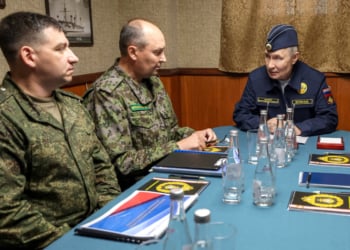
And yet the war is not going well. We’ve seen signs where the Ukrainians are killing and injuring more Russians than the Russians are able to recruit. The Russian regions are increasing the bonuses they pay for Russians to join the military campaign. That’s a sign that they’re getting desperate. And we’ve seen Africans and others who have been in Russia being forced into serving on the Russian front lines. The Russian military campaign is not going well despite what the Russian [Army] Chief of Staff [Valery] Gerasimov and others, including [Defense Minister Andrei] Belousov, may be telling Putin that the things are going great.
More: Petraeus: Ukraine’s Drone Edge Is Reshaping the War — and the Future of Warfare
IAM: You say that Putin wants to destroy Ukraine, but what does President Trump want there? What’s his objective right now?
Kramer: I think President Trump genuinely wants the war to end. I think particularly in the beginning of his second term, he wanted to see this fighting end.
IAM: Does he know how?
Kramer: Does he know how? We haven’t seen any results so far. I mean, there had been talks. The problem has been that most of the talks have been between the U.S. side and the Ukrainian side, or the U.S. side and the Russian side. There have only been a few occasions where the Ukrainians and the Russians have actually gotten together and we have seen no indication that the Russian side takes those talks seriously.
They sent [Kremlin envoy] Vladimir Medinsky, who frankly is not empowered to do anything other than to say nonsensical things at these negotiations. The Russians are not taking this process seriously.
The problem that the Ukrainians and the Trump administration face is that Putin thinks he is winning based on the lousy information he’s getting from his generals and defense ministry and intelligence agencies, and he thinks he can outlast the West. And so based on those two things, Putin thinks he can hang in there and continue this war.
So I think President Trump does genuinely want to end the war. However, it has to end in a way that is just and doesn’t lead to a resumption of fighting down the road. It also cannot be a situation, in my view, where the United States is pressuring Ukraine to surrender territory, because on that territory, there are hundreds of thousands of Ukrainians who should not be subjected or consigned to living under Russian control.
So it’s up to the Ukrainian people to decide what the conditions of an end to this war should be. The United States should facilitate that, but we should not be making demands of the Ukrainian side.
We have not applied, in my view, sufficient pressure on the Russian side. Yes, there were sanctions imposed on Lukoil and Rosneft in October, but as I mentioned already, there have been waivers on those sanctions for Russian oil that is already in tankers because of the global energy crisis resulting from the war with Iran.
So there needs to be much more pressure on the Russian side from the United States and from our European allies. There needs to be a resumption of U.S. military assistance. I don’t envision that will happen, but that’s what I believe should be done.
IAM: You mentioned U.S. envoys Steve Witkoff and Jared Kushner. Witkoff has been to Moscow eight times and met with Putin on multiple occasions, and we’ve heard President Zelenskyy actually criticizing them for not visiting Kyiv even once. Does this open criticism by Zelenskyy mean that he is again growing exasperated with the Trump administration?
Kramer: I think we have seen signs of that. We’ve seen President Zelenskyy more critical of the U.S. approach to the war. He has voiced criticism of the fact that Witkoff and Kushner have not been to Ukraine. Frankly, no top U.S. official has been to Ukraine in the current administration. We’ve seen members of Congress go, but no one from the administration. [Some administration officials have visited Kyiv, including Treasury Secretary Scott Bessent and Army Secretary Dan Driscoll. Keith Kellogg, the administration’s special envoy to Ukraine, visited on multiple occasions, but left his post late last year and has not been replaced.]
And we also see, at least according to media reports, pressure on the Ukrainians to stop hitting Russian energy facilities because of the need to have as much oil and gas available in light of the global energy crisis — Ukrainians are ignoring that.
And what I think we have seen is because the United States ended assistance to Ukraine, it also has lost leverage with the Ukrainians. The Ukrainians have now adjusted and are no longer looking to the United States for military assistance or financial assistance, even humanitarian assistance. And as a result, we don’t have as much leverage.
Famously, the phrase was that the Ukrainians don’t have cards to play. Ukrainians do have cards to play. We may have forfeited some of our cards in this situation. And that means that President Zelenskyy is more likely to offer criticism and ignore what the United States is saying.
IAM: In one of your recent articles, you said that what’s happening between Russia and Iran should remove any doubt that Russia under Vladimir Putin is one of the gravest threats to the United States today. Why do you think the White House thinks differently by the look of things?
Kramer: Good question. I don’t know. But just to underscore the point, there have been very credible media reports that Russian intelligence agencies have been providing information to the Iranians in order to target U.S. military facilities and kill Americans. There have even been reports that the Russians have been providing weapons to the Iranians as they are fighting against the United States.
That should set off alarms, frankly, that the Russians are aiding and abetting the Iranians to try to kill Americans. And yet it seems to be fluffed off as though it’s not significant, or just because we’re providing assistance to the Ukrainians. And we are, by the way, continuing to provide intelligence assistance to Ukrainians — that is very important. But that has been cited as almost a justification explaining why the Russians may be providing support for Iran: it’s tit for tat.
I think we should view that as a major threat. If we didn’t view Russia as a threat before the war with Iran, we should definitely view them as a threat now because they are siding with Iran against the United States. There’s no question about it.
Russia is being accused of arming Iran with intelligence, drone technology, and tactics, helping Tehran attack U.S. forces in the region. Experts testifying before the U.S. Helsinki Commission warned that this is part of a growing anti-American alliance with China and North… pic.twitter.com/mIjATHuZS4
— Independence Avenue Media (@indavemedia) April 27, 2026
But they also were a threat before, whether it’s through hybrid activities, election interference, trying to cut cables undersea, with targeted assassinations, blowing up an arms depot in the Czech Republic, threats to NATO, violation of NATO airspace and others. So there are plenty of reasons to view Russia as an existential threat, but the most recent is Russian support for Iran.
IAM: And it does probably point to the fact that Russia feels somewhat emboldened in its standoff with the West. Do you think it’s just, you know, rhetoric, disruption attempts, the hybrid warfare if you wish, maybe posturing — or is there some sort of a plan in Russia to take on the West in a more meaningful way?
Kramer: Russia has its hands full with Ukraine, there’s no question about it. But if we let them off the hook, if we don’t apply the necessary pressure, if they somehow — and I don’t envision this — but if the Russians were somehow able to turn the tables and really make inroads more seriously than they have in Ukraine, then Russia could feel emboldened and decide it’s time to go after another country.
It could be Moldova — Russia already occupies the Transnistria region. It could be Georgia, where Russia occupies 20% of Georgian territory. But they’ve also been talking about threats to the Baltic states, for example, where they claim that the Baltic states have been allowing Ukrainian drones to fly over Baltic territory and then hit Russia in the far northwest. And so that has raised some concerns that Russia may be setting its sights on a NATO member state.
And that then brings up questions about whether the United States would come to the aid of a NATO member, a Baltic state, which by the way, their defense spending is much higher than 2%, they’ve been very supportive of the United States in various operations around the world. But questions are about whether the United States would be there should Russia attack. That is down the road, but it can’t be ruled out.
IAM: Do you think it will? Do you think actually the current administration will come to the defense of a Baltic state or even Poland if it were to be attacked by Russia?
Kramer: I want to think that the United States will, because for decades the assumption has been both in Washington and in Moscow, as well as in other European capitals, that the United States would be there under an Article 5 commitment — that an attack on one would be considered an attack on all, including considered by the United States.
I think there have been some questions raised, not least by the president’s rhetoric, where he has expressed real disappointment with, in his view, NATO’s lack of support for the U.S. campaign against Iran, for the unwillingness to support reopening of the Strait of Hormuz. And I think there have been some questions raised about the ironclad commitment of the United States. Article 5, as you know, has only been invoked one time, and that was by our fellow NATO allies after the United States was attacked on 9/11 by al-Qaida.
But there are some questions. And if we’re wondering about that, then the Russians might be wondering about that too.
And key to deterrence is to have Russian officials think that the United States would in fact come to the aid of a fellow NATO member state and I think reaffirming that would be very important to do. There’ll be a NATO summit coming up that would be a good opportunity to do so.
IAM: And if you talk to Europeans, they actually go on record saying publicly that they see this threat as credible, and you just described how Putin may be feeling emboldened by that perceived lack of commitment from Washington. How realistic do you think the threat is that Russia can actually try something against a NATO member state in the next, say, two to three years?
Kramer: I think Putin would like nothing more than to show that NATO is a “paper tiger” — to borrow a phrase that has been out there recently. And I think if he could get away with some — not necessarily a full-scale invasion — but a kind of hybrid action, as you indicated, I think he would relish the opportunity to show that NATO will not be there in a time of need for another NATO member state.
President Donald #Trump sharply criticized #NATO allies for failing to back U.S. military action against Iran and said a U.S. exit from the alliance is now "beyond reconsideration."
— Independence Avenue Media (@indavemedia) April 4, 2026
Here are some of the things Trump has said about NATO during his second term in office. pic.twitter.com/78UIQgmR5j
I think Putin has had a certain degree of respect for NATO since he assumed the presidency back in 2000. And I think he would like to show that NATO is in fact not all that. But that’s risky.
Moreover, right now, I don’t think he has the capacity to do so. As I said before, he has his hands full in Ukraine, and taking on a campaign against Estonia, Latvia, and Lithuania, which I think would be the most likely targets should he move in this direction, would stretch his forces even more.
I do think European countries would respond. I don’t have much doubt that particularly the new NATO members, Finland and Sweden, would respond. I think Germany would respond. And perhaps most importantly, I think the UK and France would respond. The reason I say they’re most important in this is because they do have nuclear weapons and that matters when it comes to deterrence with NATO and Article 5.
More: Former U.S. Ambassador to NATO: U.S. Exit Would Be ‘Devastating’