
• ქართული
  • Українська
  • Русский
Donate Now
No Result
View All Result
Independence Avenue Media
  • Home
  • SPOTLIGHT
  • INTERVIEW
  • DEEP DIVE
  • VIDEO
  • Forged by War
  • DIASPORA
Independence Avenue Media
  • Home
  • SPOTLIGHT
  • INTERVIEW
  • DEEP DIVE
  • VIDEO
  • Forged by War
  • DIASPORA
No Result
View All Result
Independence Avenue Media
Home DIASPORA

How the Georgian Language First Came to Print — in Rome, in 1629

The hidden history housed at the Library of Congress

Kartlos Sharashenidzeby Kartlos Sharashenidze
April 17, 2026
How the Georgian Language First Came to Print — in Rome, in 1629 – Independence Avenue Media
A A
Summarize with ChatGPTShare on X

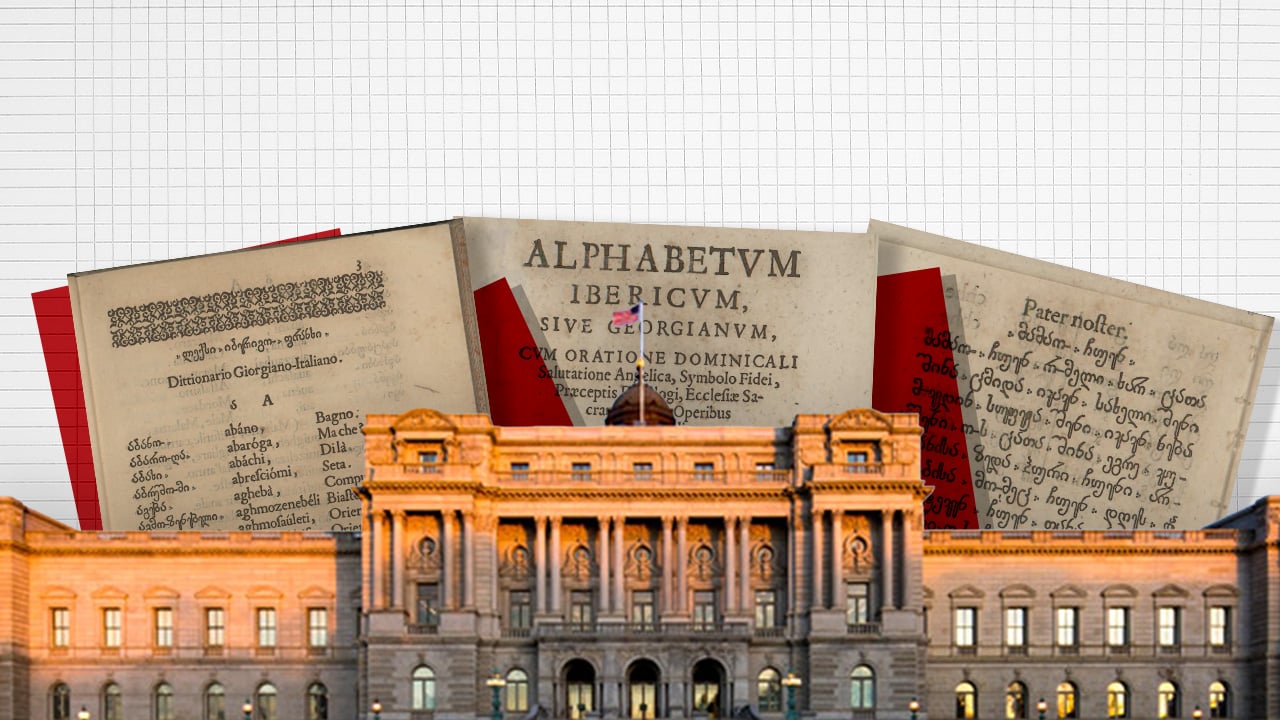
It is Rome, 1629. At the printing press of Propaganda Fide — the Catholic Church’s missionary printing house.

Two books are printed: a Georgian alphabet with prayers and a Georgian-Italian dictionary.

These are the first Georgian-language texts ever set in movable type.

Now, nearly four centuries later, the books that marked that moment are being held at the Library of Congress.

Originally created for Catholic missionaries, the books were meant to provide practical tools for clergy preparing to work in Georgia.

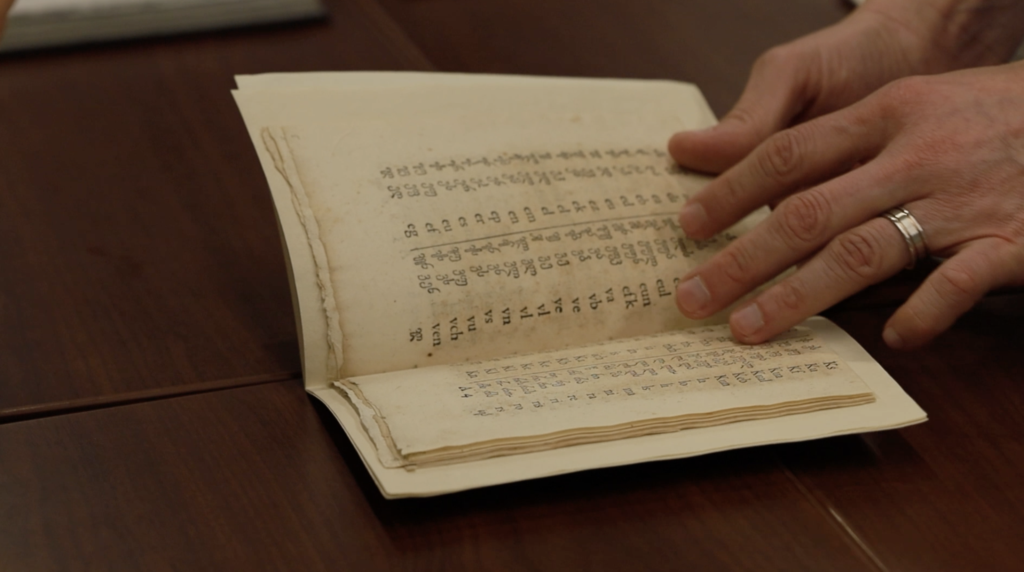
Khatchig Mouradian, an area specialist, gives Independence Avenue Media a firsthand look at these unique texts, first flipping through the pages of a book that contained the Georgian alphabet and prayers.

“We only have the Latin title, and the rest is in Georgian,” he says. “And this will allow the priest to also know how to pronounce the words and how to recite the prayer. This is, for example, Ave Maria.”
How the Georgian Language First Came to Print — in Rome, in 1629 – Independence Avenue Media

Next, Mouradian shows a Georgian dictionary.

“This is a phenomenal dictionary that, in the beginning, introduces the letters, and then we have the words in Georgian, their transliteration in Latin script, and then the Italian synonym for it,” he says. “In both of these cases, these were published with the assistance of Georgia’s representative in Rome. So, there was a Georgian person who was familiar with the alphabet, was familiar with the language of course, and he played a critical role in the process of printing.”
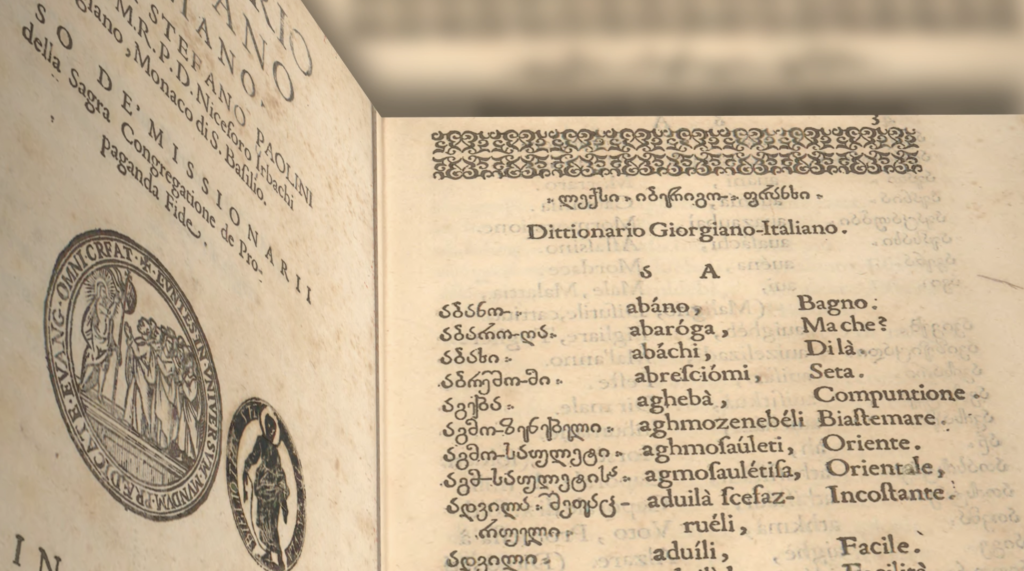
Georgian–Italian dictionary

That representative is Nikoloz Irubakidze-Cholokashvili — a Georgian cleric, scholar, and diplomat sent to Rome by Georgian King Teimuraz I as part of an effort to seek support from Western Europe and the Papacy.

At the time, Georgia, one of the world’s earliest Christian nations, is facing sustained pressure and repeated invasions from Safavid Persia and the Ottoman Empire.

The effort does not succeed. No army comes. No alliance is formed. But before leaving Rome, Cholokashvili helps bring the Georgian language into print for the first time — some 80 years before printing begins in Georgia itself.

“These early publications in Georgian are important because they’re part of world history, they’re part of world heritage, they’re part of the history of printing,” says Mouradian.

Now, four centuries later, the books are a lasting testament to a 17th-century diplomatic mission that did not secure the support Georgia sought.

Watch Below:

Tags: Christianitygeorgiageorgian languagehistory
Kartlos Sharashenidze

Kartlos Sharashenidze

Kartlos Sharashenidze is co-founder, executive editor, and Georgian Service managing editor of Independence Avenue Media, with expertise in U.S. foreign policy and Eurasian geopolitics. A former documentarian and reporter at Voice of America, he got his start in his native Georgia at Georgian Public Broadcaster and Imedi TV.

Recommended Reading

Trump's Belarus Pivot: Why Washington Is Engaging Lukashenko After Years of Isolation – Independence Avenue Media
INTERVIEW

Trump’s Belarus Pivot: Why Washington Is Engaging Lukashenko After Years of Isolation

by Kiryl Sukhotski
0
edited images of Viktor Orbán and Péter Magyar in Hungary’s election scene
INTERVIEW

A ‘Generational Challenge’ — What Changes After Orban

by Kartlos Sharashenidze
0
Jaap Arriens via Reuters Connect
DEEP DIVE

Orban is Gone: What it Means for Ukraine, the EU, Russia and the U.S. 

by Glenn Kates
0
logo-dark

To provide clarity in a complex world through fact-based storytelling about American policy, politics, and society.

Quick Navigation

  • Home
  • About Us
  • Contact
  • Privacy Policy
Donate Now

© 2025 Independence Avenue Media

Welcome Back!

Login to your account below

Forgotten Password?

Retrieve your password

Please enter your username or email address to reset your password.

Log In

Add New Playlist

No Result
View All Result
  • English
    • English
    • ქართული
    • Українська
    • Русский
  • Home
  • USA
  • INTERVIEW
  • DEEP DIVE
  • Forged by War
  • DIASPORA
  • VIDEO

© 2025 Independence Avenue Media