Anna Borshchevskaya, a senior fellow at the Washington Institute for Near East Policy, tells Independence Avenue Media that the advantages for Moscow of the current Middle East conflict go deeper than the short-term windfall from the rising price of oil and a temporary lifting of Western sanctions.
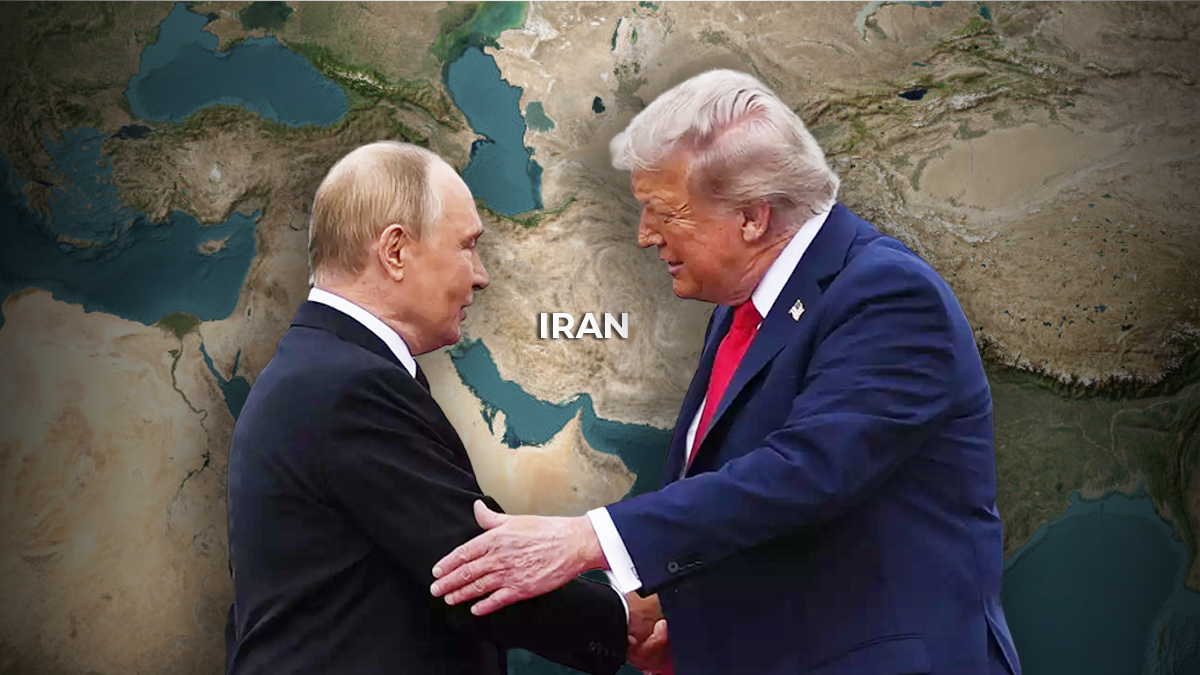
Russian President Vladimir Putin, she says, is “playing a bigger game” in which he presents Russia as an “indispensable” player capable of mediating an end to the crisis to the U.S., the Gulf states, and Israel — all while providing intelligence to the Iranian regime that helps it continue to fight.
All the while, Russia continues to prioritize its maximalist goals in Ukraine, while hoping the United States and the West will be focused elsewhere.
“This is a bigger chess board, where Ukraine is the priority, but the Middle East plays a very important integral part of this current priority,” Borshchevskaya, who previously consulted for the U.S. State Department, says. Meanwhile, “the United States and the West at large are clearly distracted from Ukraine, with or without oil prices.”
The following interview, recorded on March 17, 2026, has been edited for length and clarity.
Kiryl Sukhotski, Independence Avenue Media: Is Vladimir Putin happy with everything that’s going on in Iran right now?
Anna Borshchevskaya, senior fellow at the Washington Institute for Near East Policy: In the short term, Vladimir Putin is happy for sure. And the most obvious reason that we can observe, of course, is the rise in oil prices as well as the temporary lifting of the sanctions on Russia.
IAM: So when it comes to oil, while obviously this is turning into the worst-case scenario for the West, do you think it is the best-case scenario for Russia right now?
Borshchevskaya: Well, it’s hard to see how much better it can get unless the lifting of the sanctions becomes permanent. And that, to be sure, is unlikely. The question is, again, how long is it going to last? How long will this additional revenue that the Kremlin is raking in right now continue? Is it going to be weeks? Is it going to be months? That of course makes a difference.
But even as we’ve seen in one short week already, the Kremlin has been reportedly making over $150 million per day that it is going to throw at its war machine in Ukraine of course — and it comes at a time when Russia was doing poorly on the battlefield. So again, at least for the short term, for the immediate term, this turn of events is very positive for Putin.
IAM: Do you think that Putin is betting on those short-term advantages becoming actually a long-term advantage? For instance, the lifting of the sanctions that you mentioned — they’re lifted for one month currently. Is he betting that he may convince President Trump and other Western leaders that there are actually merits to having them lifted for longer?
Borshchevskaya: I think Putin is playing a bigger game here. If we take a step back and look at the bigger picture, sanctions and prices of oil are only one piece of the puzzle.
The strikes on the Iranian regime raise a lot of questions for Russia, but at the same time the entire ongoing chaos that the Middle East finds itself in presents bigger opportunities for Russia that are not short-term, that are long-term, or at least medium-term.
One is simply the fact that the United States and the West at large are clearly distracted from Ukraine, with or without oil prices. The overall shift of Western attention to the Middle East theater away from Europe is a big advantage to Russia.
The fact of the matter is, any crisis presents an opportunity for somebody who knows how to manage it — to take advantage of it — and Putin knows how to take advantage of crises. This is a deliberate approach that he’s pursuing. It’s not accidental.
So what Putin is doing is two things. He is publicly condemning the United States — very predictably — while positioning Russia as this perceived reasonable actor that can play a mediating role in the crisis. Simultaneously, however, Russia is covertly helping the Iranian regime, and that was also very predictable.
What Russia does not want to do in the support of the Iranian regime is provide direct military assistance that would put it in a direct clash with the United States. That would not be smart for Russia. It’s not a fight Putin wants to get into. Instead, he is engaging in all sorts of activities below that level of direct military engagement.
We’ve already seen reports by The Washington Post earlier of Russia sharing intelligence with Iran. That was not surprising at all. Of course, I can’t verify those reports, but given the type of support Russia has given Iran over the last few years, it would certainly be in line with that type of assistance that Russia would be providing.
So it’s a very deliberate strategy of forcing the United States to pay more attention, to exert more energy and resources, through this type of indirect support to the Iranian regime. And frankly, I would also watch for all sorts of other ways that Russia could complicate life for [the U.S.] outside Iran, and across the region as well.
One question would be: what type of assistance is Russia providing to the Iranian proxies — that is the [Yemen-based] Houthis, [Lebanon-based] Hezbollah and [Gaza-based] Hamas. I would also look for any type of disinformation campaign across the region. Russia could add fuel to the fire that way, which would be another tool in Russia’s toolkit.
IAM: And indeed, as you said, Putin is seemingly trying to insert himself as a key negotiator in this Iranian crisis. And there were reports that Putin offered Trump to use Russian troops to extract enriched uranium from Iran and to store it in Russia. And Trump refused to publicly deny those reports. So is that the game that Putin is trying to play?
Borshchevskaya: I think it’s a broader game than that. That offer to take Iranian nuclear materials was only one try. It didn’t work, so Putin will probably try something else. It is frankly a long shot for Israel at this stage to expect Russia to be a neutral mediator, specifically on the Iranian nuclear issue. But I would look at it this way: Putin threw this one shot, it didn’t work, he will try something else.
I think the bigger game for Putin is to mediate between the United States and Israel and Iran — again, not simply on the nuclear material but on a package of issues to bring some sort of a ceasefire. Russia is not the only country in the game right now when it comes to mediation between Iran and the West and Israel, but that’s also not the point. The point is that this is how Putin is positioning himself as an indispensable actor.
IAM: So with that, when Russia is playing that game in the Middle East, does it actually have one eye on Ukraine and Europe, as they are probably bigger priorities right now? So if they are helpful, insert themselves as a sort of negotiating actor and then ingratiate themselves with the Trump administration, is their hope that this could help them in securing advantage in any talks on Ukraine?
Borshchevskaya: Well, Ukraine is certainly a priority for Putin right now. Any action that Putin takes across the Middle East takes that into account. What Putin does know how to do, however, is focus on several priorities at once. It’s just this is a bigger game, this is a bigger chess board, where Ukraine is the priority, but the Middle East plays a very important integral part of this current priority. So to that end, yes, I think Putin will certainly try to see which way he can turn the negotiations on Ukraine, precisely as you described.
We’ve also seen that Trump simply wants to resolve the Ukraine crisis. He signaled very clearly early on in his administration that he wants it to end. So you have a mismatch here of expectations and priorities, where prior to the strikes on Iran Trump had signaled that he wants the war in Ukraine to end. Putin played his traditional game where he says on the one hand yes, but clearly his actions show he’s in no hurry.
And Ukraine was stuck in the middle in this very difficult position, where Ukraine also wants the war to end, but not in a way that it turns into a capitulation, because a capitulation to Russia will not bring genuine peace.
Again, I think what we can say is that Putin is exercising restraint and he’s being patient in working towards his goal, and that goal is Ukraine right now.
IAM: So do you think Ukraine should be concerned by all of this, and what steps do you see that Kyiv is taking, whether in the Middle East or elsewhere, to prevent Moscow from gaining that advantage?
Borshchevskaya: Ukraine should be concerned, absolutely. But Ukraine also clearly understands the game that Putin is playing. And they’ve been very quick to make the right move in this war, and that is to offer assistance to the Gulf states that are being attacked by Iranian drones.
Specifically, Ukrainian President [Volodymyr] Zelenskyy sent military advisors, technical experts, and also offered to sell drones to the Gulf states. I think that shows that Ukrainians understand exactly the game that Russia is playing — and rather than being a victim, they’re being proactive and they’re demonstrating what an incredible asset they are to the West, to Western interests in this region.
IAM: Speaking about the bigger game that you mentioned — let’s talk about the Middle East. Russia’s influence in the Middle East traditionally stood on two major pillars, two major allies. There was Syria on one side and Iran on the other side. Obviously Syria’s Bashar al-Assad was deposed and Iran is engulfed in the war with the U.S. and Israel. Do you think those pillars crumbled for Russia — or as you mentioned, chaos is the bigger thing that they’re betting upon in this region?
Borshchevskaya: I don’t think Russia suffered nearly as much of a setback in terms of its influence and access to the Middle East as many observers had hoped with the fall of Bashar al-Assad. It is true that in many ways Russia’s influence in the region leaned more on anti-American actors in the region — and that was until recently the Assad regime with Iran and its proxies.
But again Russia played a much bigger game across the Middle East. It was not simply an alliance with American adversaries. Instead, Russia had created partnerships with all actors in the region. It’s a flexible approach that simultaneously included working with everyone while leaning more on anti-American actors.
That’s precisely why Russia has been able to recover. First, in post-Assad Syria, we very much see Russia making a comeback there — slowly, for the long-term. Russia is playing the long game there, and it’s certainly not a priority now.
And second, when it comes to the Iranian regime right now. If the current regime in Iran falls, it will indeed be a major setback for Russia, more so than the fall of Assad, because Iran is a bigger country with a much bigger game across the region. But it will not fundamentally push Russia out of the region, because Russia also built very strong partnerships with Israel and the Gulf states.
And in fact, the strength that Russia is exercising in the Middle East right now highlights that strategy. Russia does not want to alienate the Gulf states or Israel. That’s why they’re not coming to Iran’s rescue in addition to prioritizing Ukraine.
Leaders come and go. Regimes change. And Russia occasionally suffers setbacks. But the game for Russia does not change, and I think that’s important for us in the West to understand.
IAM: Do you think that Washington is doing enough to convince those Middle Eastern states that there are or there could be better options than establishing strong ties with Moscow?
Borshchevskaya: Well, the West certainly could be doing more — and one way to do it would be precisely to support Ukrainians more across the Middle East. Ukraine is showing what an indispensable asset it is right now to the United States and to Western interests at large.
Ukraine is the only country with unparalleled expertise that can counter Iranian drones in the Middle East — both Russian and Iranian drones. There’s simply no other country that can match that.
And the best strategy for the West right now would be to push for greater Ukrainian inclusion in the region, specifically in the arms market, in any kind of tactical military exercises that the United States does across the region, in pushing for greater Ukrainian influence across important economic forums across the Gulf states.
And that is to say, take what Ukraine is doing right now as an opportunity to cement Ukrainian influence in the region more for the long term — in other words, take this as a window towards broadening a deeper partnership between Ukraine and the Gulf states.
And in this way, Ukraine would be better positioned to counter Russia in the arms market in the Middle East, where Russia plays a very important role. Ukraine could be the best competitor to Russia’s arms across the Middle East and that would be one very practical way in which the United States could push Russia out of the arms market in the region.
We misunderstand Russia’s bigger goals in the region. We looked at how Russia didn’t come and rescue Iran from U.S. military strikes and many thought that this means Russia doesn’t have a game in the Middle East.
That’s not true. It’s precisely the opposite. Russia is playing a much more careful, sophisticated, restrained game in the region. And Russia is going to keep doing that to harm American interests across the region.
RELATED STORIES:
- War by Nonmilitary Means: How Russia Negotiates
- Steven Pifer: Conflict in Iran Shows Limits of Being Russia’s Friend
- Targets, Objectives, and End States: A Military Assessment of the U.Sand Israeli Operation Against Iran
- Is It Possible to Reopen Ukraine’s Lviv Airport? Boris Johnson Says Yes
- The Arms Race Is Here — and America Should Embrace It — a National Security Strategist Says