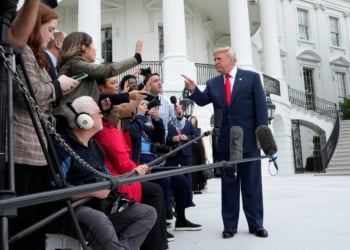
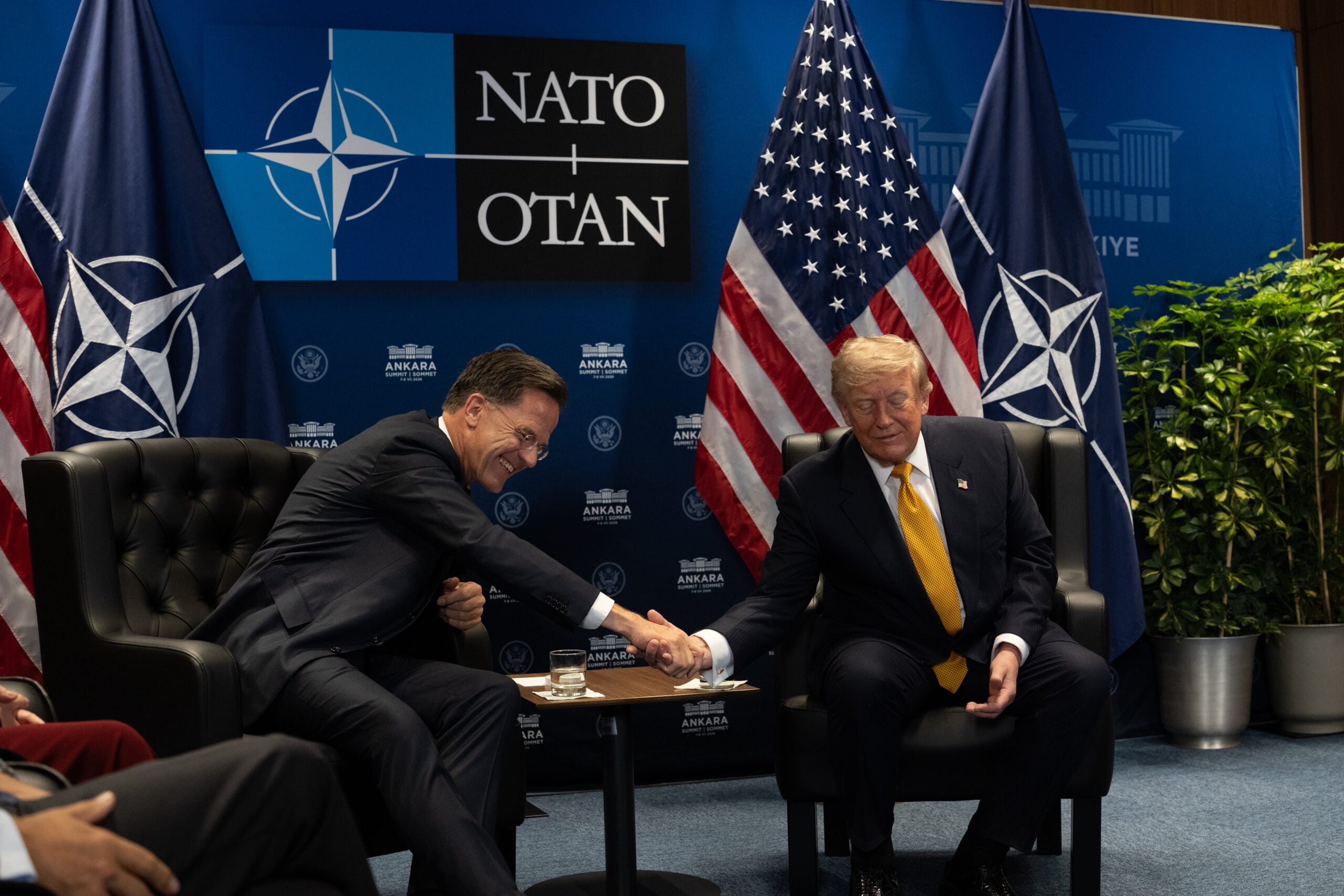
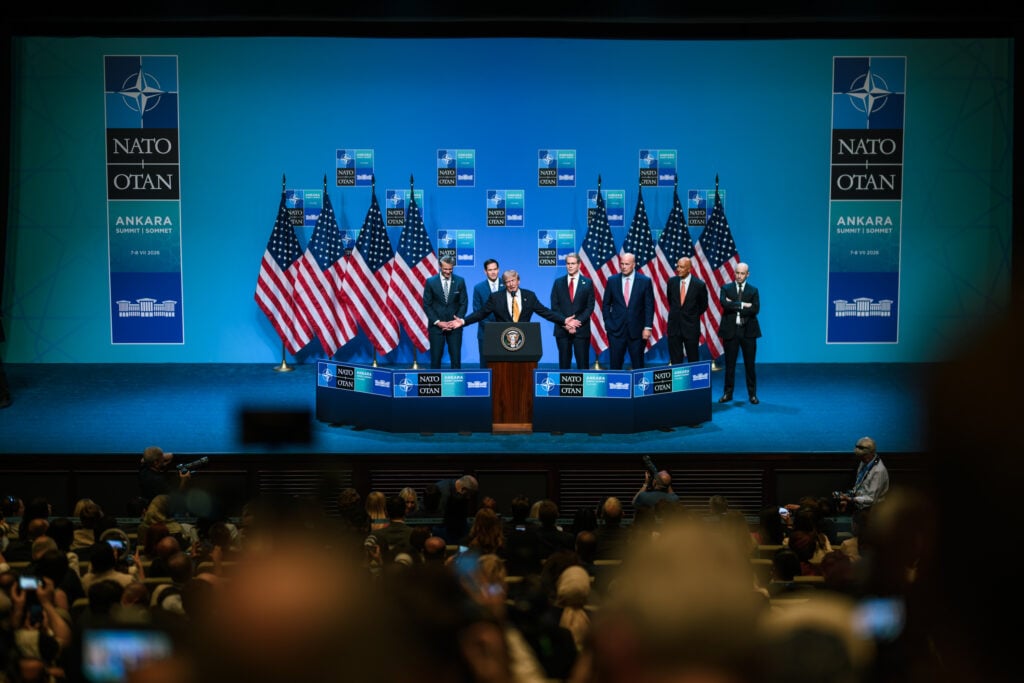
Retired Rear Adm. Mark Montgomery argues that the alliance ended the July 7-8 NATO summit in Ankara on a stronger note than it began, with meaningful progress on Ukraine and defense cooperation. But he cautions that the summit did not erase longstanding concerns among America’s allies about the Trump administration’s commitment to Europe.
“I think America’s NATO allies would be wise to be concerned about President Trump throughout the rest of his administration,” Montgomery, a senior fellow at the Foundation for Defense of Democracies, tells Independence Avenue Media.
At the same time, he says the summit sent a stronger message to Moscow than many expected. Montgomery argues that NATO addressed Ukraine’s most pressing military need — air defense — and says U.S. President Donald Trump is beginning to recognize that “Zelenskyy’s a winner.” It is a shift he believes could influence Washington’s approach to the war.
Montgomery also discusses the future of U.S. force posture in Europe, NATO’s defense industrial base, plans to co-produce Patriot interceptors with Ukraine — which he warns will not be a quick process — the possibility of a broader security package for Kyiv, the alliance’s approach to Iran, and Turkey’s potential return to the F-35 program.
This interview was recorded on July 9, 2026, and has been edited for length and clarity.
Kartlos Sharashenidze, Independence Avenue Media: President Trump described the NATO summit as “tremendously successful.” Would you agree with that? Was there anything that surprised you about this summit?
Rear Adm. Mark Montgomery (Ret.), senior fellow, Foundation for Defense of Democracies: I would say it was successful because, first, there’s a low bar for summits for being successful. And second, despite a very rocky start where the president for no apparent reason just lashed out against his European allies, it then turned into a meaningful discussion and very specifically on the issue of how the war in Ukraine is going and what’s appropriate support to Ukraine. We saw a lot of indications of that, both from the Europeans, who continue their aggressive support of Ukraine, and from President Trump, who agreed, at least provisionally, to several important steps that will help with the air defense of Ukraine. So, that’s a big one.
But there are also things that I’m still concerned about — U.S. force posture in Europe and things like that — which weren’t explicitly dealt with. We could see announcements from the United States in the next few weeks or months that backtrack on the good vibrations that might have been there at the very end of the summit. But again, it started out poorly, but ended strong.
IAM: Do you think allies now have more confidence that the United States would stand by its Article 5 commitments if they were ever tested?
Montgomery: I think that whatever opinion you had of President Trump before the summit and his credibility as an ally, you still hold it.
There’s too much water under the bridge: the threats in Greenland, divestment from Ukraine, the force posture moves, which were done without any kind of consultation with Poland and the Baltics. All that’s happened. You can’t wish that away.
So, I think that America’s NATO allies would be wise to be concerned about President Trump throughout the rest of his administration.
IAM: You just mentioned U.S. troop levels in Europe. On the flight home from Ankara, President Trump said future troop levels could still depend on issues like Greenland and Iran, although he said he hasn’t made a final decision yet. Does that change how allies should interpret the outcome of the summit?
Montgomery: Look, there’s some truth in President Trump’s complaints about European troop levels. When you spend 25 years, or 20 years, spending less than 2% [of GDP] on defense, you actually can’t defend yourself. NATO’s hard. It’s not one country, it’s 32 countries, so there are inefficiencies in the armies, navies, and air forces when they come together.
So, with all that put together, the European military commitment, circa 2022, was abysmal. And their ability to generate forces without the United States was negligible in terms of confronting a peer adversary like Russia. Now they’re doing a lot more, particularly Germany. Obviously Poland and the Baltic states stepped out first, but those are small militaries, relatively speaking.
But Germany has really stepped up, and that’s what I think the president needs to do more to acknowledge. Germany is taking this leadership position among the European NATO countries. And if they continue that, Europe will be in much better shape and NATO will be in much better shape.
But a U.S. drawdown of our actual forces in Europe, or our commitment to provide forces in a surge, which are two different things, can’t be an abandonment. It has to be done in an integrated fashion. The big one is the one where we announced that as part of an overall fight in some kind of real crisis with Russia, the United States is going to provide less forces. And that’s because we recognize the authoritarian axis that we’re facing — China, Russia, North Korea, Iran. They are more likely to operate together now. They’re showing that in Ukraine. So, we can’t send most of our submarines, most of our fighter jets, most of our carrier strike groups to Europe in a crisis. We have to split it.
Now, this could have been done better. It could have been done in better consultation. It could have been done with discrete timelines that give the five or seven years Europe needs to get to those positions.
Hopefully, coming out of this, the guidance he gives Secretary [Pete] Hegseth, our secretary of defense, is to do this in a more deliberate way. You continue along, continue to explain to Europe there’ll be fewer Americans. Because this is the truth — whether it’s President Trump or a Democratic president or a future Republican president — the U.S. will be providing less forces because of the nature of the axis of authoritarians. It’s just that President Trump and his team, particularly Secretary Hegseth, have not communicated that in an effective way.
MORE: Kori Schake: NATO’s Biggest Challenge Is Preventing a ‘Precipitous American Withdrawal’
IAM: Let’s talk about the summit declaration. It highlights NATO’s commitment to collective defense, describes Russia as a long-term threat, underscores support for Ukraine, and calls for expanding defense production. What will it take to put those priorities into action?
Montgomery: I appreciate all those. I’ll take defense production. Europe does need to increase its defense production. What would be unhealthy is if Europe follows France’s lead and tries to say we will not select [U.S. companies]. That would be inappropriate. For the last 20 years, the United States did maintain a defense industrial base, did sell weapons to Europe. And for Europe to suddenly turn on that would be a mistake.
The United States military industrial base, though, can’t supply all of Europe and all the United States and all of our Asian partners and our Middle East partners. So I’m excited about German companies growing and becoming more capable, because they are the industrial workhorse of Europe. I’m excited about Polish companies being able to export more. And the same with the Brits and the French and the Italians. And of course Norway has a very aggressive program. But this needs to be done as a partnership, not to the detriment or exemption of any one country.
And so the offers that happened during the summit for co-production of U.S. weapons in Europe are a great way of acknowledging that U.S. production capacity just isn’t there, but the U.S. technology is of value. And I think we’ll see the same thing with some of these unmanned systems that U.S. companies co-produce with European partners who have the intellectual property, particularly eventually Ukraine.
So, I’m excited. If done properly, if done in a non-punitive way, which is hard when you’re involving President Trump, there’s a great opportunity here for a NATO that can produce sufficient weapons to counter any Russian aggression.
IAM: From Moscow’s perspective, how should the Kremlin read this declaration and the outcome of the summit?
Montgomery: They should be concerned. And I think Putin was immediately fairly threatening.
Look, co-production of Patriots by Ukraine is really interesting. I hope this doesn’t mean Ukraine doesn’t continue to try to produce its own air defense interceptor. I’m excited about the idea of Ukraine producing a low-cost, maybe not quite as effective, but still very effective, air defense asset, that’s not made from the same supply chain as the Patriot, because, you know, co-production for Patriot will still be putting a burden on the same supply chain. We don’t get rid of that problem. So, I’m hoping Ukraine does both.
If I were Russia, I would be concerned. The summit tried to address Ukraine’s greatest shortfall — air defense interceptors. There was a discussion about working together to protect the air defense of Ukraine. These are things you haven’t heard from the United States ever — under Biden or Trump.
I think we all know President Trump likes to back winners. And slowly but surely the truth is breaking through the kind of Russian disinformation campaign that surrounds the president, telling him that Russia is winning. You know, [Russian] General [Valery] Gerasimov may be able to trick Vladimir Putin into thinking they’re making progress, but he shouldn’t be able to trick the president of the United States who has the U.S. intelligence community, telling him very directly that Ukraine holds the cards, that Ukraine is in the stronger position, that as long as Ukraine doesn’t do anything illogical, they are not going to lose — their military resilience is too strong to lose on the ground. And when that gets through to the president and he understands that [Ukrainian] President [Volodymyr] Zelenskyy holds the cards, not President Putin, you’ll see a change in how President Trump approaches both those leaders.
IAM: You mentioned the Patriot production decision. What do we know about this plan, and what could it mean for Ukraine in both the short term and the long term?
Montgomery: This is a little bit more than when President Trump said maybe [we’ll send] Tomahawk missiles, because that was definitely just a maybe. This sounds more solid, but still there are so many steps to get done. That’s why I said Ukraine should still be pushing for its own domestically produced air defense weapon. I think that’s more likely to get done first than a co-produced patriot with the United States.
You know, I’m equally happy that we’re co-producing Patriots with Germany. There you have a proven industrial base that can attack this pretty quickly. And I believe the Germans would provide Patriot rounds to Ukraine as part of that production. So, both of those efforts in Germany and in Ukraine to co-produce Patriots could eventually produce results. But as I said, I hope Ukraine continues with an alternative path because that’s a risky path. Building Patriots is not easy and the secondary and tertiary supply chains are under stress from U.S. production increases.
So, I don’t know that that’s a quick win, but it’s part of a narrative of support that has to have Vladimir Putin concerned.
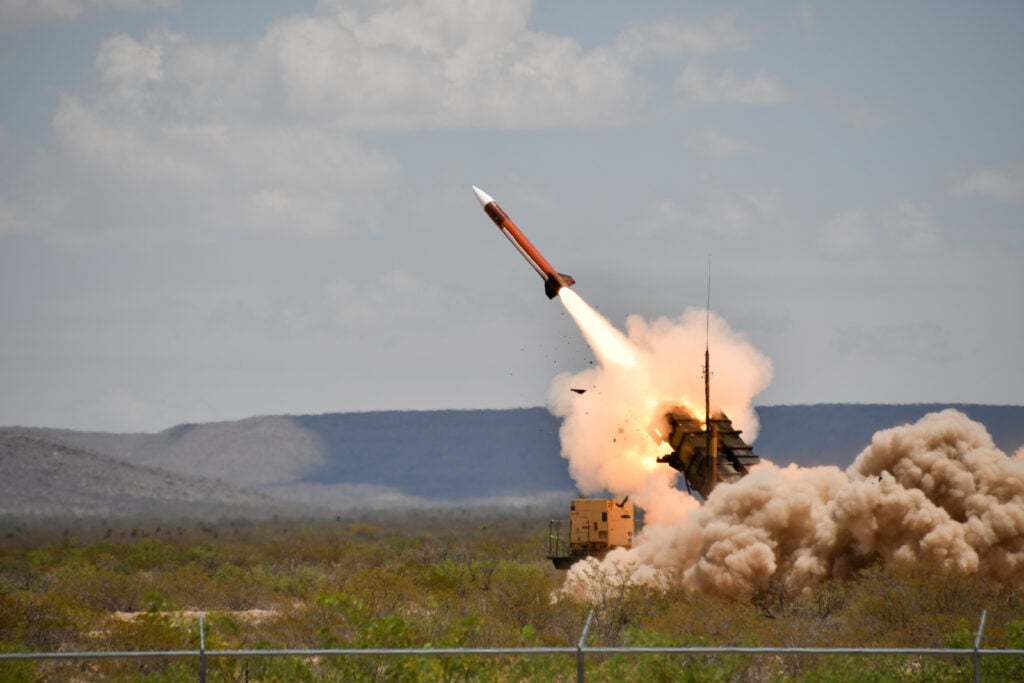
IAM: President Trump said producing Patriots is a difficult and complex process, but that Ukrainians can do it.
Montgomery: I mean, do I think Ukraine can MacGyver together almost everything if they have the intellectual property? You bet. But there’s certain parts of a Patriot that are essential and have to be made at a specific factory, or set of factories, and that supply chain is under duress as the U.S. is trying to increase its production of patriots — trying to almost triple it over the next five years. Japan’s trying to increase theirs, I believe, doubling it. Germany’s going to come online doing it, and Ukraine. That’s a lot of stress on a supply chain. This is not a question of President Trump’s commitment, this is a question of scientific or engineering fact. Only so many of these things are being produced at a time, so we just have to make sure that we’re working hard on all the supply chain.
IAM: President Trump’s meeting with President Zelenskyy seemed quite different from some of their previous meetings. Do you think we’re seeing the administration take a different approach to Ukraine?
Montgomery: For now, yes. I mean, this is the problem with this administration. It looks like all signals point to an improving relationship. And again, I think this is principally driven by President Trump’s desire to support a winner. And I don’t think that’s going to change. Ukraine’s clearly the winner, and I think there’s been a breakthrough in the Russian disinformation campaign, you know, from Tucker Carlson and others that surround the president. I think that’s broken.
But Steve Witkoff has been busy in the Middle East. He’s coming back. He has not been a useful interlocutor. So there are places where I could see setbacks.
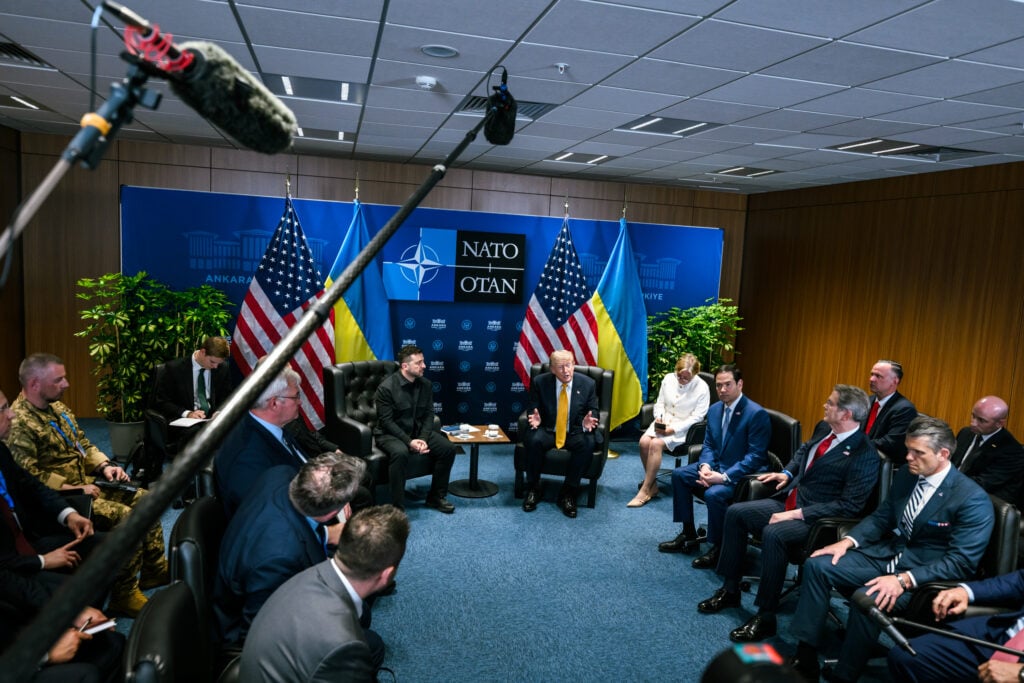
But absolutely coming out of this summit, the momentum is towards better U.S.-European-Ukrainian cooperation. That’s clearly critical and Zelenskyy deserves a lot of credit. He’s shown patience, he’s shown discipline. You know, since the bad meeting in February of 2025, he has tried his utmost to support President Trump, to reach out effectively to President Trump. And that 18-month campaign is paying off. I don’t think President Trump is inviting Zelenskyy over for Christmas dinner, but I do think he understands Zelenskyy’s a winner and he understands that Ukraine has the military and civil strength to persevere over Russia. The most important thing is to continue to break the Russian offenses and prevent any Russian movement.
IAM: Let me ask you about Iran. Iran is also mentioned in the summit declaration, and President Trump criticized allies for not helping when “they had the chance” although he later said they now want to help. With the ceasefire apparently over and the conflict escalating again, what role do you realistically expect NATO allies to play?
Montgomery: I mean the president is overly critical of Europe in this way. Look, we did not give warning to Europe. I kind of understand that. I think the idea that they could have kept that secret and there was an importance to timing, you know, for leadership strikes and everything in Iran that made it impossible to give them early warning. But there could have been briefings weeks ahead of time that said, look, we’re serious about this. Here’s what we’re thinking of doing — not giving away the timing. And then clearly the minute the strike started, we could have done a more aggressive role of courting allies. Part of this was the hubris of the first few days of the strikes, everything going well, that the president decided diplomatically not to engage the allies. And as a result, there was some initial restrictions on airspace and airfield usage. 90% of that went away rapidly. Spain remained an outlier, but 90% of it went away. And our military’s had the support it needs. There are a handful of exceptions, but it has the support it needs.
I think what you heard in Ankara, was it was more of an agreement about the importance of international law in the Strait of Hormuz and the idea that forces might be contributed to maintaining that at some future time. Realistically, that’s minesweepers. One of the things that NATO struggles with is they don’t have good navies. When you spend 2% or less of GDP on defense the military service that suffers the most is the Navy, because the Navy is composed of large ships or medium-sized ships. And those are expensive to build and maintain. And you can see it in the Royal Navy. The British Navy is a shadow of its former self.
So, we might see some French or some British support, but it’ll be very, very limited versus say the 18 destroyers the United States has in the vicinity to conduct blockade and maritime operations. So, we’ll have to see what we get out of that. I think that was a good solution for the president and a good solution for Europe.
And again, I think throughout the whole process of the summit, the Europeans were disciplined, were supportive of the American positions, and generally did everything right. And the president had a good second day, but his arrival press conference was unhelpful and unnecessary. And the irony is he talked about how great Turkey was. Turkey was no special help in the Iran effort, and they’ve never been a good help against the Iranians. So, you know, the president was even slightly confused about that.
IAM: And now, there’s also talk that the U.S. could lift sanctions on Turkey and allow it back into the F-35 program…
Montgomery: But to get to the F-35, there’s congressional language on this as well. So, Turkey’s probably going to have to give up the [Russian] S-400. And this is a principal thing to Erdogan. I don’t even think they use the S-400. There are rumors that they’re still in boxes, so to speak. But he would have to admit he was wrong to buy it. And Erdogan shares many character traits with Trump, and one of them is he can’t admit he made a mistake.
So, you know, they may eventually get F-35s, but I don’t think just yet. There are some things that have to be done. And in any case, there’s a long line for F-35s. And no F-35’s going to get delivered to Turkey while Trump is president. So, then you get someone else who gets to interpret the law, you know, as the next president. So we’ll see about that.
IAM: Before the summit, you laid out several criteria for what would make it a successful summit. Looking back now, how do you think it measured up against those expectations?
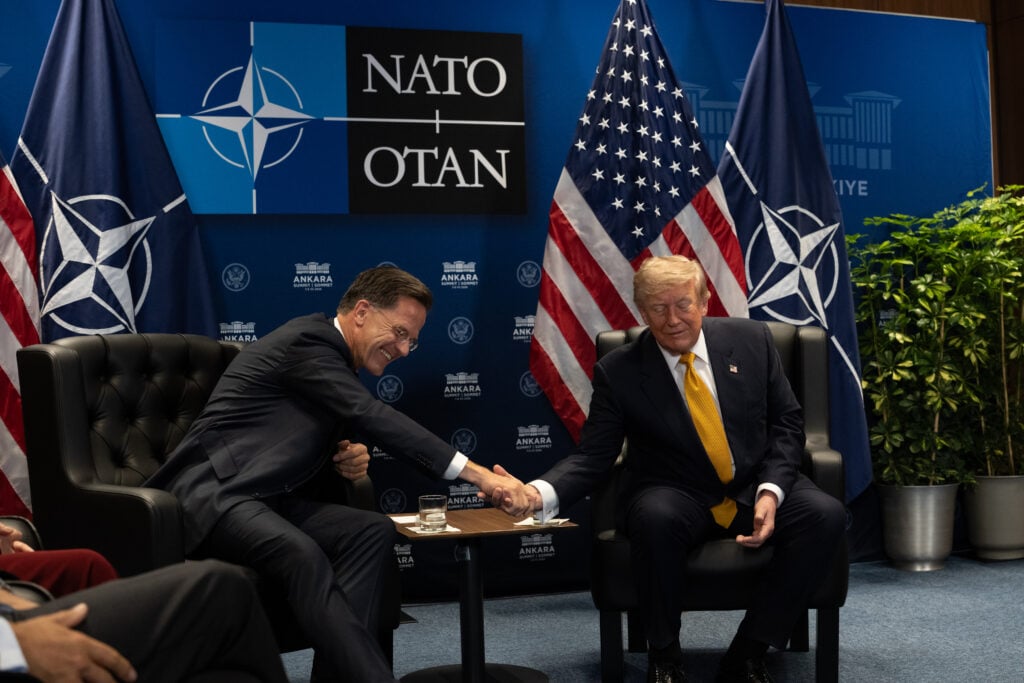
Montgomery: I think the first one — acknowledge the defense spending and still call out the laggards. Well, President Trump called out the laggards. Not the way I would have done it, but I think that’s a check. NATO [Secretary-General Mark] Rutte has a list and he’s tracking it. I cannot tell you enough how fortunate the alliance is to have Mark Rutte as secretary general right now to work between Trump and the Europeans and he did a fantastic job on that.
Number two is on force posture. I think that’s still an open question. Trump says, I’m still moving, Rutte’s trying to get a task force together to make sure it’s done in a deliberate way. There are already existing mechanisms for doing that. I hope coming back, that’s something Trump is telling Hegseth do this in a more deliberate fashion. That one is still an open question.
Calling Putin out, I think that happened more than I thought.
On Iran, I think it’s about what I expected. Pretty weak tea, but still an acknowledgment of Iran and that Iran’s the bad actor in this war.
And then finally on the defense industrial base, there I think it’s strong. Lots of discussions of Patriot co-production, lots of discussions of buying American weapons, lots of discussions of buying European weapons. Again, Trump may not fully state what I would say, but the United States benefits from Europe having a robust defense industrial base. I get that that might not be great for Lockheed Martin or Boeing, but it’s good for America because America needs its allies to have quality defense industrial bases. And a little competition never hurt any of these companies. So overall good work, but not all five were complete.
MORE: AEI President Robert Doar Makes the Case for Trump Foreign Policy — With Caveats