The Shatterbelt Brief is a weekly column by Brian Whitmore examining the shifting political and geopolitical dynamics of Eastern Europe and Eurasia. The views expressed are the author’s and do not necessarily reflect those of Independence Avenue Media.
Don’t look now, but from the Baltic and Black seas to the Mediterranean, Kyiv is expanding the battlefield and taking out Russian military assets farther and farther away from the front.
As I wrote last week, on the eve of the summit meeting between Chinese leader Xi Jinping, U.S. President Donald Trump, and Russian autocrat Vladimir Putin in Shenzhen, Ukraine struck the Kerch Strait Bridge linking Russia and occupied Crimea, severing road traffic and indefinitely halting rail traffic.
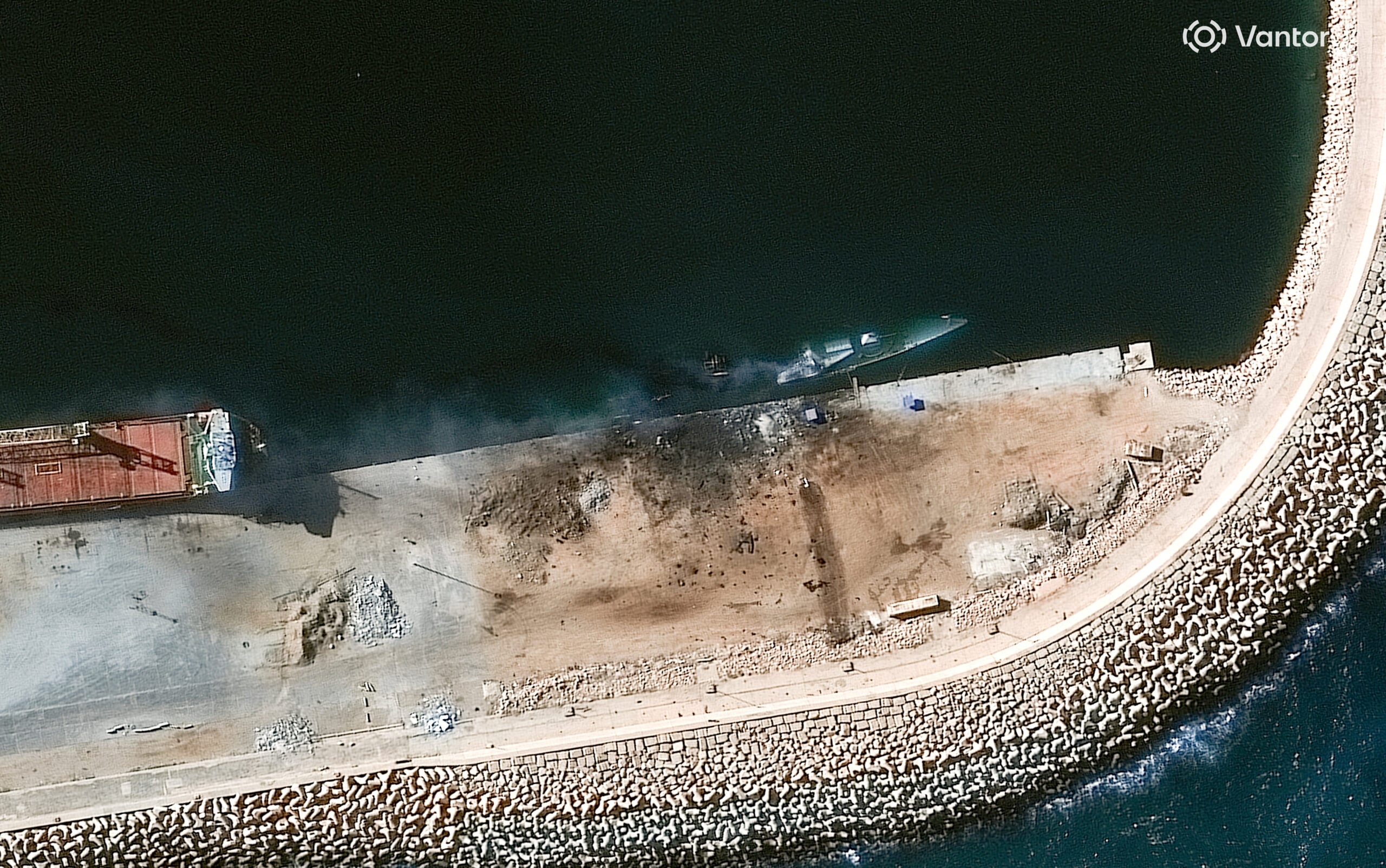
But Ukrainian drones and missiles have also been busy much farther afield, hitting Russian naval assets off the coast of Libya, and a Russian vessel in the Gulf of Finland. Ukraine also took out three MiG-31s and two Su-34s warplanes in a strike on the Savasleyka airfield in Russia’s Nizhny Novgorod region. There have also been reports of explosions and drone activity near the base of Russia’s Baltic Fleet in Kaliningrad.
And all of this was just in the past week.
As Tania Myronyshena and Jonas Heins write in the Kyiv Independent, these ever-deeper strikes represent an apparent attempt to reverse the escalation dominance — the ability to raise the stakes at each step in a way the other side cannot match — Moscow has enjoyed in its war against Ukraine.
“Since Russia started its full-scale invasion in February 2022, many have focused on managing or warning of a Russian escalation, given that the Kremlin holds the world’s largest nuclear arsenal and Russian President Vladimir Putin is no stranger to threatening others with it,” they write.
“But Ukraine’s latest strikes raise the question of what escalation dominance Kyiv holds over Moscow, and whether it is now playing out at an opportune moment.”
The strike campaign also looks like an effort by Ukraine to turn Russia’s strategic depth from an asset to a liability.
Because of its vast territory and military networks spanning well beyond its borders, Russia has historically been able to shelter military and economic assets far from the front. With its geographically dispersed deep strikes, Kyiv is aiming to erode that advantage and degrade the economic, logistical, maritime and geopolitical infrastructure that sustains Putin’s war machine.
“Kerch, Baltiysk, the Gulf of Finland, Benghazi: all of them are points on Russia’s own military supply chain, and Ukraine has now shown it can hit every one of them within a single week,” Catarina Buchatskyi, director of analytics at the Serpens Center for International Security, told the Kyiv Independent, referring to the Kerch Strait Bridge, the Baltic Fleet, and the Libyan port.
By forcing Russia to protect assets across a considerably larger geographic area, Ukraine is imposing a defensive burden on Moscow, which throughout the war has been seeking to maintain an offensive posture.
The strikes have thus expanded the war beyond Ukrainian territory and what the ancient Chinese military strategist Sun Tzu in “The Art of War” called “death ground,” the terrain where an army has no choice but to fight for its survival.
This is also consistent with a theory of victory called “strategic neutralization,” developed by former Ukrainian Defense Minister Andriy Zagorodnyuk, which aims to deny Russia the effective use of its military capabilities rather than necessarily destroying those capabilities altogether.
Such a strategy aims for Ukraine to establish a sustainable strategic position even as the Putin regime refuses to negotiate in good faith or abandon its maximalist and eliminationist objectives.
Russia, of course, also has a theory of victory.
Defense analyst Brynn Tannehill succinctly outlined Moscow’s strategy in a Substack post this week:
- Target Ukrainian civilians and its energy grid to weaken the public’s will to fight.
- Target critical infrastructure to undermine Kyiv’s capacity to fight.
- Undermine foreign economic and military support for Ukraine.
- Persuade Ukraine’s supporters that a Russian victory is inevitable and a peace deal on Moscow’s terms is the best option left.
Tannehill’s post is consistent with a report published by the U.S. Army War College in August 2026, which characterizes Russia’s strategy as “coercive attrition” aimed at undermining Ukraine’s capacity to fight and the cohesion of its international partners. According to the author, Tewfik Hamel, Moscow is seeking “to exhaust Ukraine, fracture Western cohesion, and force political recognition of Russia’s claims to status and strategic depth.”
And sadly, the Trump administration seems to be doing its utmost to make the Russian strategy a success.
According to a report in the Financial Times, U.S. Defense Secretary Pete Hegseth has been holding up the delivery of 60 Patriot missile interceptors, which are essential for defending Ukrainian cities and critical infrastructure as Putin steps up aerial assaults. Likewise, Ukraine says it is facing limitations on the use of the Starshield satellite communications system, which complicates its air defense operations.
After describing Putin as “my friend” in Shenzhen, Trump reportedly called European leaders from Air Force One and pressed them to cut off economic and defense assistance to Kyiv.
And Trump’s envoys Jared Kushner and Steve Witkoff, as well as the president himself, have persistently promoted settlements of the war on Moscow’s terms — agreements that would compel Ukraine to cede territory it currently holds and leave it vulnerable to further Russian aggression.
But as it did after the disastrous Oval Office meeting in February 2025 and the Alaska summit that August, Ukraine seems to innovate its way out every time its erstwhile partners in Washington betray it.