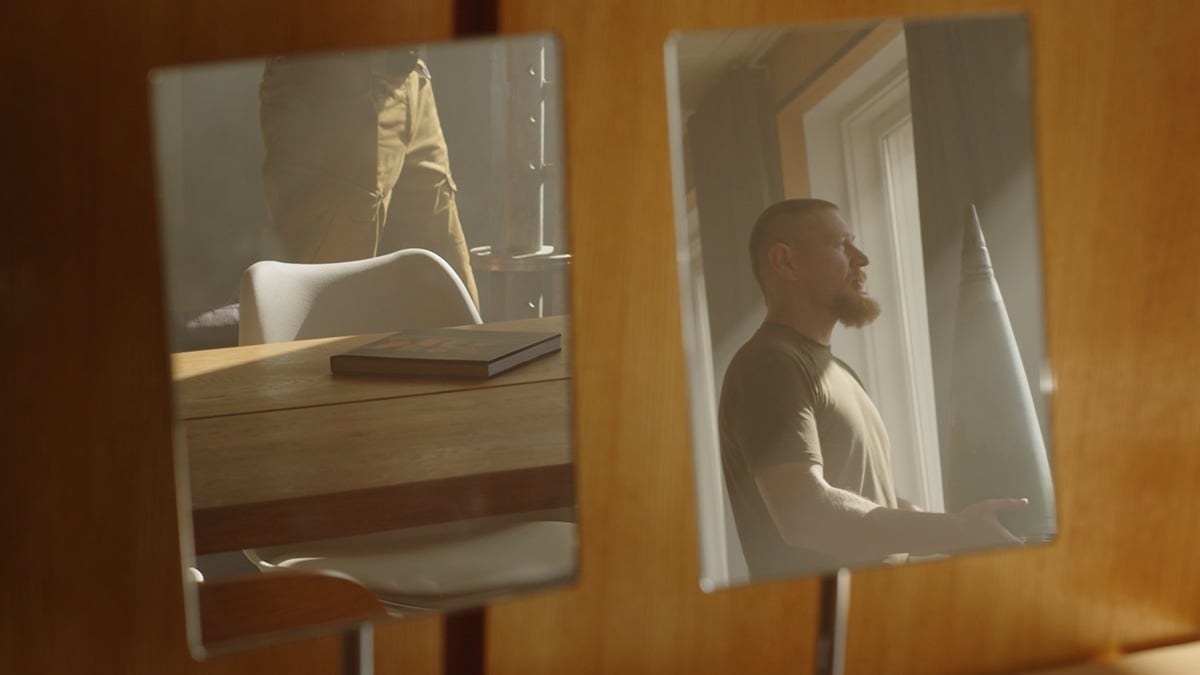
Ukrainian veteran Maksym Fetisov sits down in a small Lviv studio to record the story of Ihor, a fellow soldier.
As he’s voicing it he makes a discovery: he and Ihor served in the same unit, in the same operations — and had never met.
“There’s even video,” he says, speaking of his time on the frontlines. “I filmed a vehicle passing by. Ihor was inside.”
That kind of connection is at the heart of “Voices of Defenders,” a project that pairs veterans’ written accounts of the war with the voices of fellow service members who read them aloud.
“Reading someone else’s story helps you process your own without reopening every wound,” says Yurko Vovkohon, the project’s co-creator.
A veteran and culture manager, Vovkohon was wounded in 2022. He returned to civilian life determined to preserve the stories of those who served.
For the veterans who take part, the act of voicing a fellow soldier’s words can feel intimate.
“When it’s someone from your brigade — even if you didn’t know them — you feel it instantly,” says Nazar Pavlyk, a veteran and the project’s sound engineer. “You remember the places, the smells. That connection is powerful.”
So far, more than 40 veterans have contributed to “Voices of Defenders.” The stories themselves range from the frontline to the raw aftermath of liberation.
Andriy Kaspshyshak, a veteran and author, tells the story of a village in eastern Ukraine and a small hill at its center.
It’s the only spot with a phone signal, and residents once risked their lives climbing the hill to tell loved ones they are still alive.
“Then one day, armored vehicles came in. Blue-and-yellow flags. They knew — they were free,” says Kaspshyshak.
After the war, Kaspshyshak left a career at a prestigious accounting firm to start a publishing house and work with the growing veteran community at Ukrainian Catholic University.
“You come back changed,” he says. “You don’t postpone life anymore. War doesn’t let you.”
For Vovkohon, that urgency is the point.
“It’s a painful experience, gained at a high cost,” he says. “But if you don’t pass it on, it stays inside you as trauma — and begins to destroy you from within.”
See the full story below: