
Though most ballots have yet to be cast for the Nov. 3 U.S. midterm elections, it is already clear that Ukraine will be losing some of its most effective defenders on Capitol Hill.
Eleven senators are not seeking reelection this year — the largest wave of Senate retirements since 2012. Ten of them have substantial records in support of Ukraine. They sponsored legislation, traveled frequently to Kyiv, pressed the Pentagon to deliver weapons and built the sanctions package that passed this summer. In the House, longtime Democratic Party leaders, including former House Speaker Nancy Pelosi, are stepping down, alongside several Republicans who are among some of the sharpest critics of the Trump administration’s recent overtures to Russia.
“A number of senators who have been strongly supportive of Ukraine will be gone, and that is a problem,” Daniel Fried, a former U.S. ambassador to Poland and former assistant secretary of state for European affairs, told Independence Avenue Media in an interview in September. “There may be senators coming in who are similarly inclined, and I certainly hope so.”
That hope is now the central question for Kyiv. Will a strong, bipartisan coalition supporting Ukraine — one that has influence both in the halls of Congress and in the corridors of the White House — remain?
The Senate Exodus
Among the most consequential departures on the Republican side of the Senate are former Majority Leader Mitch McConnell, KY, and Thom Tillis, NC, who have been influential advocates of military assistance, sanctions against Russia and stronger European security cooperation. Other Republicans, including Steve Daines, MT, Joni Ernst, IA and Cynthia Lummis, WY, have supported sanctions and, to varying degrees, military aid, even if some have raised concerns about spending. Alan Armstrong, OK, appointed to the Senate in March after Oklahoma Sen. Markwayne Mullin resigned to become secretary of homeland security, also backed Ukraine-related legislation, but is not running for a full term.
In Texas, John Cornyn, who has been part of bipartisan efforts to direct seized Russian sovereign assets toward Ukrainian military assistance, lost the Republican primary to Ken Paxton. During the primary campaign, Paxton attacked Cornyn over his support for Ukraine. Paxton is now locked in a close race with his Democratic opponent, James Talarico, a Ukraine supporter, whose campaign, according to reporting in Politico has been targeted by a Russian covert influence operation.
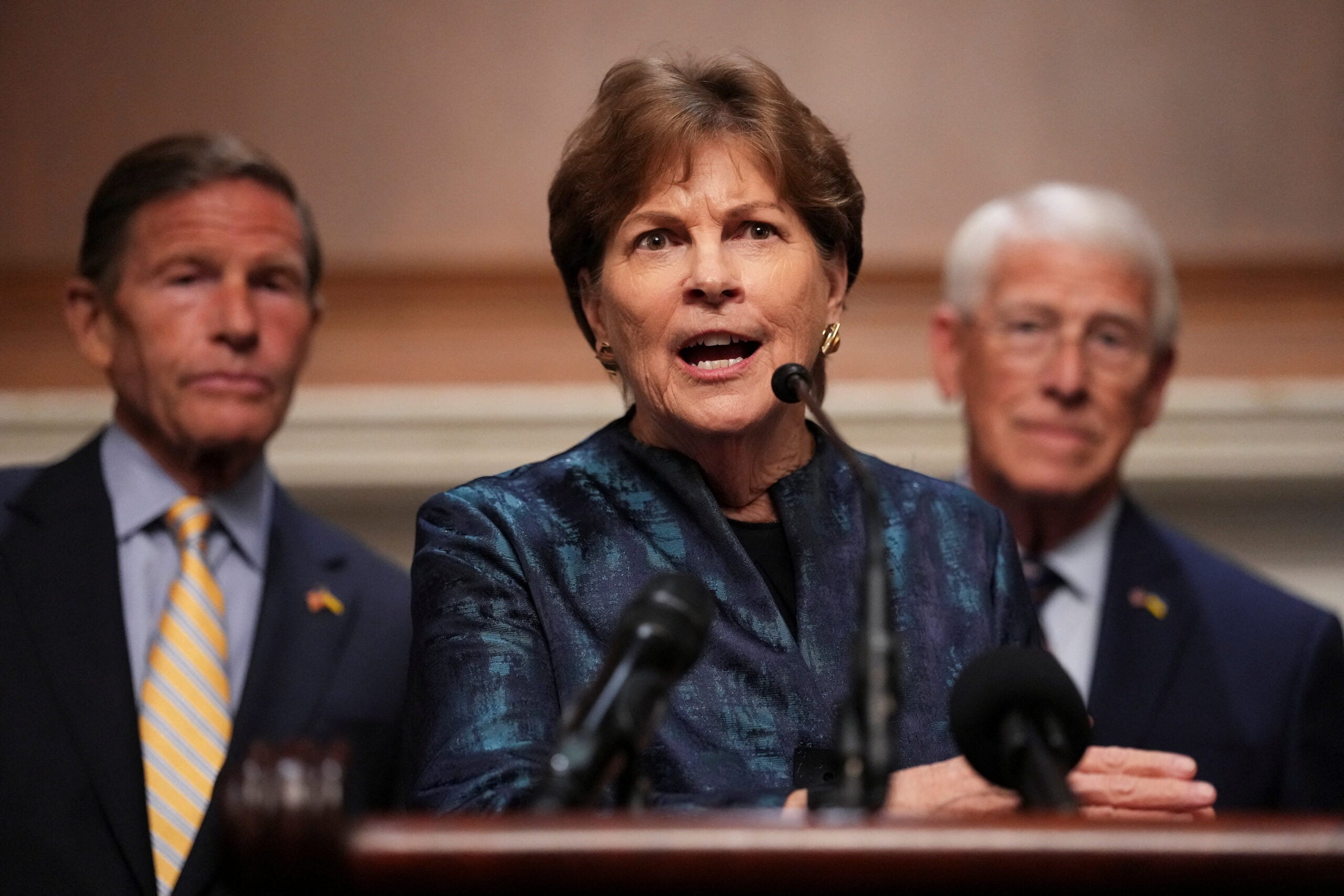
On the Democratic side, the departures of Dick Durbin, IL, and Jeanne Shaheen, NH, are particularly significant: both have played leading roles in building bipartisan coalitions on Ukraine. Shaheen is the ranking member on the Foreign Relations Committee and has shaped Ukraine policy, while Durbin is a longstanding Democratic leader of the Senate Ukraine Caucus. Gary Peters, MI, and Tina Smith, MN, are also both members of the Senate Ukraine Caucus who have been consistent supporters of Ukraine-related legislation.
The House: Losing the Coalition Builders
The House is losing several of the lawmakers who have long held its pro-Ukraine coalition together. They include former Foreign Affairs Committee Chair Michael McCaul, R-TX, former Democratic leader Steny Hoyer, MD and Pelosi, D-CA. Also leaving are Don Bacon, R-NB and Dan Newhouse, R-WA, two of the Republicans most openly critical of the administration’s recent turn toward Russia.
Melinda Haring, a nonresident senior fellow at the Atlantic Council’s Eurasia Center, called Pelosi’s exit the loss that worries her most. In 2024, according to Haring, Speaker Mike Johnson was blocking a $60.8 billion emergency aid package for Ukraine and supporters were short of signatures on a discharge petition to force a vote. Haring went to see Pelosi for a meeting scheduled for 10 minutes. It lasted 40, and Pelosi got on the phone.
“I had three more signatures on this discharge petition by the time I was out of her office,” Haring said. “She knows how to work the phones and make things happen on the Hill.”
The stakes are also visible in individual races. In Pennsylvania’s 1st District, Republican Brian Fitzpatrick, co-chair of the Congressional Ukraine Caucus, is seeking reelection against Democrat Bob Harvie. Fitzpatrick has been one of the few Republicans running for reelection willing to openly challenge the Trump administration’s warming Russia ties, which he says are coming at the expense of Ukraine.
The Future of a Bipartisan Coalition for Ukraine
The test for the next House is whether a cross-party majority can still be assembled. The June vote on the bipartisan Ukraine Support Act showed that it’s possible: 18 Republicans joined Democrats despite opposition from their leadership. The next Congress will have to rebuild that coalition with new members and possibly new leaders.
The House Passed a Ukraine Aid Bill. We Asked Members Why They Voted For — And Against — It
Haring said many senior Republican champions will remain in leadership posts. Her concern is with junior Republicans in swing districts, such as Mike Lawler, NY, and Jen Kiggans, VA, who could lose their seats. Among the House members she expects to lead on Ukraine are Democrats James Walkinshaw, VA, and Eugene Vindman, VA, and Republicans Nick LaLota, NY, and Andrew Garbarino, NY.
Luke Coffey, a senior fellow at the Hudson Institute, sees a different risk: the growing influence of both parties’ fringes, which he says are less likely to support Ukraine.
Still, Coffey believes bipartisan support for Ukraine in Congress can endure, partly because lawmakers do not want to be out of step with public opinion. Recent Economist/YouGov polling suggests that Americans remain broadly sympathetic to Kyiv: 66% of registered voters say they sympathize more with Ukraine than Russia, while 65% view Ukraine as an ally or friendly to the United States.
Fried said he hopes that a wider base can become what he called “a tacit pro-free-world coalition.” It would bring together national security Democrats, “Democrats on the left who take their anti-fascism seriously,” and Republicans in the tradition of Ronald Reagan and John McCain.
Haring argued that worsening conditions in Ukraine could also increase pressure on Congress to act during the lame-duck period and beyond.
“Congress will eventually do the right thing. It’s just going to take a while,” she said.
What Should Kyiv Do?
The experts’ advice to Kyiv is to stop assuming continuity and start building relationships with the next generation of lawmakers, in both parties, before their positions harden.
“The Ukrainians have to be adding and multiplying supporters in Congress, not subtracting and dividing,” Coffey said. He urged Kyiv to reach out to new members across the spectrum, from MAGA Republicans to members of the Democratic Socialists of America, and to invite them to Ukraine.
Haring urged Ukrainians not to write off any group. “We convinced Mike Johnson to support Ukraine. He’s winnable. Anyone is winnable,” she said. “The messenger and the message matter.”