After Viktor Orban’s defeat, Hungary is heading into a political transition that could reshape its role inside the European Union — but not as dramatically as some might expect.
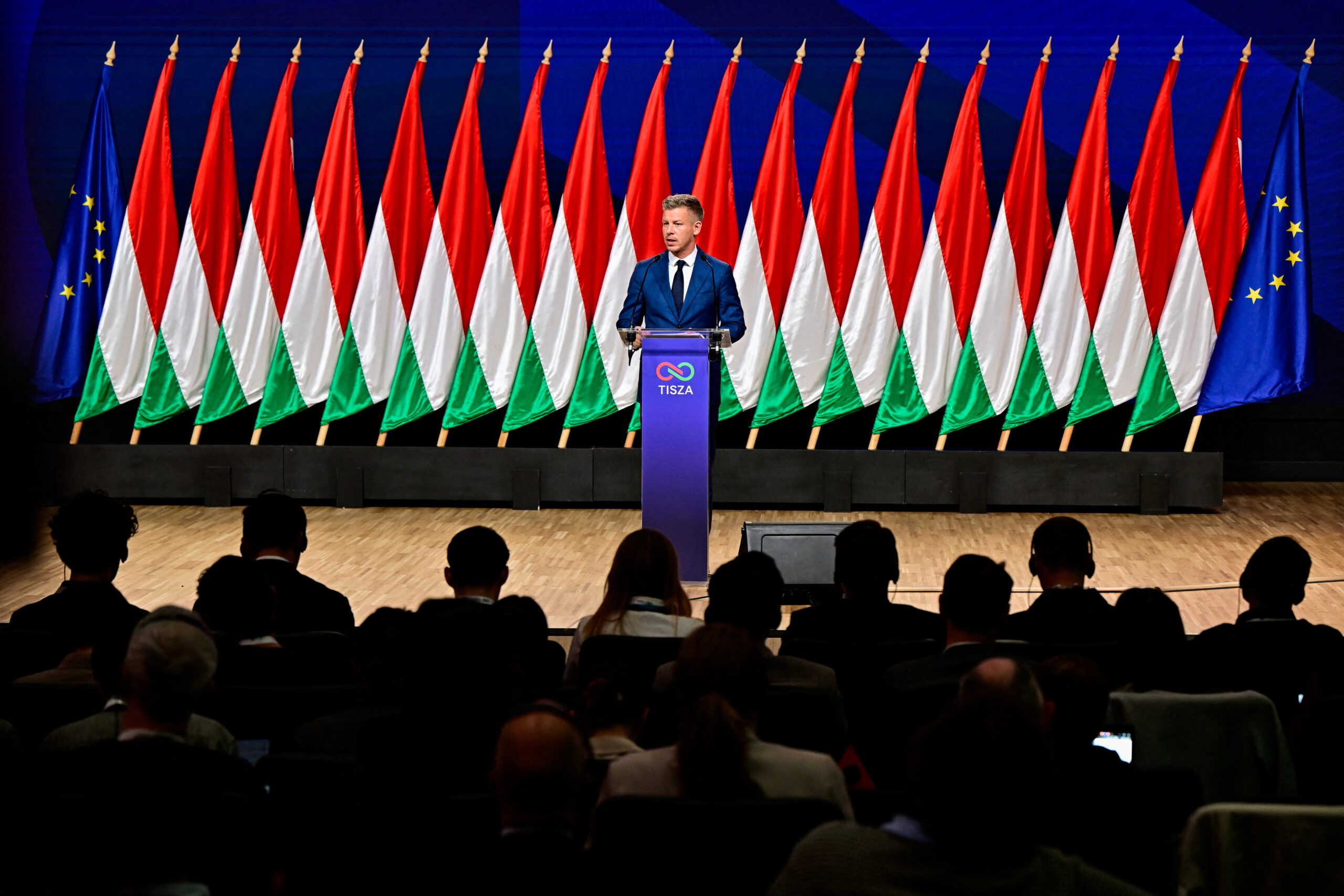
Orban’s government spent more than a decade building a system that extended far beyond politics — into institutions, media and the economy — while positioning Hungary as a frequent blocker of EU decisions, particularly on Ukraine. Now, with Peter Magyar’s Tisza party securing a constitutional supermajority, expectations are high that Budapest will shift course.
In an interview with Independence Avenue Media, Jörn Fleck, senior director of the Atlantic Council’s Europe Center, says the change will be real, but uneven, as Hungary will likely remain “a more conservative member state” on issues such as migration and Ukraine’s EU accession.
The stakes extend beyond Brussels. Hungary’s shift could weaken Russia’s influence, though not eliminate it.
“Politically, Russia lost a major ally on the inside of European Union deliberations,” Fleck says, pointing to Hungary’s previous role in shaping EU decisions.
At the same time, he warns that dismantling the Orban system will be far more complex than winning an election.
The following interview was recorded on April 14, 2026, and has been edited for length and clarity.
Mariia Ulianovska, Independence Avenue Media: How do you think Hungary’s role in the EU will change with the new majority in the parliament?
Jörn Fleck, senior director of the Atlantic Council’s Europe Center: Well, as the election winner, Peter Magyar has already indicated he wants Hungary to become a normal EU member state at the EU table in Brussels. And that is exactly what Hungarians and the vast majority of Hungarians also supported in lending Tisza and Magyar their vote.
IAM: Do you think we can expect Hungary to become a more constructive participant and are there any issues where Hungary will still be a little bit difficult to deal with?
Fleck: The main issue on everyone’s radar is obviously the vetoing of key decisions related to EU support for Ukraine and the EU’s efforts to confront Russia about its continued war against Ukraine. Peter Magyar, the election winner, has already indicated that he will end that veto that he considers very much a personal veto of the outgoing Prime Minister Viktor Orban that had been kind of a thorn in the side of the European Union on major decisions.
I think we’ll also see Hungary under the new Tisza government, once it comes into power, assume a much more constructive role on a whole range of EU issues.
And at the same time, I don’t think we should expect huge changes when it comes to Hungary being a more conservative country, a more conservative member state on issues such as migration or even fast-track EU enlargement for Ukraine. Peter Magyar has already indicated how he thinks about these issues. And I think that reflects the Hungarian population’s stances, in the majority of course, on these key issues.
So on the 90 billion-euro loan to Ukraine that the EU has been planning to pass and support Kyiv with, I think we’ll see relatively quick movement from Hungary to approve that. At the same time, Magyar has also said the budget situation and economic situation in Hungary won’t allow the country to actually join the financial mechanisms to support this, which Viktor Orban had also opted out of initially.
IAM: Do you think we should expect any resistance from Viktor Orban? His party is now in the opposition. And if we do, what kind of resistance are we talking about?
Fleck: So I think we should first watch what Fidesz and Viktor Orban are planning to do in the interim between now and the actual new Magyar Tisza government coming into power.
I think we can expect allies of Viktor Orban and Fidesz actors across the institutions trying to either destroy evidence or trying to move money in the interim. The European Union should watch whether there’s any mischief between now and the new government coming into office.
Viktor Orban has remade the institutions across the Hungarian government, but also beyond that in terms of the wider civil society. And I do think we’ll see some resistance to change. There’s obviously a major victory in all of this for Tisza and Peter Magyar, and that is the fact that he won that two-thirds majority in parliament and then that will make it a lot easier to change the constitution and to reverse some of the changes that Fidesz put in place to protect itself.
IAM: So what signs should we be looking at for Hungary to show a change of course?
Fleck: We’ve already seen Peter Magyar reaching out and speaking to European leaders, to [European Commission] President Ursula von der Leyen of the European Commission. I think it would be really important to signal that commitment to supporting the passage of the €90 billion loan to Ukraine. I think that’s an important initial signal.
And then I think the commission that is overseeing the blockage of €18 billion in EU funds for Hungary has to work out exactly a plan that both gives a boost and allows an incentive for reforms to move quickly on the Hungarian side. On the other hand, that protects also the spending of that EU money because we know Fidesz and Viktor Orban have put allies into key institutions and even the private sector that could benefit from that influx of EU funds as well.
So, finding the right balance between the technocratic and bureaucratic oversight of the spending and release of that money on the one hand, and on the other hand, the political signal, understanding that this was a vote for Europe by the Hungarian people, and they should see some relief and some benefits from that decision on a on a shorter timeline.
IAM: Hungary relies heavily on Russian energy — both oil and gas — and maintains close economic ties with Moscow. With pro-Russian forces now in the opposition, how do you see Russian influence in Hungary evolving, and what might this mean for Budapest’s relationship with Russia going forward?
Fleck: On the one hand, I think people chanting Russians go home or Russia go home on election night and the fact that we’ve seen these leaks about just how close Fidesz and Viktor Orban have been to Moscow and that that was rejected is a very important signal.
Politically, I think Russia lost a major ally on the inside of European Union deliberations and strategic and policy discussions. As we’ve heard about the foreign minister [Peter Szijjarto] making calls, Viktor Orban offering the help of Hungary for Russia at the EU table. And so that is a major loss of influence and indirect interference for Moscow. That’s number one.
On the energy side of things, I think Peter Magyar has already made clear that this is not an issue that can be solved over time. And I think everyone in Brussels and across the other member states is also very well aware that this will require transition time. It’s also an opportunity for other European countries and the EU to step up and help Hungary wean itself off of Russian fossil fuels and the corrupt economic system that was built around it. But I think that has to come over time. Tisza has already indicated that in many ways.