U.S.-brokered talks between Russia and Ukraine have concluded much like previous talks — without any major breakthroughs.
But in an interview with Independence Avenue Media, Kurt Volker says the fact that U.S. negotiators are discussing Europe’s security architecture is a win for Moscow.
“Russia is deliberately trying to create a circumstance where the United States is negotiating over the heads of other countries to do a deal with Russia,” says Volker, who served as special representative for Ukraine negotiations during President Donald Trump’s first term. “The kind of thing that Russia has always tried to do, but previous American administrations have always resisted.”
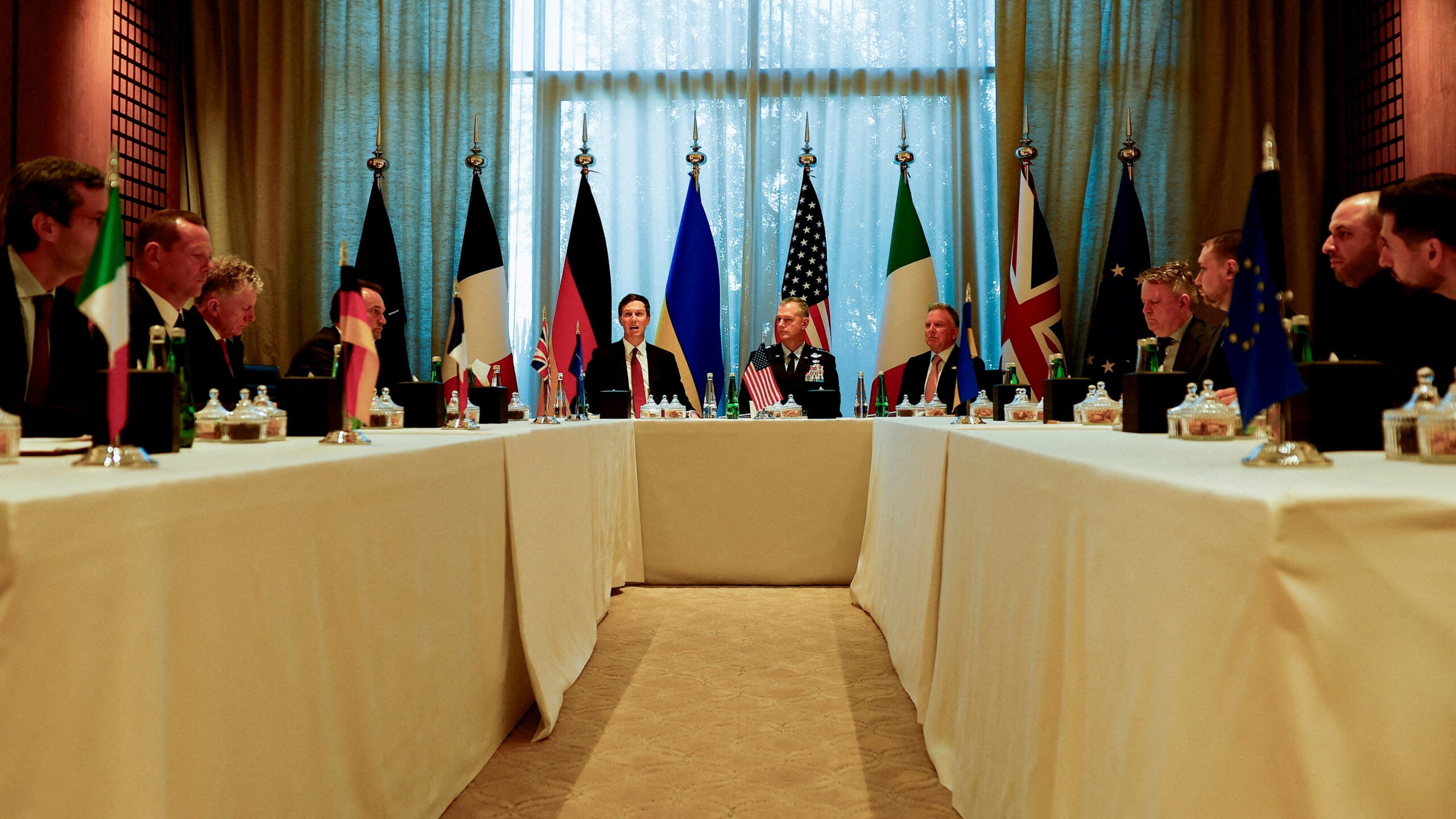
After the Nov. 10-11 talks in Abu Dhabi, Jared Kushner and Steve Witkoff, Trump’s special envoys, met with Russian President Vladimir Putin in Moscow and Ukrainian President Volodymyr Zelenskyy in Dublin. Kushner announced that Russia had agreed to allow “European partners” to join the next round of negotiations, but Moscow contradicted him, saying it had not yet made a decision.
Either way, Volker says, with Russia sticking to its maximalist demands for a full Ukrainian withdrawal from territories it has not been able to conquer on the battlefield and continuing to pummel Ukrainian civilians and civilian infrastructure, European security architecture is exactly the wrong topic to be discussing now.
“We are getting sucked into talking about things that we don’t need to be talking about,” he argues. “We should be focusing like a laser on getting Russia to stop its aggression against Ukraine. Instead, that’s not the principal topic in the last day or so. It’s actually about a European security architecture that isn’t broken. It’s just that Russia’s attacking it. So by even launching this discussion, we are being derailed off the real issues and onto imaginary ones.”
In a wide-ranging interview, Volker, who is also a former U.S. ambassador to NATO and serves on the Independence Avenue board, says the only way to force Russia to take negotiations seriously is for the Trump administration to change course and help Ukraine put military and financial pressure on Russia.
“Maybe President Trump or others say: look, after five years of doing the opposite, maybe we should try something else and see whether that would work,” says Volker.
This interview was recorded on Nov. 12, 2026, and has been edited for length and clarity.
Glenn Kates, executive editor, English, Independence Avenue Media: Ambassador Volker, U.S.-brokered talks in Abu Dhabi between Ukraine and Russia have wrapped up with no breakthrough. And President Putin has said he’s sticking to his maximalist demands. In many ways, these talks look like previous talks, but what’s concerning Europeans is the new element of the negotiations: Europe’s security architecture. What does this have to do with efforts to end Russia’s war in Ukraine?
Kurt Volker, former U.S. ambassador to NATO: What it really amounts to is the United States giving credence to Russia’s claims that somehow Ukraine’s independence, or NATO’s existence, or previous NATO enlargement is in some way a threat to Russia. They have made this claim for decades, going back to President Putin at the Munich Security Conference in 2007, when he said this European security architecture doesn’t work for them. But remember that these are arrangements that are basically all about preserving state sovereignty and independence and the rights of every country in Europe. They come from the Helsinki Final Act of 1975, which the Soviet Union signed. They were reiterated in the Charter of Paris for a New Europe in 1990, which the Soviet Union also signed. And again at the NATO-Russia founding documents and summit in 2002 in Italy, which Vladimir Putin signed.
So everyone has been in agreement that these basic principles of European security are sound and should be respected. And the issue is really not that there’s a problem with European security. It’s that Russia no longer wants to abide by these rules. It wants to attack its neighbors and take their territory, explicitly against these rules.
IAM: So if that’s the case, why do you think the United States has allowed this issue to seep into the process, which began as a negotiation about ending Russia’s war in Ukraine?
Volker: There are several reasons. First off, the United States, in President Trump’s second term, has not wanted to put any serious pressure on Russian President Vladimir Putin. That’s what it would actually take to get Russia to stop the war and agree to a ceasefire. But since we’re unwilling to do that, we keep looking for alternatives: well, what else could we talk about? What else might satisfy Russia, so that we can end the war, rather than putting pressure on Russia just to stop it. So that’s one.
Second, there is an element here where the American negotiators now, Steve Witkoff and Jared Kushner, really don’t have a background in this. They really couldn’t tell you about the Helsinki Accords, and they couldn’t tell you what the [Helsinki] Decalogue is, and they couldn’t tell you that Russia had already signed up to these under Vladimir Putin before, and that there’s no problem. They’re simply hearing what the Russians say. It may sound reasonable the way the Russians present it: we want transparency, we want accountability, we want collective security, mutual reassurance. All those things sound nice, but the fact is we already have them, and Russia’s the one violating them. And they would need to know that to know to push back on this, rather than actually adopt it as an American position.
IAM: There was this mantra at the beginning of the war. It said: nothing about Ukraine without Ukraine. Does Europe need to demand the same at this point?
Volker: Well, yes and no. What’s interesting here is the U.S. has actually created formats with Ukraine. This meeting in Abu Dhabi was Ukraine, Russia and the United States together. That’s recognizing that the United States can’t make commitments about Ukraine and expect Ukraine to fulfill them. Ukraine has to be at the table. Now, Europe should also be at the table for anything dealing with its security and interests as well — except that we shouldn’t even be talking about that. We should be talking about how to get Russia to end its war on Ukraine, not how to rewrite European security architecture.
But that being said, the United States, now recognizing this, has brought national security advisers from several European countries to Abu Dhabi for these meetings. And then the Russians don’t let them in the room, and say: no, no, you have to stay in the hotel, and the Americans can brief you later. So Russia is deliberately trying to create a circumstance where the United States is negotiating over the heads of other countries to do a deal with Russia. The kind of thing that Russia has always tried to do, but previous American administrations have always resisted.
IAM: I know that one of the requests that the special envoys, Jared Kushner and Steve Witkoff, have apparently made — and they made it in Moscow — was that Europe be allowed to join the talks [following the interview Kushner announced that Europe would be joining future talks. Moscow has said it has not made a decision]. But you referred to this question of why they’re even talking about European security. And Estonia’s prime minister [Kristen Michal] said even this idea is a trap. What do you think he means by that?
Volker: It means that we are getting sucked into talking about things that we don’t need to be talking about. We should be focusing like a laser on getting Russia to stop its aggression against Ukraine. Instead, that’s not the principal topic in the last day or so. It’s actually about a European security architecture that isn’t broken. It’s just that Russia’s attacking it. So by even launching this discussion, we are being derailed off the real issues and onto imaginary ones.
IAM: Is that what Russia wants ultimately? Or is there something else that Russia wants by having this conversation about Russian security?
Volker: We as Americans tend to think that there is a finite thing that Russia wants, and if they get that, then that accomplishes something. That is not the way Russia thinks at all. The whole thing is a process. The idea of getting American negotiators to chase their tails, the idea of creating disruption in European security rather than having some new settled framework — that is what Russia does. The idea of gray zones, where it’s unclear who’s sovereign, who’s in charge, what police powers there are, is there security, is there not security — this is what Russia thrives on. They want these things. It’s us in the West who want to create clarity, and Russia then takes advantage of our desire for that to create the next thing and the next thing, to tie us into knots.
IAM: On that, I want to talk to you about the broader Trump administration strategy. We spoke in the middle of August, and there was a little bit more hope at that point that the Trump administration would be putting more pressure on Russia. But as you’re well aware, in October there was a hard shift away from Ukraine and toward Russia on the part of the administration. The administration has waived certain sanctions, is reportedly proposing renewed gas sales to Europe, and is reportedly discussing business deals with Russia. At the same time, Washington is putting tremendous pressure on Kyiv. According to President Zelenskyy, in fact, Starlink’s Starshield is being throttled again, just as Russia continues its all-out attack on Ukrainian civilians and civilian infrastructure. Do you expect any of this to bring Russia and Ukraine closer to a peace deal?
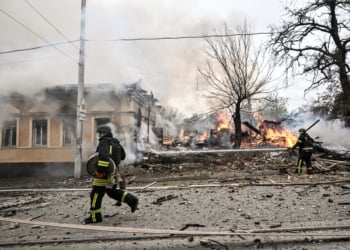
Volker: No, quite the opposite. Every time we take a position to promote Russia’s position, Russia’s views, Russia feels no pressure, and so they are just determined to continue the war. This is exactly what we saw again this week. We had two days of talks in Abu Dhabi. We got derailed off of talking about ending the war and onto talking about broader European security architecture. And then Russia goes ahead and bombs Ukrainian cities again, quite massively, in the wake of these talks. So the more the United States in particular, but anyone, is giving Russia comfort about its demands and its aggression, the more they’ll just continue.
IAM: This pattern that you’ve outlined has been going on now for two years. Witkoff — I believe it was his 10th trip to Moscow. What are they hoping to achieve? What do they think they will achieve by making these concessions to Russia?
Volker: That’s a really good question too, because there’s what they say — and do they think something else and not say it? It’s really hard to know. But one of the consistent things you hear from President Trump, Secretary [of State Marco] Rubio, Witkoff is that they view this as two sides fighting. In other words, moral equivalence — equal right and wrong on both sides — and they need to find a way out. Meaning that it is as much on Ukraine to stop the war as it is on Russia to stop the war.
That is a fundamental misunderstanding, or miscasting, of what is actually happening. There was no war until Russia attacked in 2014. There was no massive war until Russia’s full-scale invasion in 2022. Ukraine has repeatedly called for ceasefires of various kinds, including a general ceasefire, and Russia has repeatedly rejected that. So this is not two parties just fighting. This is one party launching an aggression against the other, and the other having to defend itself. And if you don’t understand that as the nature of what’s happening, then I think you completely misunderstand how to deal with it, and what the parties might actually be telling you.
IAM:Ambassador Volker, obviously you served under President Trump in the first administration. What would you be advising the administration to do, if you had that capacity to advise them?
Volker: What we need to do is end the war. President Trump’s right about that. But the only way you’re going to end it is if you convince Vladimir Putin it is too costly for Russia to continue. Whether it’s finances, or the military, military logistics, their place in the world — you name it — we’ve got to lay on the penalties and the pressure so it’s not worth it to continue. And then he might agree to a ceasefire.
Now, Ukraine has already begun doing this on its own, without U.S. help. And there’s a three-part strategy here. It is: hit the Russian finances — the Kremlin’s ability to pay for the war. And you do that by knocking out oil and gas export capacity and refining capacity. Second, make sure the Russian population knows that this is an active war going on that affects them. It’s not some antiseptic special military operation, as Putin has claimed. That puts pressure on Putin domestically. And then third is make sure that the Russian military is coming apart — which they are doing by taking out more personnel than Russia can recruit, and by disrupting the military logistics, which is the fuel lines, the roads, the bridges, ammunition depots, airfields, aircraft — everything that the Russian military needs to deploy and sustain its forces in the field. And the Ukrainians have done this brilliantly, and they continue to do so.
So when you have a situation where your finances are getting weaker, your population is getting more restive and your military is becoming disorganized, it’s time to stop the war. That’s what Ukraine is doing to Russia. What the United States should do — the advice to President Trump and to all Western leaders — is amplify the impact of that strategy. Look at how the finances are already being hit. Implement more sanctions, especially secondary sanctions, especially those that affect financial institutions making financial payments to the Kremlin. Disrupt those as much as you can. Help the Ukrainians with medium-range and long-range strikes on military targets. These are things that will make a difference and actually end the war quicker.
IAM: Ambassador Volker, I have to say, what you just laid out is essentially the opposite of what the administration is doing right now. In fact, the administration is recommending that Ukraine step back from its economic pressure on Russia, is telling it to stop hitting oil refineries, is allegedly restricting Starshield, which makes it harder for Ukraine to defend itself. But during Trump’s second term, the relationship with Ukraine has been hot and cold. It would be hard to argue that it’s ever been worse than it’s been over the past month. Do you think there’s any hope of getting that relationship back on track — or at least to the point where it was before October?
Volker: Look, there’s always a chance, there’s always hope, there’s always a possibility. The basis of that is simply what you said to start off your question: what I’m recommending is the opposite of what the administration is doing. Maybe President Trump or others say: look, after five years of doing the opposite, maybe we should try something else and see whether that would work. And I do think that you’re going to find more voices in the United States — from Republicans as well as Democrats, in the media — saying that the administration’s approach here is really wrong.
Importing Russian diesel, or at least seeking to do that — that doesn’t make any sense. That just gives the Kremlin more money. Lifting sanctions to do oil exploration in the Arctic — even the American companies don’t want to do that. And again, it would provide a benefit to Putin, which would cause him to continue the war. So I think you’re going to hear more and more of this after the midterms. And I think it is fair to think maybe President Trump, who does want to be effective, would reconsider.
IAM: On the midterms, what do you expect to change now? Do you think that on both sides there will be more pressure on the Trump administration? And given that U.S. foreign policy mostly comes from the executive branch, how can policy be influenced from Congress?
Volker: The bottom line is that you’re absolutely right. The president has significant leeway in foreign policy under the Constitution, and he has the ability to veto legislation that Congress produces. So he has the upper hand here. But Congress will pass legislation, they will pass budgets, and they’re going to challenge President Trump to veto them. And in some cases, they might even have the ability, with a few Republican senators joining the Democrats, to override a veto. If it was anything about leaving NATO, for example, I think you would see a majority in the Senate, including Republicans, saying: no, no, no, we’re not doing that. Likewise, you might find that with assistance to Ukraine.
And you might find that with sanctions on Russia, because the Lindsey Graham sanctions bill was passed with 80 votes or more in the Senate. And President Trump, in fairly short order, issued a national security waiver to say it’s not in our national security interest to implement this. Well, Congress vehemently disagrees with that — thinks it’s very much in our interest to do this. So you could imagine the next Senate, the next House, passing legislation again on Russian sanctions, but without including a national security waiver provision, so that President Trump would be forced to implement it.
He would likely veto that, and you might get the votes to override that veto. And if you game all that out, then maybe President Trump would actually think it’s better to implement the sanctions as they are, rather than losing that national security waiver for the future. So it’s an interesting and complex relationship coming up between Congress and the president over some of these issues, where there is a very strong and bipartisan view coming from Congress that President Trump doesn’t agree with, but may not be able to overcome.
IAM: Do you think Ukraine is going to remain a priority in Congress?
Volker: Yeah, it will. It’s not going to be the only one, and it may not even be the first one. But it will be a priority, because it touches on a lot of issues. It is national security, with respect to our alliance and with respect to Russia. It is democratic and human values, moral issues, support for people fighting for their freedom. It is popular in the U.S. — Trump’s position on Russia and Ukraine is not popular in the U.S. So there are a lot of reasons why I think it will remain a high priority for Congress.
But that being said, the top priorities are going to be the war against Iran and what’s going to happen there; what’s going to happen with what is perceived by the Democrats to be a lot of illegal actions by the Trump administration, and investigating those and taking them to courts. And then there’ll be pressure on the Democratic side not to get too bogged down in foreign policy, because the midterms are really about the domestic situation and the domestic economy, and what can be done to help people there. So there are a lot of priorities that they will be focusing on.
IAM: Ambassador Volker, I want to shift really briefly to Iran. When we spoke in August, you said that Trump was buying time before the midterms to make any major decisions on Iran. Well, the midterms are over, so I want to ask you: are those major decisions coming?
Volker:Yeah, I think so. I think he did buy time. We didn’t see a major escalation before the midterms. And then the midterms turned out to be a major rebuke to President Trump, and a major rebuke against the idea of launching this war against Iran. So I think that has now helped Trump make a decision not to relaunch a major war against Iran. He may have been inclined toward that if he had had a big turnout and a win in the midterms, but I think the midterms kind of made the decision for him.
So now he’s going to be looking for a way to say that he’s done enough. And I think that will be trying to conclude a nuclear deal where Iran promises never to have a nuclear weapon, even though we don’t believe them. And we agree to sign a deal like that, even though we’re skeptical. And we just move on from the issue of freedom of navigation, because we’re not willing to fight a major war to reopen the Strait [of Hormuz]. That seems to be where we’re headed. Not a great outcome, but I think the midterms have helped shape that direction now.
IAM: In terms of that direction — as you know, the morning after the election, Vice president JD Vance blamed the Iran war for the election loss. And Trump has said he largely agrees with Vice President Vance. Although today he announced on Truth Social that he’s pulling Vice President Vance away from the talks. Given what you just said, do you think that, by pulling Vance away — is that more of a message to Vance, or a message to Iran?
Volker: Oh, I think it’s definitely a message to the country: we’re going to focus on domestic issues and all those terrible things the Democrats are doing. So it’s fighting fire with fire. The Democrats will be investigating the administration, Trump, his family, DOGE — you name it. So he’s going after corruption in blue states, and letting JD Vance take the lead on that. It’s all about the domestic side. And it also preserves JD Vance for the future, because if I’m right, I think we’re going to end up with a not-great deal with Iran and just get it over with. And maybe it’s better not to have the vice president’s fingerprints on that.
IAM: A final question. As you look ahead to the remaining two years of this administration, what do you think is the greatest threat or challenge facing American foreign policy? What keeps you up at night, Ambassador Volker?
Volker: I think the best way to say this is: because we are not creating a positive, stable, principles-based, clear posture for the United States and the West, people are always wondering, what are we going to do? What do we stand for? President Trump, to be fair, says he likes to be unpredictable. But the fact is, this unpredictability can lead to people assuming that we won’t act — that they’ll be testing us, and they’ll be degrading our position in the world over a couple of years. And one of those could actually blow up spectacularly, without anyone really wanting it. So I think we’ve created a very volatile situation, where any number of crazy things could happen, and then we’ll be in a much bigger mess than we are already. So I think that lack of commitment to values and to principles, and to a steady approach on foreign policy, is very, very dangerous.