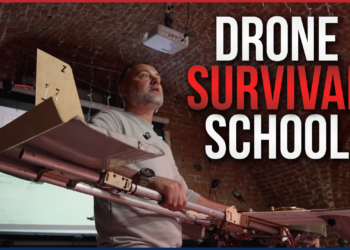
Zaliznyak, commands the drone unit of Peaky Blinders, a volunteer formation serving in Ukraine’s National Guard. He spends most days hunting Russian drones.
But today he’s a teacher.
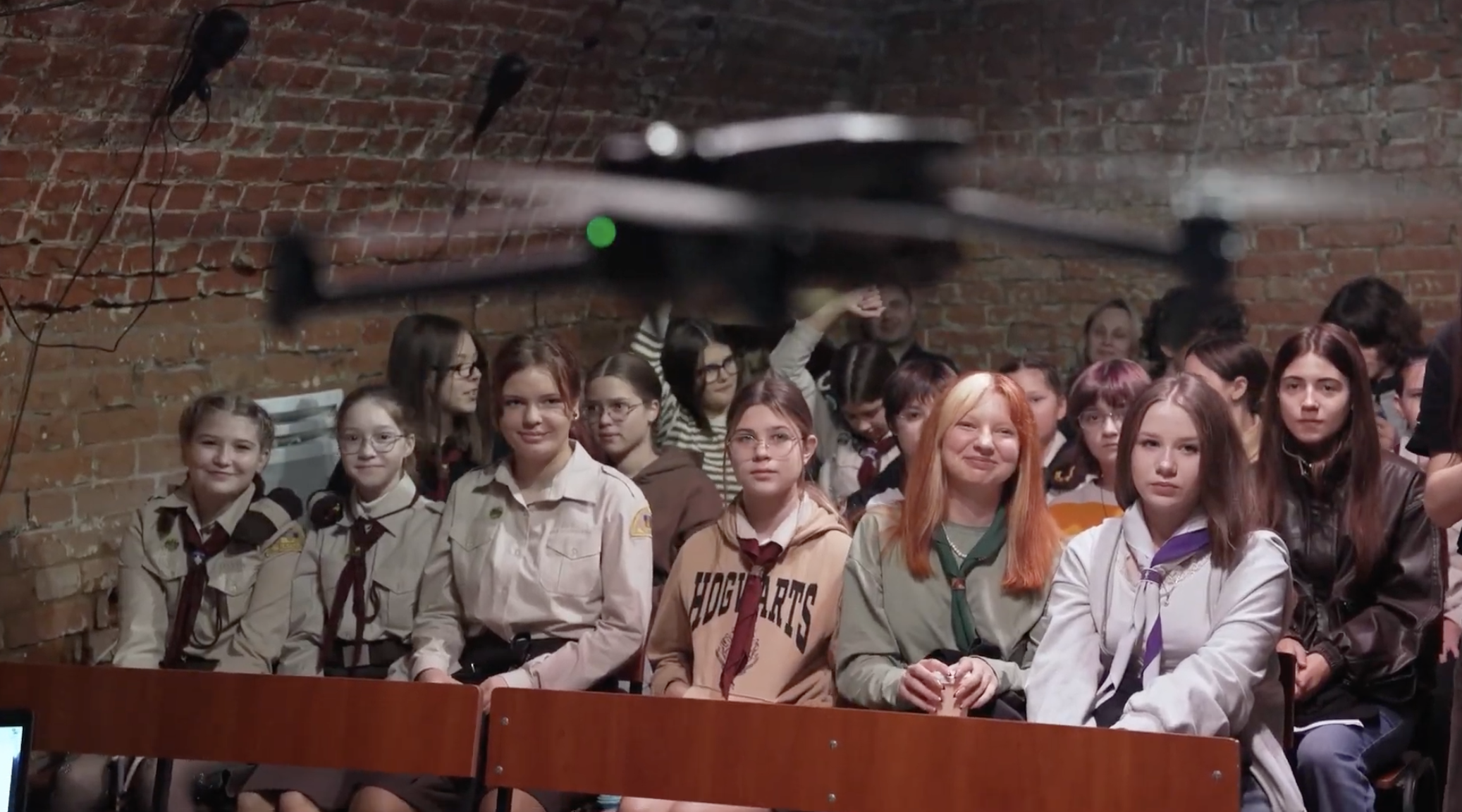
“Has anyone heard of fiber optic? Has anyone seen one before?” he asks a room of teenagers in Kharkiv, holding the thin fiber optic cable commonly used by Russia to guide short-range drones.
“Near my house,” a child answers.
According to the United Nations short-range drones became the second-leading cause of civilian casualties in Ukraine in September, killing 87 civilians and injuring nearly 500 more.
Zaliznyak and other soldiers are teaching children how to recognize different types of drones and how to avoid becoming their targets.
The need is growing with technology. “Two years ago, FPV drones could fly 10 kilometers. Today, they can fly 100 kilometers. How far they’ll fly tomorrow, nobody knows,” Zaliznyak says. “Everyone in Ukraine, especially people living near the front lines, needs training on how to stay safe during drone attacks.”
Zhora, another soldier, holds up a downed Russian Molniya drone, the Z marking still visible on its body. He walks the class through how a drone finds a person, how the operator releases the munition, and what happens next. Then he lays out the rules.
“If you hear or see something, head to the nearest shelter,” he tells them. “If you find a drone that hasn’t exploded, whether it’s overturned or just lying there, notify the appropriate authorities. Don’t try to disarm it. Don’t approach it. Don’t touch it. Understood?”
The soldiers teach the children about electronic warfare too. Zaliznyak gives commands to a colleague while the class claps as loudly as it can — the noise standing in for the radio interference that cuts a drone off from its operator.
“While you were making noise on this frequency, I gave Olia several commands,” he says. “But Olia, why didn’t you follow them? You couldn’t hear them, right?”
Roman, a 13-year-old student, says his school was bombed by Russia in 2022. After five years of war he says he can already tell by sound whether a Russian attack drone is passing overhead or diving toward its target. What he liked most about the day, he says, was “learning about first person view drones — how they fly and how they drop grenades.”
Iryna Dement brought her three daughters. “Drones fly over Kharkiv every day,” she says. “We need to understand what’s flying, where it’s flying, and how to protect ourselves.”
Reporting by Maria Malevska in Kharkiv