The Shatterbelt Brief is a weekly column by Brian Whitmore examining the shifting political and geopolitical dynamics of Eastern Europe and Eurasia. The views expressed are the author’s and do not necessarily reflect those of Independence Avenue Media.
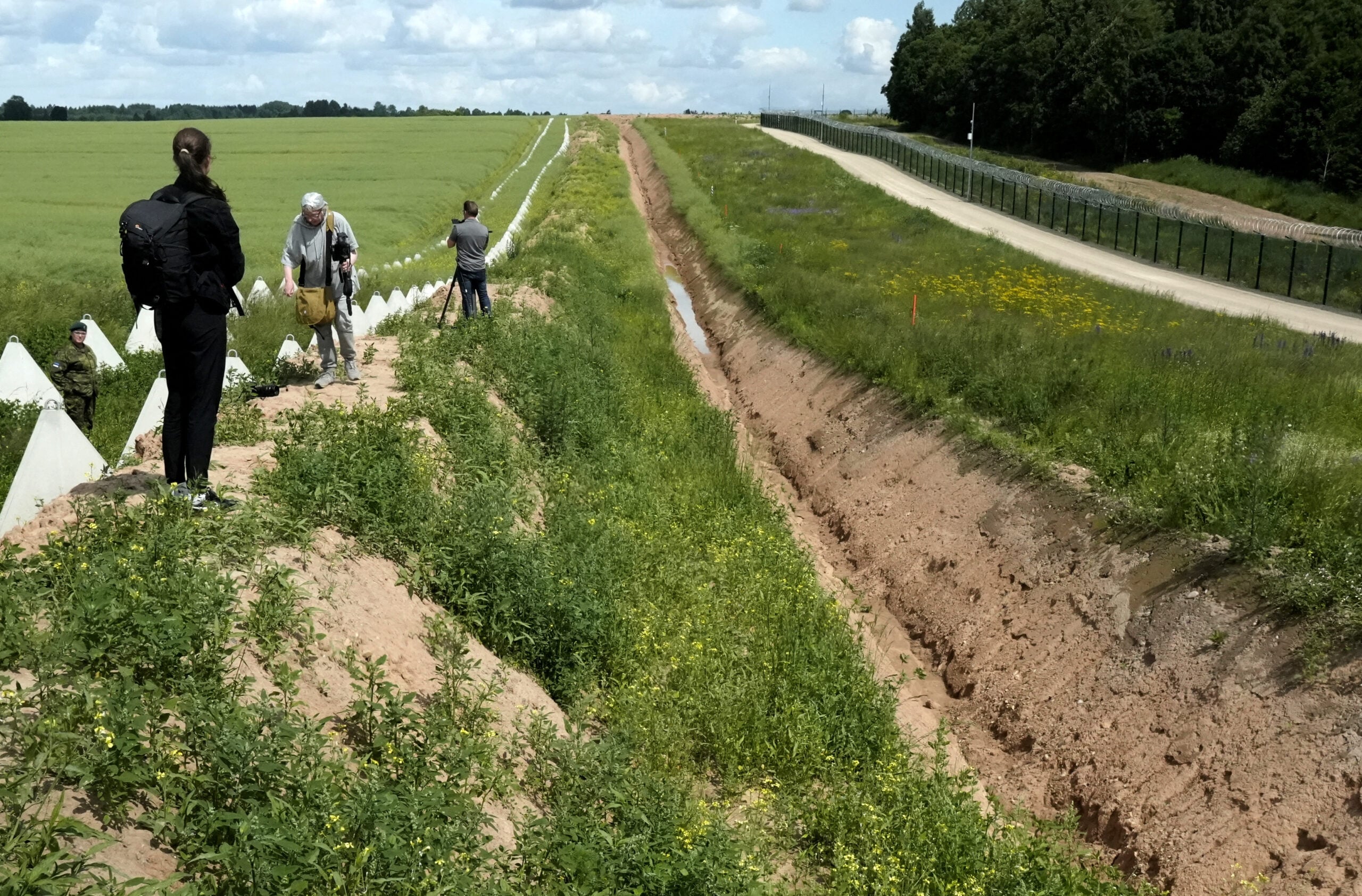
Lithuania is preparing evacuation routes. Poland is planning for the possible influx of refugees from the Baltic states. Germany is readying its hospitals and health care system for potential armed conflict. And France is taking measures to protect critical infrastructure.
Europe is on edge. And it is preparing for the worst.
Russian hybrid attacks, sabotage campaigns and assassination plots on the continent have been steadily rising this year. In the first eight months of 2026, there were 100 officially attributed Russian attacks in Europe.
An unidentified senior NATO official told Politico that the actual number was “easily 200 plus.” And this doesn’t include cyberattacks, which the official said number in the thousands against NATO headquarters alone. “Numbers are up, severity is up,” and Russia’s “risk appetite is up,” the official said.
The emerging consensus in Europe, especially on NATO’s eastern flank, is that Vladimir Putin’s autocratic regime is plotting something escalatory. Perhaps a false-flag terrorist operation to instill fear, discord and division. Perhaps a drone attack with plausible deniability. Perhaps a limited incursion into eastern Estonia to test the alliance’s resolve.
Polish Prime Minister Donald Tusk told parliament on Sept. 17 that intelligence suggesting Russia was up to something big was “highly consistent and, unfortunately, persuasive.”
And Tusk is not alone in raising the alarm.
Lithuanian Foreign Minister Kestutis Budrys says Vilnius’ intelligence matches Poland’s. Dutch Prime Minister Rob Jetten said on Sept. 18 that Europe needs to take Tusk’s warning “very seriously.” French President Emmanuel Macron, who said Tusk’s warnings were “sound and well-documented,” called an emergency meeting in Paris that included party leaders and 2027 presidential candidates, and ordered officials to protect critical infrastructure from hybrid attacks. And Finnish President Alexander Stubb warned his nation, which has a 1,340-kilometer border with Russia, that it was “worth mentally preparing for something to happen.”
This all follows a high-profile visit to Moscow in August by CIA Director John Ratcliffe, in which he reportedly warned Russia against attacking NATO countries. Ratcliffe’s visit came after U.S. intelligence assessments suggested that Moscow may try to test NATO’s resolve with a limited assault on an allied country in the next few years — most likely one of the Baltic states.
And back in May, Anne Keast-Butler, director of GCHQ, Britain’s signals intelligence agency, warned that Putin is poised to escalate his sabotage and assassination campaign in Europe, with the main targets including critical infrastructure and supply chains.
Warnings that Russia is preparing to launch some kind of operation in Europe have become so frequent this year that they risk resembling “The Boy Who Cried Wolf.” Could this all just be an elaborate Kremlin-orchestrated psyop?
Perhaps — I’ve wondered about that in this space. But there are also very good reasons to believe that the threat is real.
Most importantly, Putin may see a unique window of opportunity to achieve his long-cherished goal of splintering NATO and the European Union — and is determined to move before the window closes.
President Donald Trump’s current posture toward NATO has vacillated between indifferent at best and hostile at worst. U.S. forces in Europe number approximately 80,000, and the Pentagon is considering pulling out between 25,000 and 40,000 of them. Trump has repeatedly berated European allies for not bearing enough of the alliance’s defense burden and suggested that the United States may not be there to protect them in a crisis.
In this atmosphere, a limited Russian incursion into one of the Baltic states could create a scenario designed to test NATO’s Article 5 collective-defense clause. This is a scenario the Institute for the Study of War (ISW) recently explored in a study of a hypothetical limited Russian armed intervention in eastern Estonia in which Russian proxies seize the Narva Museum and its city hall.
“A number of NATO states will likely be very hesitant to invoke Article 5 over a limited incursion, fearing the consequences of appearing to launch the alliance into a full-scale war with Russia. Russian cognitive warfare efforts are already playing on these fears and will intensify before and during the Russian attack,” the scenario’s authors, Frederick W. Kagan, Mason Clark and George Barros write.
The second reason to take the threat seriously is that the Ukrainian armed forces are performing better on the front than at any time since 2023, according to military analyst Michael Kofman. ISW data shows that in 2026 Russian forces seized just 147 square kilometers of territory and 40 settlements, while Ukraine liberated nearly 1,000 square kilometers of land and 60 settlements.
Much of this is the result of Ukrainian ingenuity and innovation, especially in drone warfare. But some of it is due to European support, which has stepped in to fill the void left by the decreased defense support from Washington. Under these conditions, Moscow may be incentivized to attack the European production and logistics hubs aiding Ukraine’s defense.
And the final reason to take all this seriously is that Russia is already attacking Europe.
An explosive-laden Russian drone hit an apartment building in Romania. NATO fighter jets shot down multiple Russian drones that had violated Polish airspace, and explosives were placed on a Polish rail line. Aviation systems have been jammed over Sweden. And a dam was hacked in Norway. And that’s just a small sampling.
And when you consider that Russia is reportedly building a network of at least 10 military bases along its borders with Ukraine and Belarus, equipped with at least 59 launch rails to enable mass drone attacks that could target Ukraine as well as European capitals, one has to wonder what a Russian escalation in Europe might look like.
But we should all remember that in “The Boy Who Cried Wolf,” the wolf does eventually come for the flock.