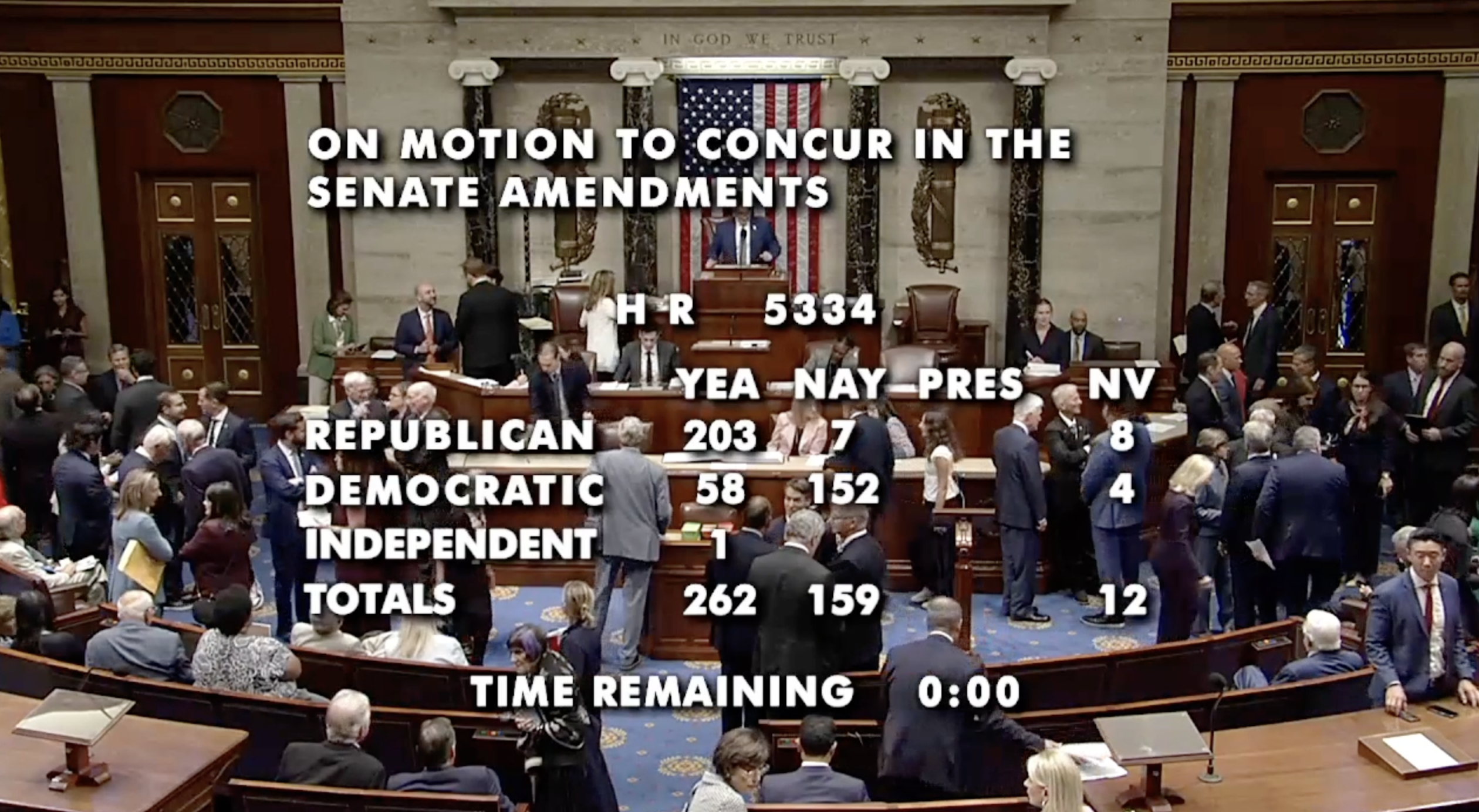
The U.S. House of Representatives voted 262-159 to approve one of the most significant new efforts to increase economic pressure on Russia since the full-scale invasion of Ukraine. The bill now heads to President Donald Trump’s desk.
Getting to this point has been anything but straightforward. The legislation — formally the Lindsey O. Graham Sanctioning Russia and Iran Act, named for the late South Carolina senator who spent more than a year negotiating it — cleared the Senate by an overwhelming margin last month. In the House, however, Republicans and Democrats spent hours arguing over a more complicated question: would this bill actually help Ukraine, or would it simply hand President Trump more power?
Members of both parties overwhelmingly say they support Ukraine, but they disagree on what is more important for Kyiv right now — money and weapons, or economic pressure on Russia.
Republicans argued that Congress can make the war more expensive for Russian President Vladimir Putin without appropriating a single new dollar or rifle for Kyiv.
“Putin believes he can keep financing this war indefinitely. We need to change that calculation and bleed his regime economically dry,” said Rep. Michael McCaul, a Texas Republican.
The measure allows the president to sanction Russian officials, banks, and the “shadow fleet” of tankers that keeps Russian oil moving around the world despite existing price caps. Its centerpiece, though, is trade policy: it authorizes Trump to impose tariffs of up to 100% on the top five importers of Russian oil or natural gas — a list topped by China and India — with an exception for countries that get less than 15% of their energy from Russia and have taken meaningful steps to cut further.
“The economic lifelines that keep the Kremlin’s war machine running must be restricted.”
— Independence Avenue Media (@indavemedia) September 16, 2026
Rep. Mike Turner (R-OH) urged House members to support sanctions targeting Russia and those financing its war through purchases of cheap Russian energy. Pointing to the toll on Ukrainian… pic.twitter.com/0nUGPsigl6
That tariff mechanism is also what split lawmakers.
Many Democrats argued that a bill offering Ukraine neither money nor weapons, while simultaneously expanding the president’s own tariff authority and leaving sanctions largely at his discretion, could not honestly be called pro-Ukraine legislation.
Rep. Gregory Meeks, the ranking Democrat on the House Foreign Affairs Committee and one of the bill’s sharpest critics, took direct aim at how much discretion the legislation hands the White House.
“Why would we hand the ‘tariff man,’ as he calls himself, new authority to impose even more inflationary tariffs without clear guardrails?” he said. “And what do the Ukrainians get in return? No security assistance, no air defense, no reconstruction support for war-ravaged communities. This bill as drafted does not require tougher sanctions on Russia. The historically broad waiver language makes imposing sanctions essentially optional. Do we really believe that President Trump and his record is going to suddenly get serious about punishing Russia?”
Rep. Don Beyer, a Virginia Democrat, went further, predicting that Ukraine’s supporters would come to regret backing the bill.
“Yes, they will be able to say ‘we stood with Ukraine’ in the immediate aftermath,” Beyer said, “but when Donald Trump hits our allies with new tariffs and waives sanctions on Russia, the propaganda victory for Putin will be lasting, and the damage will be embedded in U.S. policy for years.”
Some Republicans who voted for the bill said it could have been better. Rep. Don Bacon, a Nebraska Republican who has broken with his party on Ukraine policy before, urged colleagues to back it despite its imperfections: “Do not let perfection be the enemy of good.”
The divide did not run neatly along party lines. Maryland Rep. Steny Hoyer, the former House majority leader, urged fellow Democrats to back the bill despite its flaws.
“I disagree with the president,” Hoyer said. “But I agree strongly, ladies and gentlemen of this House, it is time for us to stand up and say to Russia: you will not continue with this without our adverse action.”
“If we fail to pass this bill, there will be cheers in the Kremlin and tears in Kyiv,” he added.
“If we fail to pass this bill, there will be cheers in the Kremlin and tears in Kyiv.”
— Independence Avenue Media (@indavemedia) September 16, 2026
Rep. Steny Hoyer (D-MD) urged the House to pass the Russia sanctions bill, rejecting arguments that it would give Trump unchecked power.
He said lawmakers should send a clear message in… pic.twitter.com/65arnjdw56
Who’s Really Standing With Ukraine?
Much of the floor debate turned into a broader argument over which party has actually done more for Kyiv.
Democrats pointed to what they described as a 99% cut in U.S. assistance to Ukraine under the current administration, blocked funding packages and hundreds of millions of dollars previously approved by Congress that remain unreleased.
They also invoked what they saw as President Trump’s affinity for Putin over Ukrainian President Volodymyr Zelenskyy.
Republicans countered that Democrats were putting opposition to Trump ahead of support for Ukraine. They noted that Zelenskyy and Ukrainian officials themselves had backed the legislation, arguing Democrats were second-guessing what Kyiv says it needs.
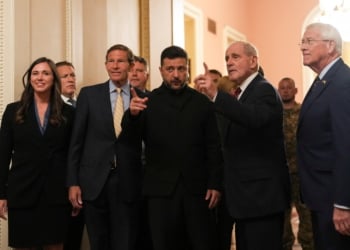
“Eighy-six senators voted for this bill. You cannot get 86 senators to agree the sky is blue. Volodymyr Zelenskyy is strongly in support of it, so much so that he flew here to support it. Vladimir Putin is against it. Should that not tell us all we need to know? Are we now claiming that we know better than President Zelenskyy about what’s in the best interests of Ukraine?” said Rep. Brian Fitzpatrick, a Pennsylvania Republican.
What Happens Now
With both chambers now having passed the same text, the bill goes directly to Trump for his signature.
For Ukraine, the bill’s passage removes one source of uncertainty heading into a difficult winter — even as questions remain about how aggressively the tariff authority it grants Trump will actually be used.
MORE: Daniel Fried: Take Trump’s Peace Push Seriously — and Pass the Sanctions Bill to Back It