
WASHINGTON — Former national security adviser H.R. McMaster says the Trump administration’s new national security strategy misses critical opportunities to confront what he calls an “axis of aggressors” led by Russia and China.
In an interview with Independence Avenue Media, McMaster said that “the document would have been better if it would have stressed the danger associated with the agenda of these revanchist powers,” and that it underestimates both the scale and urgency of the threat.
“There [are] some missed opportunities there to clarify the nature of the competition” presented by Russia and China, he said, which are working together to “tear down the existing rules of international discourse and replace them” with new ones that favor authoritarian governance.
McMaster, who oversaw the drafting of the 2017 national security strategy under President Donald Trump, also pushed back on European concerns about the tone of the 2025 strategy, saying the broader transatlantic relationship remains strong despite political rhetoric.
“Europe is stepping up. It finally recognizes the persistent danger associated with Russia in particular. And you have the doubling of defense budgets,” he said, noting that U.S. perceptions of European “freeloading” no longer reflect reality.
McMaster, a retired Army three-star lieutenant general, expressed alarm that the Kremlin publicly praised the U.S. strategy, especially as “Russia is waging a shadow war against the United States through various forms of cognitive warfare and cyberattacks.”
Looking ahead, he urged the United States and its allies to intensify pressure on Russian President Vladimir Putin and strengthen support for Ukraine.
“Putin’s ruse is this idea that he’s strong,” he said. “He’s the shirtless man on horseback, when in fact, he’s actually in a very weak position economically.”
McMaster warned of the consequences if the United States agrees to Russian ceasefire terms that cross Ukraine’s and Europe’s red lines.
“Putin’s objective is to drive that wedge between the United States and Europe and to break apart the NATO alliance,” he said.
Even if the war ends on Russia’s terms, “Ukrainians will never stop fighting,” he said, adding, “What’s really important at this stage is to help bolster Ukrainian will with sustained commitments.”
The following interview, recorded December 8, has been edited for length and clarity.
Ia Meurmishvili, IAM editor in chief: What do you think about the U.S. national security strategy that came out last week?
H.R. McMaster, former U.S. national security adviser: I think there [are] some missed opportunities there to clarify the nature of the competition with two revanchist powers on the Eurasian landmass of China and Russia and how they’ve brought into the fold other members of what I would call an axis of aggressors. The document would have been better if it would have stressed the danger associated with the agenda of these revanchist powers, which is really to tear down the existing rules of international discourse and replace them with a new set of rules that are favorable to their authoritarian forms of government, and in China’s case in particular, its status mercantilist economic model. Although that competition, the economic competition with China, was present in the document.
IAM: What do you make of the tone toward Europe? Europeans are very nervous about that, even though European Union foreign policy chief Kaja Kallas came out earlier and said that the U.S. remains Europe’s biggest and most strategic partner.
McMaster: I think it’s going to be fine in terms of the transatlantic relationship and the relationship with Europe. What people have to realize is that there is this sense that Europe has been freeloading on the largesse of American taxpayers, right? Europe was about 19% of the world’s economy and about 50% of the world’s social spending but wasn’t investing in defense. So a lot of Americans thought, “Hey, why are we covering their defense bills and then indirectly underwriting their social programs?”
And so they had a point there, but hey, now Europe is stepping up. It finally recognizes the persistent danger associated with Russia in particular. And you have the doubling of defense budgets, the commitment to spend 5% [of GDP annually] on defense — three and a half percent on hard defense capabilities and another 1.5 percent on critical infrastructure related to defense. So I think the Trump administration has already won on this point, but I think still to maybe appeal to their political base, they make a point of saying, “Hey, Europe, you better step up yourselves,” even though Europe is already doing that.
IAM: The Kremlin was very happy to see the U.S. national security strategy, and in fact, they officially praised it. Do you recall any such instances in the past?
McMaster: No, especially at a time when Russia is waging a shadow war against the United States through various forms of cognitive warfare and cyberattacks — but certainly against Europe.
Of course, we should all be focused on the continued onslaught against the Ukrainian people. Also, there has to be a recognition that Russia is also cutting undersea cables blowing up warehouses, trying to put bombs on DHL aircraft, blowing up a rail line in Poland, orchestrating these incursions by drones against Denmark or the Baltic states or in Poland. [Editor’s note: Although European authorities have suspected Russian involvement in Baltic Sea cable incidents, IAM could not independently confirm these claims. Russia denies the allegations.]
What’s necessary is to let [Russian President Vladimir] Putin know he can’t get away with this. And it’s well past time now to sort of exacerbate the problems he’s created for himself. And I believe that part of Putin’s ruse is this idea that he’s strong. He’s the shirtless man on horseback, when in fact, he’s actually in a very weak position economically. The three-week lightning campaign that he launched in February of 2022 is now a four-year war, and he’s incurred over a million casualties.
The economy is in a shambles as he sits on piles of cash that he can’t convert. His economy is stagnant. … And of course you have the effect of attacks by Ukraine on some of the fuel infrastructure within Russia. And now he’s resorting to essentially slave labor in some of these drone factories, for example.
And so I think it’s time, past time, to put more pressure on Putin. I would like to see the European Union use the frozen Russian assets to sustain Ukraine. … And I think it’s time to really step up the provision of certain defensive capabilities to Ukraine as we increase the economic pressure on Putin.
IAM: How important is the new national security strategy to the administration’s ability to make or execute policy? Is this a serious document?
McMaster: You know, it should be. It just all depends on what process produced it as well, like how much was the president involved.
In 2017, when we published the national security strategy for [U.S. President Donald] Trump’s first term, he was very much involved. I met with him multiple times, went over each part of the document. He was enthusiastic about it. Many times he would say, “I need more of this language. This is great.” And he would turn to his speechwriter and say, “Hey, get more of that in my speeches” and so forth.
We had worked with him across that first year of his presidency, and … a lot of the ideas [were worked] into speeches that he gave. One of those that I think was an important speech was the speech he gave in Warsaw. … It can be an important document if it reflects the president’s thinking first.
And then second, it has really critical audiences. One is the American people, so they understand really what the administration is doing to put into place a foreign policy and a national security strategy to advance the interests of the American people, given the geostrategic environment. It’s educational in that way. But the most important audience, as your audience will know for sure, is overseas, right? Because Americans, they kind of pay a little bit of attention to a document like this, but abroad, it’s read very closely. And I think it can send either a positive signal that advances your interests, or it can sow doubts about American resolve and reliability.
And sadly, I think it’s a mixture of both, right? It’s not an isolationist document. I mean, there are certain aspects of it that I think are important and promising, especially in connection with making supply chains more resilient, invigorating our industrial base to ensure that China doesn’t have coercive power over our economies.
But there are other aspects that are disappointing … not calling out Russia for its brazen aggression, not having a focus on restoring deterrence against Russia and countering the various forms of Russian aggression, along with recognizing more clearly the security threat that China poses. There is some good language in there about access to the first island chain, for example, in the Pacific. But I think it could have been a stronger document in terms of what it communicates internationally.
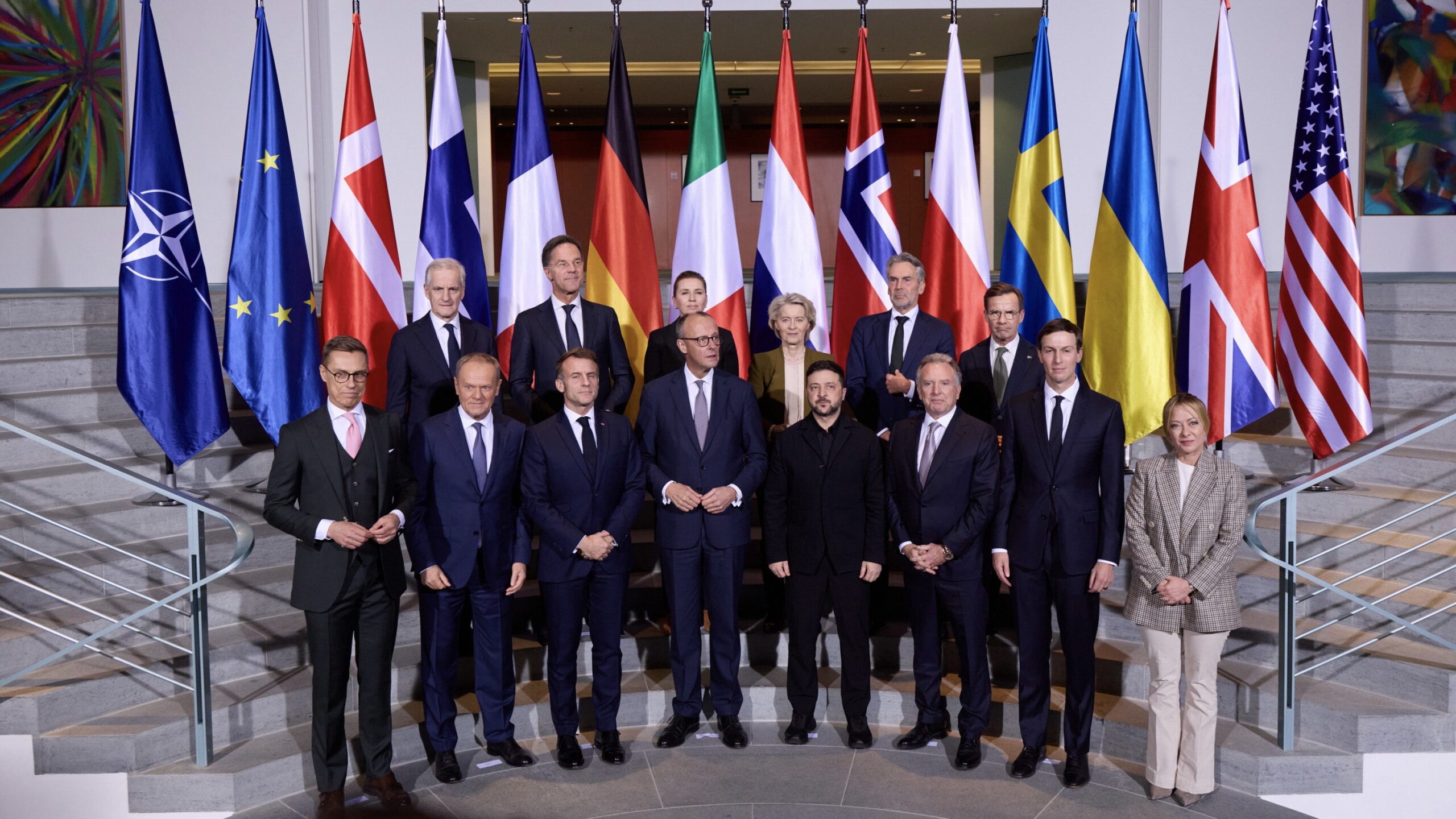
IAM: Today [December 8], Ukraine’s allies, the coalition of the willing, will be meeting in London with Ukrainian President Volodymyr Zelenskyy. How do you see the Ukraine war continuing? Do you think President Trump will continue being involved?
McMaster: I think what’s really important at this stage is to not give Russia what Russia wants, which is, Russia wants the United States to sign up for terms for a ceasefire that are unacceptable to the Ukrainians and the Europeans. Again, because … Putin’s objective is to drive that wedge between the United States and Europe and to break apart the NATO alliance.
And he thinks this is a great way to do that. So I think what’s really important is to highlight to President Trump and the people around him how this is an unacceptable agreement given the nature of Russia’s aggression and the reality that Putin won’t stop until he really is stopped.
The idea of giving de jure recognition of territory to Russia, that they control that territory, I think has got to be a red line, as well as evacuating some of the critical defensive positions that Russia has been unable to take through force. I think that those red lines are important red lines for the Ukrainians and the Europeans. I believe that President Trump can be convinced that these terms have to change. And I think the approach that President Zelenskyy has taken is the right one, which is, “Yeah, I want a ceasefire too.” And this is a good starting point.
But then to come back with a proposal because Russia really doesn’t want peace, right? Russia wants the ability to continue the war by other means and to ultimately either subsume all of Ukraine or to leave Ukraine with kind of a rump state that is servile to Russia.
Of course, Ukrainians will never stop fighting. If that’s how the war would end, that war wouldn’t end. What’s really important at this stage is to help bolster Ukrainian will with sustained commitments. Europe is doing this. I think that we’ll see that as an outcome from today because I am concerned about war being a contest of wills.
Putin’s ruse is to appear strong and to make it look like his victory in Ukraine is inevitable. Ukrainians know that’s far from the case. And so I think it’s time to help strengthen Ukrainian will, especially in the wake of the corruption scandal and these other various blows that have been delivered to the psyche of the Ukrainian people in the midst of a continued massive onslaught against civilians, civilian targets, and power and infrastructure in Ukraine.
IAM: Could Ukraine continue to fight if the United States stopped sharing intelligence and selling weapons to European allies for transfer to Ukraine?
McMaster: Yes, they can. And Europe can fill a lot of the gaps. I don’t think that’s going to happen though, because it’s very clear that the vast majority of Americans … support Ukraine and want to continue support to Ukraine.
Also, I think what you’re seeing now is Congress is having a stronger backbone, and I think will make quite clear to President Trump that they reflect the will of the American people and are in favor of sustaining support for Ukraine and not in any way signing up for an agreement that’s going to be to Russia’s benefit beyond what they’ve been able to achieve in this horrible war against Ukrainian people.