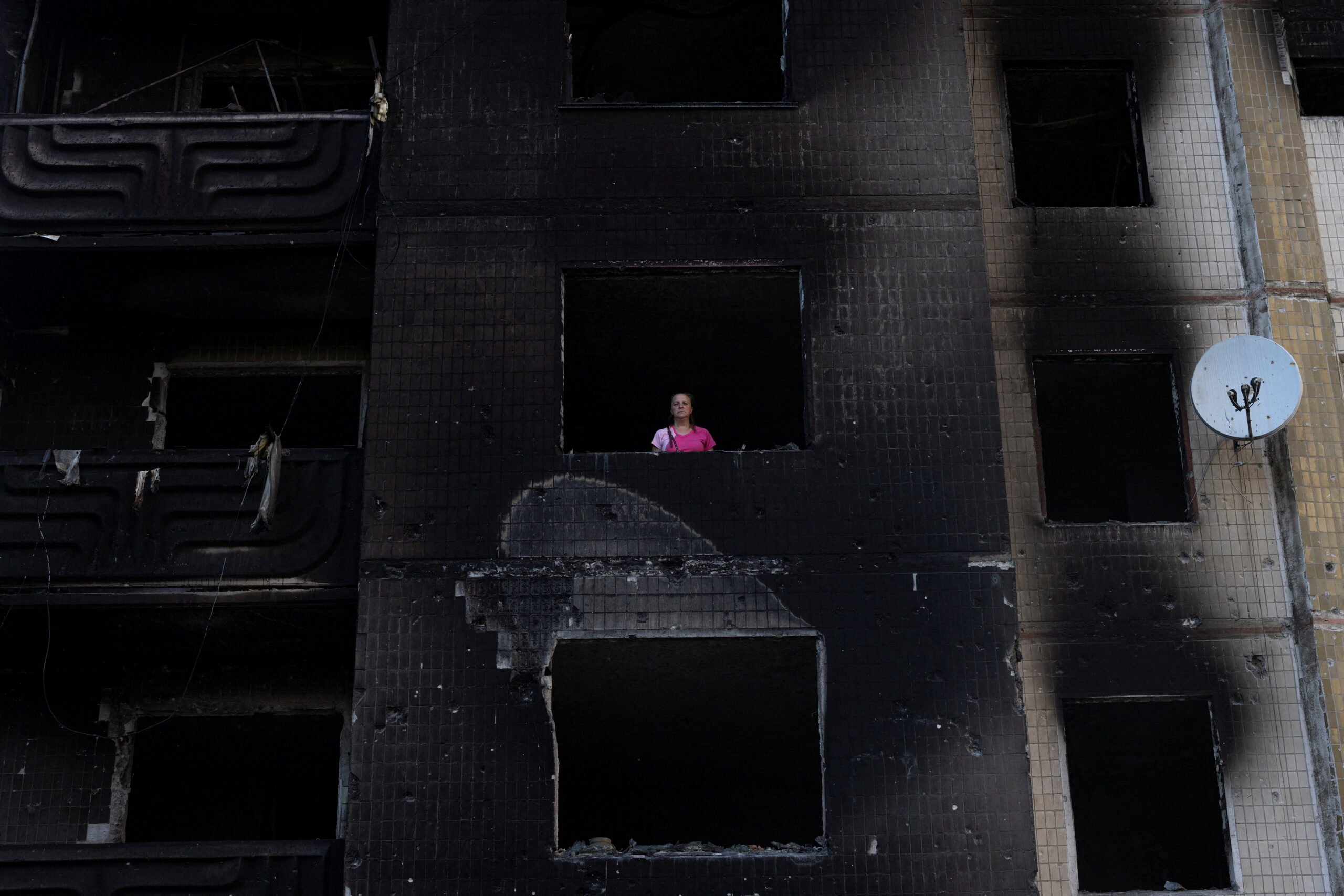
Brent Renaud was a documentary filmmaker and journalist known for telling deeply human stories from conflict zones and communities in crisis. A native of Little Rock, Arkansas, Renaud spent more than two decades working in some of the world’s most dangerous places, shedding light on the stories of civilians caught in war, conflict, and natural disasters.
“Armed Only With a Camera: The Life and Death of Brent Renaud,” an Oscar-nominated HBO documentary short directed by his brother, Craig Renaud, reflects on that legacy. In the interview below, Craig discusses Brent’s approach to journalism, the risks of war reporting, and why bearing witness to human suffering remains essential.
The following interview was conducted on January 22 and has been edited for length and clarity.
Nika Lomidze, Independence Avenue Media: Congratulations on the Oscar nomination for the HBO documentary “Armed Only With a Camera,” which showcases your brother Brent’s journalistic work. Can you tell us a little bit about the journey of getting to this point?
Craig Renaud, filmmaker: My brother was the first American journalist killed in Ukraine, on March 13, 2022. We were making a film at the time about refugees fleeing that crisis, and Brent [Renaud] was on the ground and was ambushed along with Juan Arredondo, one of our colleagues. Brent died and Juan survived just barely. And ever since then, we’ve been working on a film about what happened as a way to honor Brent, but also as a way to honor all the journalists that have been killed since Brent.
It’s been the deadliest time ever for journalists. Since my brother was killed, there’s been over 100 journalists killed every single year. And so, this film, we wanted it to be bigger than just a story about my brother. We also wanted it to draw attention to the work that the journalists do to bring the truth about these conflicts and the sacrifice that they make when they lose their lives.
IAM: It was a very moving documentary. For those who might not be familiar with it yet, who might not have seen it or might not be familiar with Brent’s work, can you tell us a little bit about how he used to describe his profession?
Renaud: Brent’s always been a documentary filmmaker and a journalist. We’ve been doing this work together as brothers for over 20 years. I followed my brother into this work, and my brother was somebody that truly believed in using his camera to do good in the world.
He was fearless and brave but also the most compassionate person I’ve ever known. When he went to conflicts, it was not about being on the front lines or the adrenaline of that. It was always about getting to the people that were caught in the middle of these conflicts and telling their stories. And that’s what we tried to do through this film, to show the 20 years of work that he did doing exactly that.
We’re just honored and grateful that HBO did this film with us, and that people are receiving it like this, because it’s important to remember people like Brent who risked their lives to try to tell these stories.
IAM: When he was going to these dangerous places — he was going to Ukraine, he was going to Haiti — when he was trying to tell the story of those whose story might not be heard, was there any part of him that wanted to cover something that’s not covered in the news? When we hear about these big stories, what is it that we don’t oftentimes hear? What is it that we miss?
Renaud: Our approach was always trying to get to the people on the ground. When these wars happen, like in Ukraine, or the earthquake in Haiti, there’s news coverage of that, and often there’s not a human face attached to those stories.
So, we always try to dig a little deeper than what everybody was seeing on the news and spend a lot of time with the people on the ground. When we would go in as documentary filmmakers, it was many, many months, sometimes over a year, that we would be on the ground. We embedded for an entire year on the ground in Iraq with the Arkansas National Guard.
It was always about just really trying to put a human face on these conflicts so that people really understood the emotional toll that these wars take on innocent people. And so that was always the goal.
IAM: There was always so much risk involved in it personally for your brother, for you. The sacrifice that your family made. What do those conversations about risk look like when he tells you that he’s going to be one of the first journalists in Ukraine in 2022? How does that conversation go?
Renaud: We talked about it throughout our entire career. We had many moments where neither one of us probably should have survived and moments that we were fearful going into conflicts. We always talked about what would we do if something happened to one of us, and we always said we would keep filming.
When my brother was killed in Ukraine, it was hard to do. It was hard to pick up a camera and keep filming, but I knew for certain that’s what Brent wanted me to do because we had talked about it. For us, we felt honored to be able to do this kind of work, and we felt a huge responsibility through that.
We understood the risk. There was never a part of me that didn’t understand that. When Brent was killed, it was very difficult and hard, but it was also very poetic because I know that Brent died doing exactly what he was put on this earth to do and something that he truly believed in.
IAM: Throughout the process of making this documentary, as you’re looking back, was there something that you learned about your brother that previously you did not fully understand or maybe overlooked?
Renaud: Part of making this film was going back into 20 years of our archives of making films together and looking for moments of Brent’s voice and his interactions with people. A lot of this stuff we never would have seen in the edit because it was just so much footage that we captured over the years.
There’s one moment in the film where Brent is filming in Somalia after the biggest car bomb in their history has just gone off, and Brent’s in the hospital filming patients, and a man spontaneously calls him over. The man’s covered in burns all over his body and says to Brent, “The way you hold that camera, you’re doing it from your heart.”
Finding moments like that, where somebody recognized that compassion in Brent, and also this shared humanity in the middle of a war zone, and this man suffering from burns all over his body that he stopped to have this moment with Brent. Those are the kind of moments that we overlooked before, and [they] reveal that there’s something bigger than just these conflicts. It really is about the people on the ground who are suffering.
IAM: At the end, when we see Ukrainians walking through the streets with pictures of Brent that they’re holding up, it was also very moving. Why do you think that is? What story did he tell about Ukraine in those early days? What truth did he put out there that reverberated with not only Ukrainians but Americans as well?
Renaud: When I went into Ukraine, it was Ukrainians and Ukrainian journalists who made it possible for me to get Brent’s body home to our family. They dropped everything that they were doing and spent over a week helping me get Brent out, helping me get Juan out of the hospital who was injured.
They all just kept thanking me for Brent showing up to tell their story to the world. I think they just were appreciative of anybody that came and tried to shine a light on this conflict. So, I’m equally as grateful to the Ukrainians for helping us during that time and for honoring Brent in that way and to know that they were celebrating Brent as a hero just meant so much to our family.
IAM: You and Brent both saw so much horror in war zones, disaster zones. What is it that you look forward to, and what do you think he would be looking forward to, on the four-year mark of Russia’s invasion? What was that sense of hope that maybe drove him and that drives your work?
Renaud: We just hope to make a difference and to have some impacts on these conflicts and on people about these conflicts. I never imagined that this war would still be going on four years after Brent was killed, which is terrible. So, I hope that this documentary and Brent’s story continuing to be in the conversation can have some sort of impact of bringing some peace for the Ukrainian people.
IAM: As viewers tune in to HBO to watch “Armed Only With a Camera,” what do you hope they walk away with?
Renaud: I hope they’re inspired by Brent’s compassion and by all the people from countries all around the world that you see through Brent’s work. I hope people pause and can see this as a unifying story: that tragedies can be overcome and that there can be a deeper meaning in all of this conflict that people go through. I hope people are inspired by his compassion and his humanity.
IAM: Our last question is about your experience in the woods yesterday. I hear through your co-producer Jeff that there might be a story here.
Renaud: Jeff Newton is a longtime friend of Brent’s and mine, and we’ve been to war zones with Jeff. I just shared with him yesterday.
I spend a lot of time in the woods when I’m reflecting and trying to connect with my brother. And during that moment, a hawk landed right in front of me, and I had an exchange in [that] moment. And it’s just one of those moments where you hope that Brent is there paying attention. And I saw that as a good sign. It’s always nice when those moments happen.