




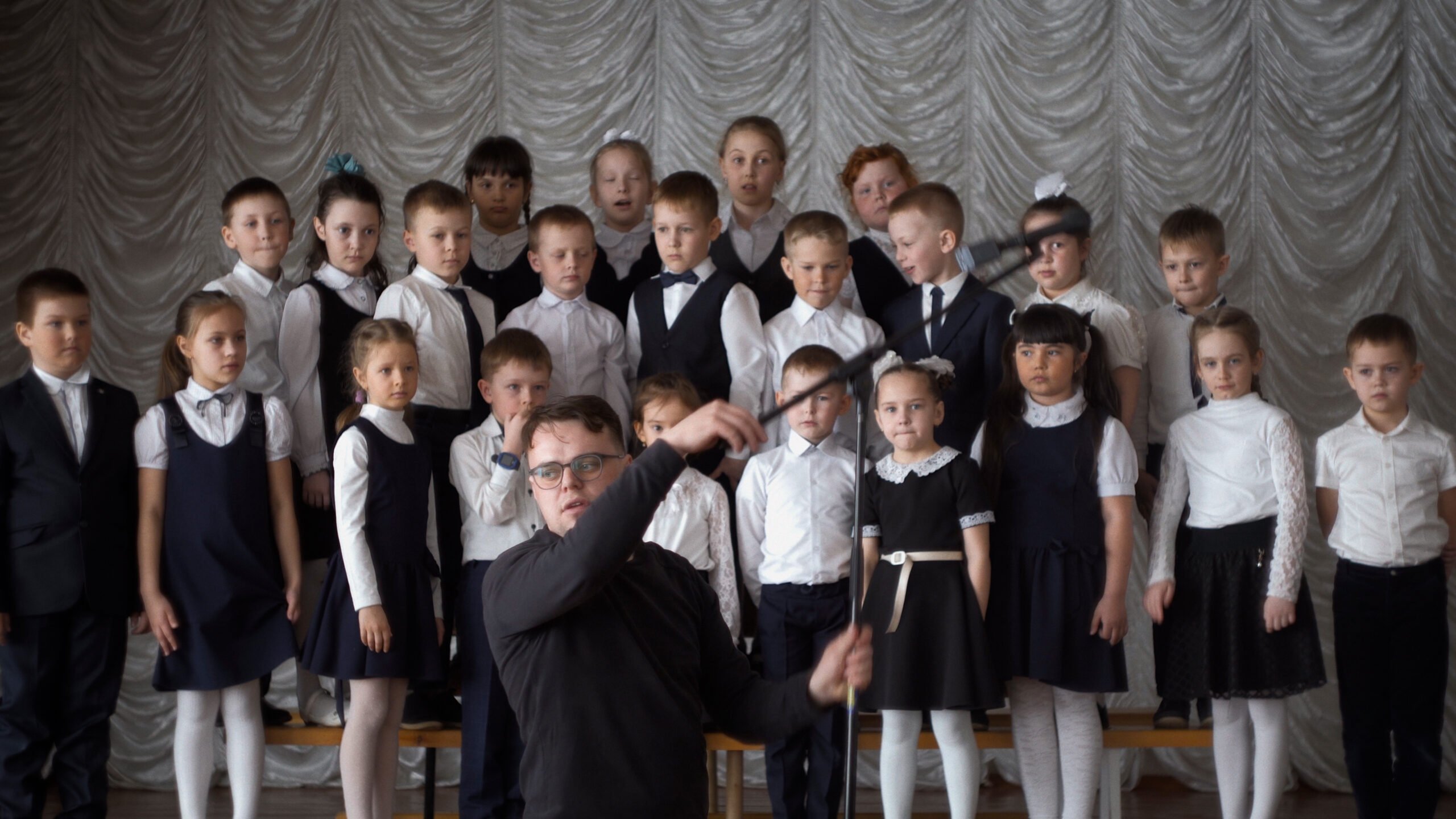
In 2022, shortly after Russia’s full-scale invasion of Ukraine, an American filmmaker secretly connected with a Russian schoolteacher and videographer from Karabash, a run-down copper mining city some 1,700 kilometers (1,000 miles) east of Moscow.
Over the next two years, the schoolteacher, Pavel “Pasha” Talankin, and the filmmaker, David Borenstein, consulted virtually as Talankin documented how militarized Russian state propaganda took over daily life at the school.
The result of the collaboration, “Mr. Nobody Against Putin,” which premiered and won a jury award in 2025 at the Sundance Film Festival, has been nominated for an Academy Award in the Best Documentary Feature category.
In a conversation with Independence Avenue Media, Borenstein discusses the film, as well as the heated debate over whether it’s better to fight the Kremlin from inside Russia or in exile.
After watching hundreds of hours of video from a Russian school, the director worries the country’s future is “very bleak.”
“I just think it’s important right now for the West to look at this kind of footage to understand what’s happening in Russian society, because it’s just very clear that the whole way of bringing up this next generation is about an ironclad commitment to a new generation of war and militarism,” Borenstein says.
The following interview, recorded on Feb. 9, 2026, has been edited for length and clarity.
Kiryl Sukhotski, Independence Avenue Media: David, this is a fairly unique movie because it’s built on footage that was collected inside Russia and then smuggled out of Russia. Could you tell us how this movie came about?
David Borenstein, Oscar-nominated documentary film director: Well, it came about via a Russian web content company posting a casting call online. It basically said something like, “How has your job changed because of the special military operation in Ukraine?” [Ed: special military operation is what the Kremlin calls its full-scale war in Ukraine] What they were looking for were stories across Russia of actual workplaces that were supporting the war effort, like writing letters to soldiers and doing things like that.
And Pasha Talankin, who became my co-director and the main character, was a teacher at a small-town school and he saw this and he responded. He said he was angry. He said, let me tell you how my job has changed: I’ve been turned into a propagandist and I’m filled with rage and I’m filled with guilt.
So he sent this in to that Russian web content company and through a twist of fate, it actually landed on eyes that were sympathetic to him and that wanted to see him tell this kind of story. And so me and him were connected through email chains. And within a few weeks of the full-scale invasion of Ukraine, Pasha and I started working together.
IAM: So the movie depicts this sheer propagandist effort and what is going on inside Russia. Were you shocked by the intensity of it, or by the content of it? Did you expect any of it?
Borenstein: Yeah, I was shocked in different ways throughout the process. So within a few weeks of the full-scale invasion, when I sent a DP [director of photography] to film Pasha in his school, I immediately was getting in real time insight into the kind of propaganda that was being taught in schools and the kind of ideology that was fueling this terrible war in Ukraine. And this was shocking in itself.
I think what became more shocking over time was seeing this school continually change over the next two years — because we continued filming. And every single day I got new footage that tracked the changes that were occurring within Pasha’s school. And I really learned something from this. I learned just how quickly an institution can change.
At the beginning of the full-scale invasion, sure there was already propaganda and Russian schools weren’t perfect, but there was a lot of space for kids to be themselves, and for free thought to be taught, and for liberal values or some sort of liberal values to live in that school.
Within two years, everything had changed. Within two years, there was no space whatsoever. Within two years, what started as softer propaganda classes pretty much degenerated into Wagner soldiers teaching kids within the school how to identify landmines on the battlefield. And it really taught me something about just how quickly we can lose our institutions and how quickly an institution can be lost.
IAM: What we see is a single-man protest in Russia, a country where mass protests are banned. We see Pavel in the school while those kids may soon go into the meat grinder of the war. So is this protest worth it, especially taking into account that Pasha still had to leave?
Borenstein: Yeah, it’s a good question. It should be noted that he’s not alone in leaving. In the two and a half years of making this film, more than 100,000 schoolteachers have quit their jobs in Russia rather than go along with this propaganda regime. And of course, so much of the broader intelligentsia within Russia have left.
It’s a huge debate whether or not this is the right thing to do … Is this the right thing to do? Is it right to leave, or should you stay and fight alongside people there? I don’t think there’s any right answer. I think that everyone’s just trying to do what they see is the best solution that’s in front of them. And at the end of the day, it’s fate and it’s chance that makes you decide to do what you do.
Pasha would still be there if he didn’t connect with us. But he connected with us, he saw the chance to do something that could maybe make an impact. And I see it making an impact. I see this film being discussed rigorously with Russians, both inside and outside of the country. Whether that’s right for him personally, I don’t know. It’s very difficult to leave Russia. It’s difficult to leave your hometown. But whether it accomplished what he wanted to do to make an impact, I think we’re seeing signs that it is.
IAM: Your movie caused sharply divided opinions in the Russian exiled community right across the lines of this very divide: whether it’s right to leave or whether it’s right to stay. Pavel mounted the resistance but then had to leave. Do you think this is the story now that no resistance is possible anymore and all is actually bleak, dystopian and hopeless now?
Borenstein: I don’t know. In hopeless situations — and this is a very, very dark, bleak situation in Russia — it’s not like anybody has the answer, right? We can’t be so sure that one side or the other has the answer to how to bring such a large, complicated country into a more humane direction.
I just think that for this kind of situation, we need to throw the kitchen sink at it. We need to do whatever we can. And I go back to what I said before, we need to go with what is in front of us and we need to take whatever chances we can. Pasha took this chance — other people will take other chances. And I just think the situation is so bleak that one cannot argue so much about one specific strategy over another.
IAM: There is a moment in the movie where Pasha says goodbye to his pupils on the last day of the school year. And it feels like it’s his goodbye message not only to the school — but to Russia. Do you think that this whole movie is sort of a goodbye letter to Russia that we knew but that doesn’t exist anymore?
Borenstein: Yeah, I mean, this is why I think the film has been so embraced by the “right-to-leave Russians,” because they see so much of their own story in it. This tension between loving a place but also absolutely not being able to accept what it’s being turned into — and this complex way of navigating these conflicting emotions. So the film is very much about that.
The town [Karabash] is some sort of a metaphor for this as well. It’s one of the most poisonous places on earth, but he has so much love for it as well. You see kids at the end that, you know, very well in a few years could end up being in Ukraine and be turned into some sort of murderers. But they are also kids and they are people that he loves. All of this complexity is kind of circulating during that last scene. And it becomes this moment where I hope many people can reflect on their own relationship with where they’re from.
IAM: A lot of classic Russian literature is built on a story of an ordinary man, an anonymous man, Mr. Nobody, if you wish, that then expands and explains the story of Russia and its society. So now we see a contemporary Mr. Nobody, a fairly anonymous teacher from a small Russian town. What does it say about Russia and its society now?
Borenstein: I think one thing that I saw through watching many, many hours of Russian propaganda classes is that there is a huge notion or a huge concept within Russian ideology — and I’m sure it predates the current regime — of the heroic solitary individual and sacrifice as some sort of an adored idea.
There is this notion, and you can see it in Victory Day parades — this is increasingly true in the last few years — that there is nothing more honorable than giving your life to a war effort. But I couldn’t help but notice that Pasha internalized that in some sort of anti-regime way. He was willing to sacrifice himself throughout the process in a similar way. I think he flirted with his own destruction in a way that was very concerning to me, but also betrayed a little bit of internalizing that kind of propaganda itself — this idea that sacrifice is really important. …
This is a documentary, it went in that direction naturally. And I think this is because Pasha has internalized a certain way of thinking, where just like [Alexei] Navalny going back to Russia, flirting with your own destruction and flirting with these incredibly borderline destructive heroic behaviors is something that is viewed as some sort of good in the Russian mentality.
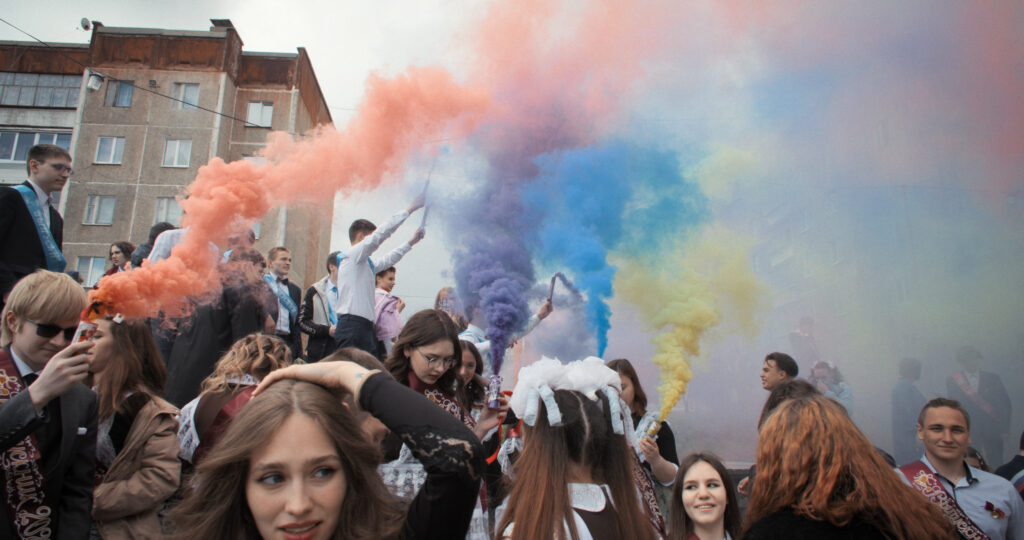
IAM: The movie is like a 90-minute view into Russia that people rarely see in the West — and maybe some parts of it that you personally did not expect to see. After making it and diving into it, what do you think is Russia’s future, the future of people like Pasha, and the future of those people who remain inside Russia?
Borenstein: I think, unfortunately, it’s very bleak. You see kids in his school, the older kids that you see hang around in his office. Pasha says all of the time that those kids only became who they were — fairly critical kids, fairly individualistic kids that had their own dreams that were separate from the state and separate from the larger goals of the regime — because they had the space to be kids when they were younger. It was much more liberal when they were younger.
Pasha worries immensely about the young kids who do not have that space right now and really wonders what it’s going to be like 10 years down the line. I just think it’s important right now for the West to look at this kind of footage to understand what’s happening in Russian society, because it’s just very clear that the whole way of bringing up this next generation is about an ironclad commitment to a new generation of war and militarism. It’s important to see that and it is very bleak.
Related stories:
